
Introduction
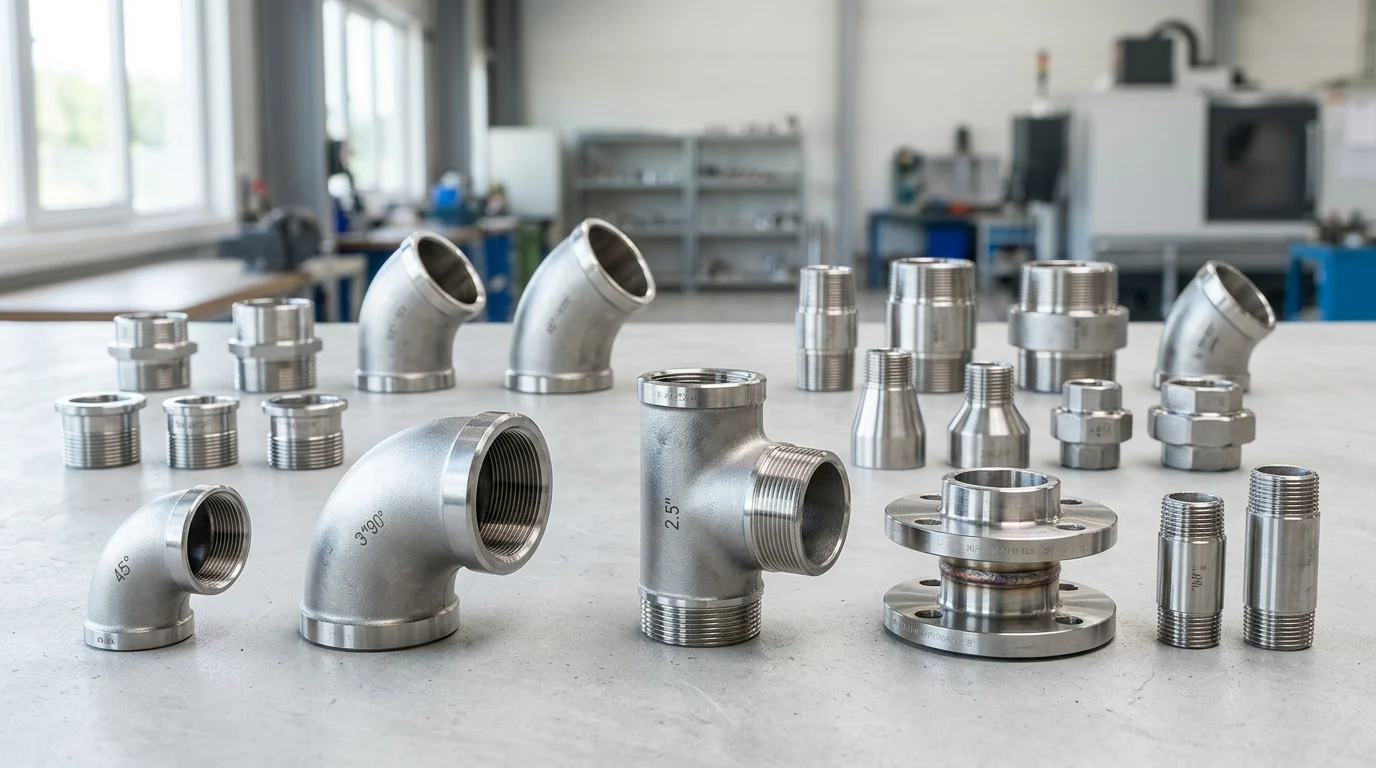
Choosing pipe fittings manufacturers for export markets is a risk-management exercise as much as a pricing decision. A supplier that offers a low unit cost can still create expensive problems through weak documentation, inconsistent quality, poor packaging, or limited experience with customs and regional standards. This article explains how to assess manufacturers with an export-focused lens, including production reliability, certification credibility, logistics readiness, and commercial risk controls. By the end, you will have a practical framework for comparing suppliers beyond brochures and quotations, so you can shortlist partners that are better prepared for international delivery, compliance, and long-term supply stability.
How buyers should frame the export decision for pipe fittings
Sourcing pipe fittings for international markets requires more than just hunting down the lowest factory-gate price. Buyers need a supply chain capable of navigating border regulations and high-stakes industrial applications without missing a beat. When evaluating pipe fittings manufacturers, procurement teams must look past flashy brochures to uncover actual export capabilities.
The decision to import heavy industrial components carries inherent logistical and financial weight. A structured evaluation framework ensures that buyers partner with facilities equipped to handle the rigorous demands of global trade.
Why export performance matters more than headline price
Headline prices often look fantastic until reality sets in. A unit price that sits 5% to 10% below the market average quickly loses its appeal if a shipment gets delayed by 30 days or rejected at customs due to improper documentation. In the industrial sector, downtime costs far exceed unit savings.
Buyers should prioritize manufacturers with proven export performance, ideally those moving at least 50 TEUs (Twenty-Foot Equivalent Units) annually to the target region. Consistent export volume proves the supplier understands international manufacturing tolerances, packaging standards, and shipping protocols.
Which commercial risks to define before supplier comparison
Before comparing quotes, sourcing managers must identify the commercial risks that could derail a project. Currency fluctuations alone can swing costs by 3% to 5% between the time an order is placed and when it finally ships, making fixed-exchange-rate agreements a valuable negotiating point.
Buyers must also lock down the exact harmonized system codes, such as HS Code 7307 for iron or steel tube fittings, to accurately forecast import duties and avoid border disputes. Furthermore, establishing clear non-disclosure agreements early in the process protects proprietary designs when dealing with custom-machined fittings.
What separates reliable pipe fittings manufacturers from traders
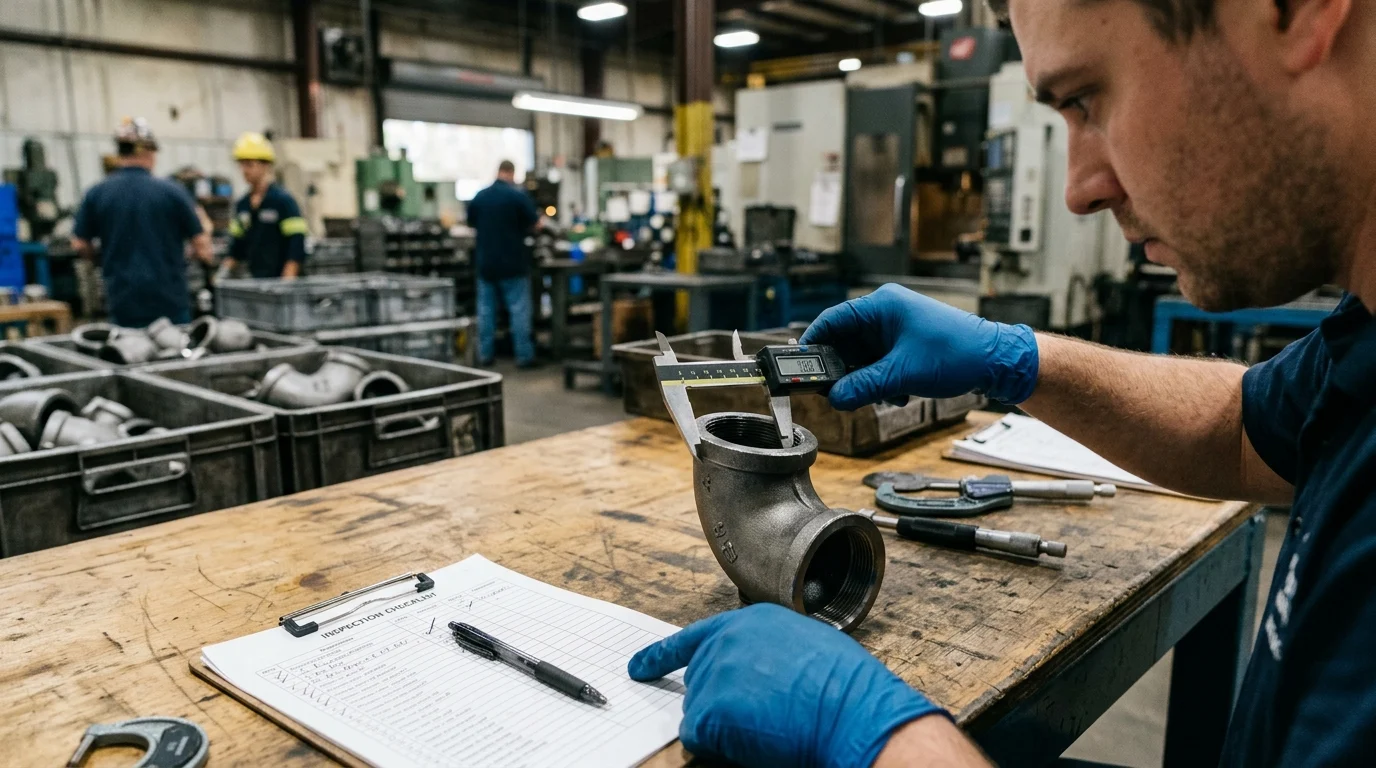
Navigating supplier directories often feels like walking through a hall of mirrors. It takes sharp eyes to determine whether a company actually melts the steel and machines the threads, or if they merely buy from local workshops and mark up the invoice.
Identifying a true factory minimizes communication delays and provides direct access to the engineers controlling the production line.
How to verify manufacturing scope and product range
Real factories specialize because heavy industrial equipment requires massive capital investment. A true manufacturer might focus heavily on forged stainless steel fittings or cast iron components, while a trading company will list every material, shape, and size under the sun.
Minimum Order Quantities (MOQs) also tell a revealing story. A genuine factory usually requires 1 to 2 tons per size to justify firing up a production run, whereas a trader might happily accept an order for 100 mixed pieces pulled from various local inventories.
Which quality control checkpoints reveal real capability
Quality control infrastructure separates the professionals from the amateurs. Reliable manufacturers keep heavy-duty testing equipment in-house rather than outsourcing it to third-party labs, which slows down production.
Buyers should look for on-site optical emission spectrometers for material chemistry analysis, and hydrostatic testing rigs capable of reaching pressures up to 10,000 PSI. A capable factory operating at this level should comfortably maintain a defect rate well below 0.5% and readily provide the internal audit logs to prove it.
What comparison criteria to use for capacity assessment
Assessing capacity requires looking at how a supplier operates under pressure. Comparing a direct manufacturer against a trading partner often comes down to lead times, customization, and pricing structures.
| Assessment Metric | Genuine Manufacturer | Trading Company |
|---|---|---|
| Standard Lead Time | 30 to 45 days (production) | 10 to 15 days (from stock) |
| MOQ Requirements | High (typically 1-2 tons) | Low (measured in pieces) |
| Customization | Full OEM and custom tooling | Limited to standard catalog |
| Pricing Model | Factory direct, volume discounts | Marked up, flexible sizing |
By benchmarking these criteria, procurement teams can quickly filter out middlemen when high-volume, highly specific production is required.
Which standards and technical details matter most
Pipe fittings hold highly pressurized, often volatile systems together. Because a single failure can shut down a plant or cause an environmental hazard, technical specifications remain completely non-negotiable during the evaluation phase.
Suppliers must demonstrate total fluency in the engineering standards that govern the buyer’s specific geographic market and industry application.
How to compare ASME, ASTM, EN, ISO, and pressure ratings
Procurement teams must ensure suppliers deeply understand global dimensional and material standards. Whether dealing with ASME B16.9 for butt-weld fittings in North America or EN 10253 for European markets, the dimensional tolerances must be exact to ensure seamless field welding.
Pressure ratings are equally critical. A manufacturer must clearly distinguish between Class 3000, 6000, and 9000 forged fittings, as each tier requires entirely different wall thicknesses and machining precision to handle high-stress environments safely.
What compliance documents manufacturers should provide
Verbal assurances are meaningless without rigorous compliance documentation. Buyers should demand EN 10204 Type 3.1 Material Test Reports (MTRs) as a non-negotiable baseline for any commercial order. This certificate guarantees that the specific batch of steel meets all chemical and mechanical requirements.
For highly critical applications, such as offshore oil rigs or nuclear facilities, buyers should step up to Type 3.2 certification. This premium standard involves an independent third-party inspector verifying the test results directly on the factory floor before the goods are released.
How to assess material trade offs across fitting options
Material selection drastically shifts both the project budget and the lifecycle of the piping system. Specifying standard carbon steel like ASTM A234 WPB keeps initial costs low, making it ideal for standard HVAC or low-corrosion environments.
Upgrading to a marine-grade stainless steel, such as ASTM A403 WP316L, typically increases the unit cost by 3x to 4x. However, that upfront premium pays incredible dividends by extending the fitting’s service life by decades in highly corrosive environments like chemical processing plants or desalination facilities.
How to evaluate landed cost, logistics, and communication
The price quoted at the factory gate is only the opening act. Total landed cost—the final price paid once the fittings arrive at the buyer’s warehouse—dictates the actual profitability of an import program.
A holistic evaluation requires buyers to map out the entire logistical journey, from the factory floor to the final destination.
What cost drivers beyond unit price affect total landed cost
Unit prices can be dangerously deceptive if buyers ignore the hidden costs of moving heavy metal across the globe. Inland freight from the factory to the departure port, terminal handling charges, customs clearance fees, and import tariffs stack up rapidly.
In many import scenarios, these logistical hurdles add 15% to 25% to the initial EXW (Ex Works) price. Sourcing managers must calculate these variables upfront, utilizing accurate HS codes and freight estimates, to avoid blown budgets upon arrival.
How packaging, Incoterms, and shipment planning affect delivery
How goods are boxed and shipped determines whether they arrive ready to install or covered in surface rust. Heavy pipe fittings require seaworthy plywood cases certified to ISPM 15 standards, heavily lined with VCI (Volatile Corrosion Inhibitor) bags to prevent oxidation during humid ocean transit.
| Incoterm | Buyer Risk Level | Supplier Responsibility | Best Use Case |
|---|---|---|---|
| EXW (Ex Works) | Maximum (pays all freight) | Minimum (makes goods available) | Buyers with strong local logistics |
| FOB (Free on Board) | Ocean freight, import duties | Inland freight, export clearance | Most standard export orders |
| CIF (Cost, Insurance, Freight) | Import duties, unloading | Ocean freight, marine insurance | Buyers wanting a hands-off transit |
Aligning the right Incoterm with proper packaging specifications ensures the product survives the journey without eroding the buyer’s profit margins.
Which process checks help audit responsiveness and sample handling
A supplier’s responsiveness during the quoting phase is the best predictor of their behavior during a supply chain crisis. Procurement teams should run simple process checks early on, such as auditing whether the manufacturer replies to complex technical queries within 24 hours.
Furthermore, buyers must track how the supplier handles prototypes. If a pre-production sample requires three rounds of revisions just to meet basic dimensional tolerances, it is a massive red flag for a future 10-ton commercial order.
How to shortlist and approve the right supplier
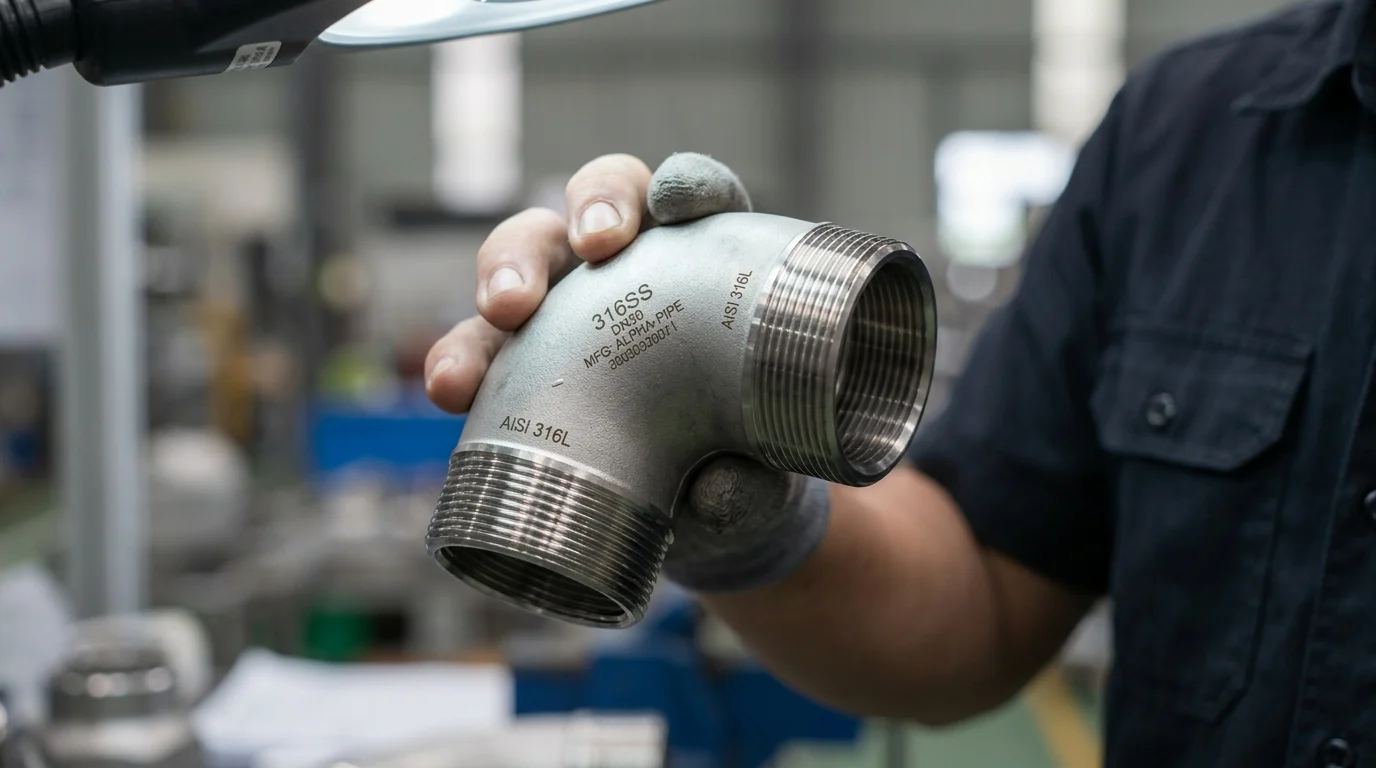
Gathering quotes, technical data, and logistical estimates is only half the battle. Bringing all that information together into a structured, confident approval decision is what actually protects the supply chain.
A methodical shortlisting process ensures that the chosen pipe fittings manufacturers offer the right balance of technical capability and commercial viability.
How to score suppliers using technical and commercial criteria
Building a weighted scorecard strips the emotion and bias out of supplier selection. A robust scorecard might allocate 40% to technical capabilities and quality history, 30% to landed pricing, 20% to logistical competence, and 10% to communication and responsiveness.
Sourcing teams often set a strict minimum threshold, requiring a manufacturer to score at least 85 out of 100 before they can be officially added to the approved vendor list.
When to use single sourcing or dual sourcing
Deciding how to allocate order volume depends heavily on the annual spend. For smaller programs under $100,000 a year, single sourcing gives the buyer enough volume to negotiate better pricing and secure priority production slots.
However, when the annual spend crosses the $500,000 mark, smart buyers shift to a dual-sourcing strategy. Splitting the volume 70/30 across two verified pipe fittings manufacturers ensures that a backup facility is always active and ready if the primary factory faces unexpected disruptions.
What final checks support confident supplier approval
The final steps before signing a long-term contract involve boots on the ground and small-scale testing. Hiring a reputable third-party auditing firm like SGS or TUV to conduct a comprehensive factory inspection is money well spent to verify equipment and labor conditions.
Once the facility passes the audit, procurement teams should order a pilot run of 1 to 2 tons. This trial batch verifies that the manufacturer can replicate the initial sample quality at scale before the buyer commits to a binding 12-month supply agreement.
Key Takeaways
- The most important conclusions and rationale for pipe fittings manufacturers
- Specs, compliance, and risk checks worth validating before you commit
- Practical next steps and caveats readers can apply immediately
Frequently Asked Questions
How can I tell if a pipe fittings supplier is a real manufacturer or just a trader?
Check for a factory tour, in-house testing equipment, realistic MOQs, and direct engineering support. A true factory like nbfh-metal.com should show its production scope clearly.
What export capability should I verify before placing an order?
Ask about annual shipments to your region, export documents, packaging standards, and customs experience. Suppliers handling 50+ TEUs yearly usually manage export processes more reliably.
Which quality checks matter most for pipe fittings exports?
Confirm material analysis, pressure testing, dimensional inspection, and traceable audit logs. Prioritize factories with in-house spectrometers and hydrostatic testing instead of outsourced lab reports.
Why is the lowest pipe fittings price often risky for export orders?
A cheaper quote can lead to delays, customs problems, or inconsistent quality. In export projects, stable lead times, correct paperwork, and low defect rates usually save more money overall.
What technical details should buyers confirm before comparing quotes?
Lock in material grade, pressure rating, dimensions, thread or end connection, standards, HS code, and Incoterms. This prevents duty surprises, mismatched products, and quote comparisons that are not equal.

Daniel Carter
Post time: Apr-27-2026