
Introduction
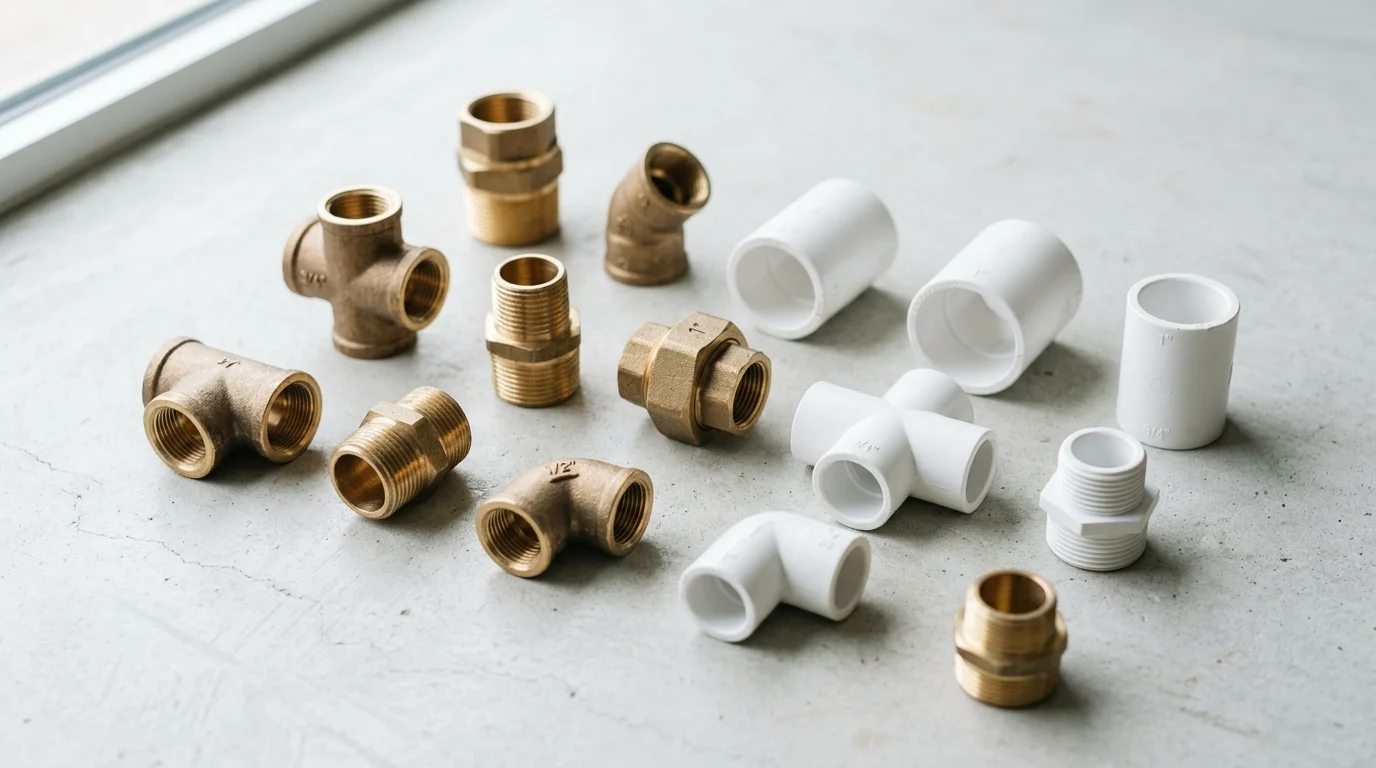
Selecting plumbing fittings is less about picking parts from a catalog and more about judging whether a supplier can deliver consistent performance across press, compression, and valve applications. Material quality, dimensional accuracy, certification standards, and production control all affect leak prevention, installation speed, and long-term system reliability. This article explains what separates a capable plumbing fittings supplier from a risky one, where common sourcing failures occur, and how to evaluate products and manufacturing support with practical criteria. With that context, the discussion can move into the specific supplier capabilities and product considerations that matter most in real projects.
Why Supplier Capabilities Matter
Procuring high-quality plumbing fittings requires a strategic approach to evaluating supplier capabilities, as these components form the critical junctions of commercial and residential water infrastructure. A supplier’s manufacturing precision, material sourcing, and quality assurance protocols directly dictate the lifecycle and safety of the final installation. Sourcing plumbing hardware is not merely a matter of unit cost optimization; it requires a deep understanding of how a supplier’s infrastructure impacts system integrity on the job site.
Impact on reliability and installation
The reliability of a plumbing system depends heavily on the dimensional accuracy and material integrity of its fittings. Precision manufacturing prevents microscopic leaks that can escalate into severe structural damage. For instance, a defect rate exceeding 0.5% in commercial press fittings or valves can lead to catastrophic water damage claims, which average upwards of $10,000 per incident in commercial real estate. Suppliers utilizing advanced automated machining and rigorous inline inspections reduce these risks, ensuring every compression nut threads smoothly and every O-ring seats perfectly.
Market pressures shaping demand
Modern market pressures are forcing contractors and wholesalers to adapt their procurement strategies. Severe labor shortages in the skilled trades have accelerated the transition from traditional sweat (soldered) fittings to advanced press and push-to-connect solutions. Because press systems can reduce installation time by up to 50%, they are fundamentally shifting the volume and type of fittings demanded from manufacturers. Furthermore, raw material price volatility requires buyers to partner with agile suppliers capable of locking in alloy prices and maintaining buffer inventories to stabilize costs during sudden commodity spikes.
Types and Comparison of Plumbing Fittings

The plumbing fittings market encompasses a vast array of connection types, each engineered to address specific installation environments, flow requirements, and longevity targets. Understanding the distinctions between press, compression, and valve solutions is essential for aligning procurement strategies with engineering specifications.
Definitions and use cases
Press fittings utilize a heavy-duty mechanical pressing tool to secure a permanent connection over an elastomeric O-ring, making them ideal for rapid, flame-free installations in commercial piping. Compression fittings rely on a threaded nut and a brass or copper ferrule to compress against the pipe. This creates a watertight seal that is highly valuable in tight spaces or repair scenarios where tools cannot easily maneuver. Valve solutions—ranging from ball and gate valves to check valves—are integrated into these systems to regulate, direct, or completely isolate fluid flow, requiring exact internal tolerances to prevent bypass leaks.
Materials, pressure ratings, and compatibility
Material selection dictates the operational limits and chemical compatibility of any fitting. Copper fittings remain the industry standard for domestic water, typically rated for continuous operation at 200 PSI and temperatures up to 250°F. For flexible piping systems, PEX fittings (often utilizing PPSU polymers or specialized brass) are standardly rated at 160 PSI at 73°F and 100 PSI at 180°F. When specifying brass components, Dezincification Resistant (DZR) brass is critical in regions with aggressive water chemistry. DZR brass prevents the selective leaching of zinc, which can otherwise cause fittings to become porous and brittle.
Comparison table for common options
Selecting the optimal fitting requires balancing installation speed, material cost, and system pressure requirements. The table below outlines the operational parameters of standard connection technologies.
| Fitting Type | Primary Material | Max Pressure Rating (PSI) | Installation Speed | Ideal Application |
|---|---|---|---|---|
| Press Fittings | Copper / Stainless Steel | 200 – 300 | Very Fast | Commercial potable water & HVAC |
| Compression | Standard Brass / DZR Brass | 150 – 400 | Moderate | Exposed retrofits & fixture stops |
| Push-to-Connect | DZR Brass / Engineered Polymer | 200 | Fast | Residential repairs & mixed materials |
| Sweat (Solder) | Copper / Cast Brass | 300+ | Slow | High-vibration & subterranean environments |
Specifications, Compliance, and Quality Control
Regulatory compliance and rigorous quality control are non-negotiable in the plumbing fittings industry. Because these components interact directly with potable water supplies and operate under constant hydrostatic stress, suppliers must adhere to a complex matrix of international safety and performance standards.
Certifications and regional standards
Suppliers must navigate stringent regional standards before their products can enter the market. In North America, NSF/ANSI 61 governs the health effects of drinking water system components, while NSF/ANSI 372 mandates a weighted average lead content of less than 0.25% across the wetted surface area of the fitting. European markets require compliance with WRAS (UK) or DVGW (Germany), which enforce their own rigorous material leaching and mechanical endurance tests. Procurement teams must verify that suppliers hold active, third-party verified certificates for these standards rather than relying on self-declarations.
Tolerances, sealing, and corrosion resistance
Dimensional tolerances and sealing materials are critical for leak prevention and lifecycle longevity. Machining tolerances for threaded brass fittings and valve bodies must typically be maintained within ±0.05 mm to ensure proper thread engagement and prevent cross-threading. In press fittings, the choice of elastomeric sealing elements is equally vital. Standard EPDM O-rings must withstand temperature fluctuations from -4°F to 250°F, while specialized FKM (Viton) seals are required for applications involving hydrocarbons or higher temperatures.
Quality documents, testing, and audits
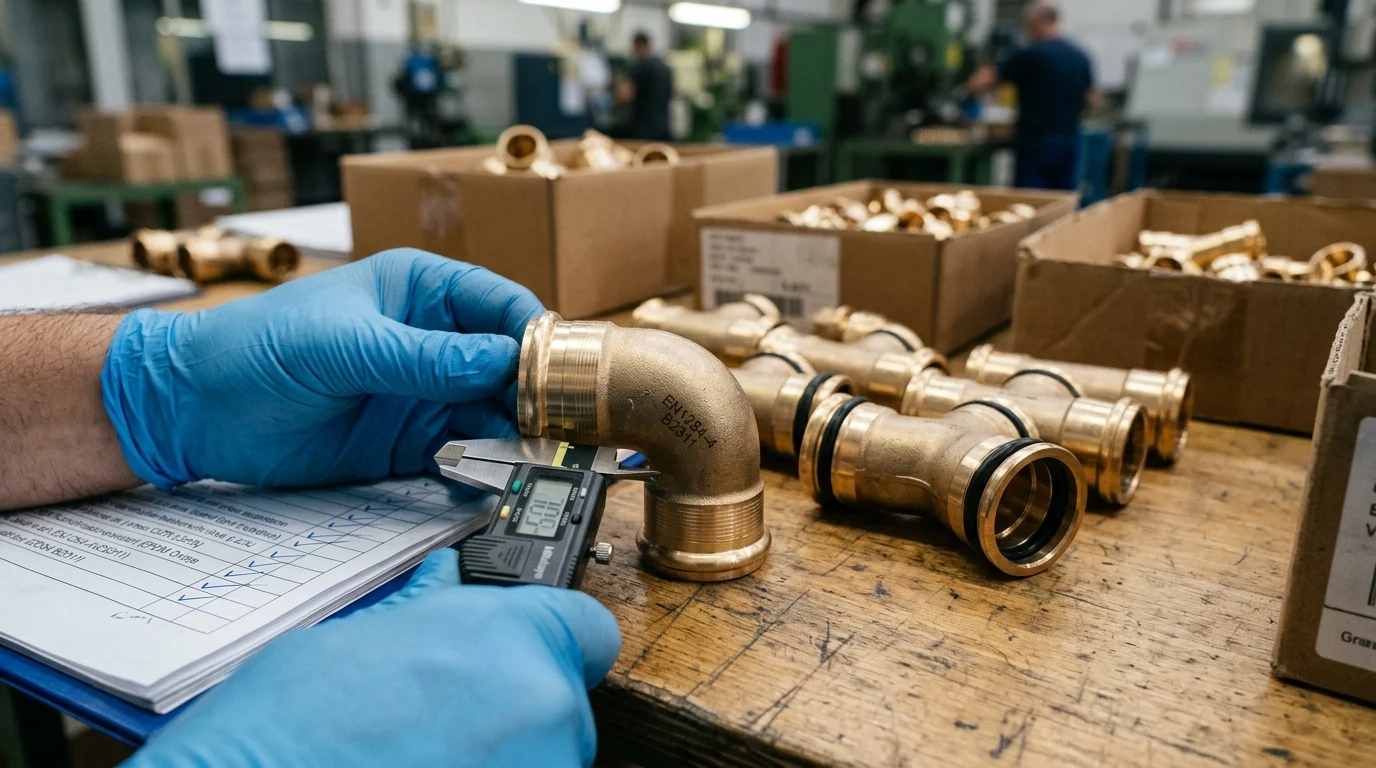
Top-tier suppliers maintain ISO 9001-certified facilities and employ comprehensive testing protocols. Hydrostatic burst testing is routinely performed on randomly sampled batches, often subjecting fittings to three times their standard working pressure (e.g., testing a 200 PSI-rated valve at 600 PSI) to verify structural integrity. Furthermore, reputable manufacturers provide Material Test Reports (MTRs) with every shipment, ensuring end-to-end traceability of the raw alloy composition from the foundry to the finished product.
Supply Chain, Pricing, and Service Models
Optimizing the supply chain for plumbing fittings requires a strategic approach to cost management, inventory planning, and vendor communication. Buyers must evaluate how suppliers structure their pricing and service models to ensure alignment with production schedules and cash flow requirements.
Key pricing drivers
Pricing for plumbing fittings is highly sensitive to raw material indexes, primarily the London Metal Exchange (LME) prices for copper and zinc. Manufacturing methods also drive unit costs. Forged brass fittings offer superior structural density compared to cast alternatives but require higher initial tooling investments. Custom tooling for specialized proprietary valves or manifold systems can range from $2,000 to $10,000, depending on the complexity of the molds and the required CNC programming.
Lead times, MOQs, and inventory strategy
Inventory strategies must account for international production and shipping cycles. Standard Minimum Order Quantities (MOQs) for custom or forged brass fittings typically range from 5,000 to 10,000 units per SKU to absorb setup costs efficiently. Typical overseas lead times span 8 to 12 weeks from purchase order to port delivery. To mitigate these delays, high-volume buyers frequently negotiate Vendor-Managed Inventory (VMI) agreements, requiring the supplier to hold 30 to 60 days of buffer stock in domestic warehouses to guarantee an uninterrupted supply.
How to compare quotes and samples
When evaluating quotes, buyers must look beyond the initial unit price to understand the Total Cost of Ownership (TCO), factoring in defect rates, shipping terms, and tooling amortization.
| Cost Component | Standard Commodity Supplier | Premium Contract Manufacturer |
|---|---|---|
| Target Unit Price (per 10k units) | $1.20 | $1.45 |
| Tooling Amortization | High upfront ($5,000+) | Often amortized into piece price |
| Acceptable Defect Tolerance | < 1.0% | < 0.1% |
| Typical Production Lead Time | 10 – 12 weeks | 6 – 8 weeks |
| Ideal Buyer Profile | High-volume distribution | Engineered custom valve solutions |
Supplier Selection Framework
Establishing a robust procurement framework ensures that buyers partner with manufacturers capable of scaling operations while maintaining strict quality thresholds. The selection process must critically evaluate a supplier’s core competencies, financial health, and long-term strategic alignment.
Matching suppliers to buyer needs
Buyers must carefully align their procurement needs with the specific operational capabilities of the supplier. Differentiating between master distributors, specialized OEM foundries, and general trading companies is the first step. A specialized brass foundry pouring 500 tons of material per month offers distinct advantages in raw material pricing and custom metallurgical control. Conversely, an assembly-focused manufacturer might be better suited for complex, multi-component valve solutions. Matching the supplier’s primary manufacturing footprint to the buyer’s exact technical requirements prevents costly delays and quality mismatches.
Criteria for long-term partnerships
Sustainable, long-term partnerships require suppliers to demonstrate financial stability, continuous improvement methodologies (such as Six Sigma or Lean Manufacturing), and adequate production elasticity. Ideal manufacturing partners operate at 70% to 85% capacity utilization. This baseline ensures they run efficiently while retaining the 15% to 30% overhead necessary to absorb sudden demand spikes or expedited orders without compromising their established quality control metrics.
Key Takeaways
- The most important conclusions and rationale for plumbing fittings
- Specs, compliance, and risk checks worth validating before you commit
- Practical next steps and caveats readers can apply immediately
Frequently Asked Questions
What plumbing fitting type is best for fast commercial installation?
Press fittings are usually the fastest option. They enable flame-free installation, cut labor time, and work well for commercial potable water and HVAC systems.
When should I choose compression fittings instead of press fittings?
Choose compression fittings for repairs, tight spaces, or exposed retrofit work where pressing tools are impractical. They are also useful for fixture stops and smaller connection points.
Why is DZR brass important for plumbing fittings?
DZR brass resists dezincification in aggressive water conditions. It helps prevent porosity, brittleness, and premature fitting failure, making it a safer choice for long-term reliability.
How can I verify a plumbing fittings supplier’s quality?
Check material traceability, pressure ratings, inline inspection processes, and compliance documents. A reliable supplier like nbfh-metal.com should clearly provide product specifications and manufacturing details.
Are valves as important as pipe fittings in a plumbing system?
Yes. Valves control, isolate, and direct flow, so poor tolerances can cause bypass leaks or shutoff failure. Match valve type and rating to the system’s pressure and application.

Daniel Carter
Post time: Apr-29-2026