
Introduction
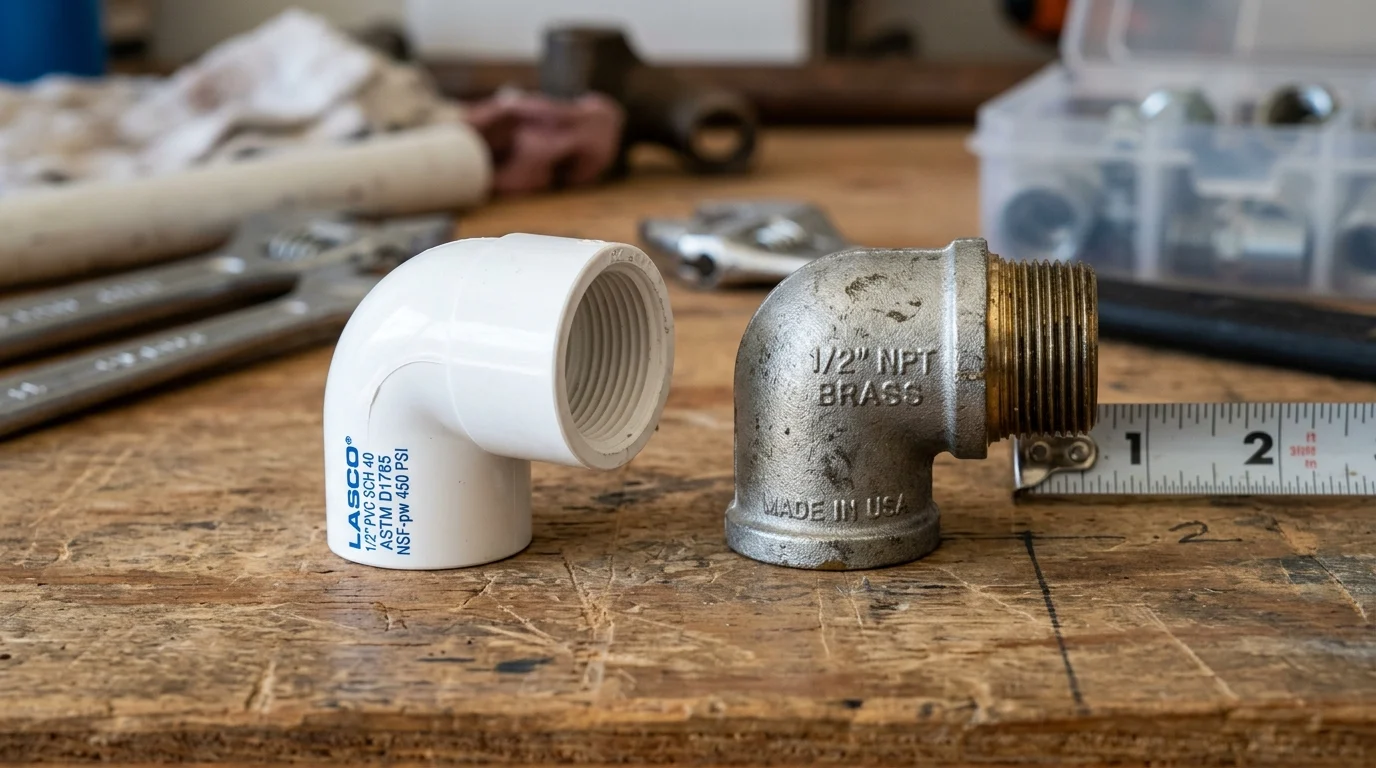
Choosing among PVC pipe fitting types affects more than layout: it shapes flow performance, pressure capacity, maintenance needs, and long-term reliability. This article explains the most common fitting configurations, what each one is designed to do, and where PVC begins to show practical limits in commercial and industrial systems. You’ll also see when metal alternatives make more sense for higher temperatures, aggressive media, or demanding pressure conditions. With that context, it becomes easier to match each fitting type to the application instead of selecting by cost or familiarity alone.
Why PVC pipe fitting types matter in commercial piping
Polyvinyl chloride (PVC) pipe fittings form the structural and functional backbone of fluid handling systems across commercial, agricultural, and industrial sectors. Their primary function is to connect, redirect, or terminate straight lengths of PVC piping, ensuring a leak-proof and structurally sound network.
Understanding the distinct variations in these components is critical for engineers and procurement specialists. Selecting an incompatible fitting configuration can lead to catastrophic system failures, regulatory non-compliance, and severe operational bottlenecks in high-demand environments.
How application demands shape fitting selection
Fluid dynamics, spatial constraints, and volumetric flow requirements dictate the correct fitting configuration. Industrial applications frequently demand specialized geometries to minimize friction loss and prevent turbulence within the line.
System pressure ratings directly dictate material thickness and fitting class. Commercial water distribution networks typically operate between 60 psi and 150 psi, easily accommodated by standard fittings, whereas industrial chemical transfer lines may experience pressure spikes exceeding 600 psi, necessitating reinforced or specialized junction components.
What cost, uptime, and risk factors matter
The financial implications of fitting selection extend far beyond initial procurement. While PVC components often present a 30% to 50% capital expenditure reduction compared to metallic equivalents, these savings are rapidly negated if an under-specified fitting causes an unplanned shutdown.
Uptime relies on selecting fittings that match the exact chemical and pressure profile of the transported fluid. Risk mitigation requires factoring in the cost of potential environmental remediation, structural water damage, and lost production time, which can easily exceed tens of thousands of dollars per hour in a continuous manufacturing facility.
What are the main PVC pipe fitting types
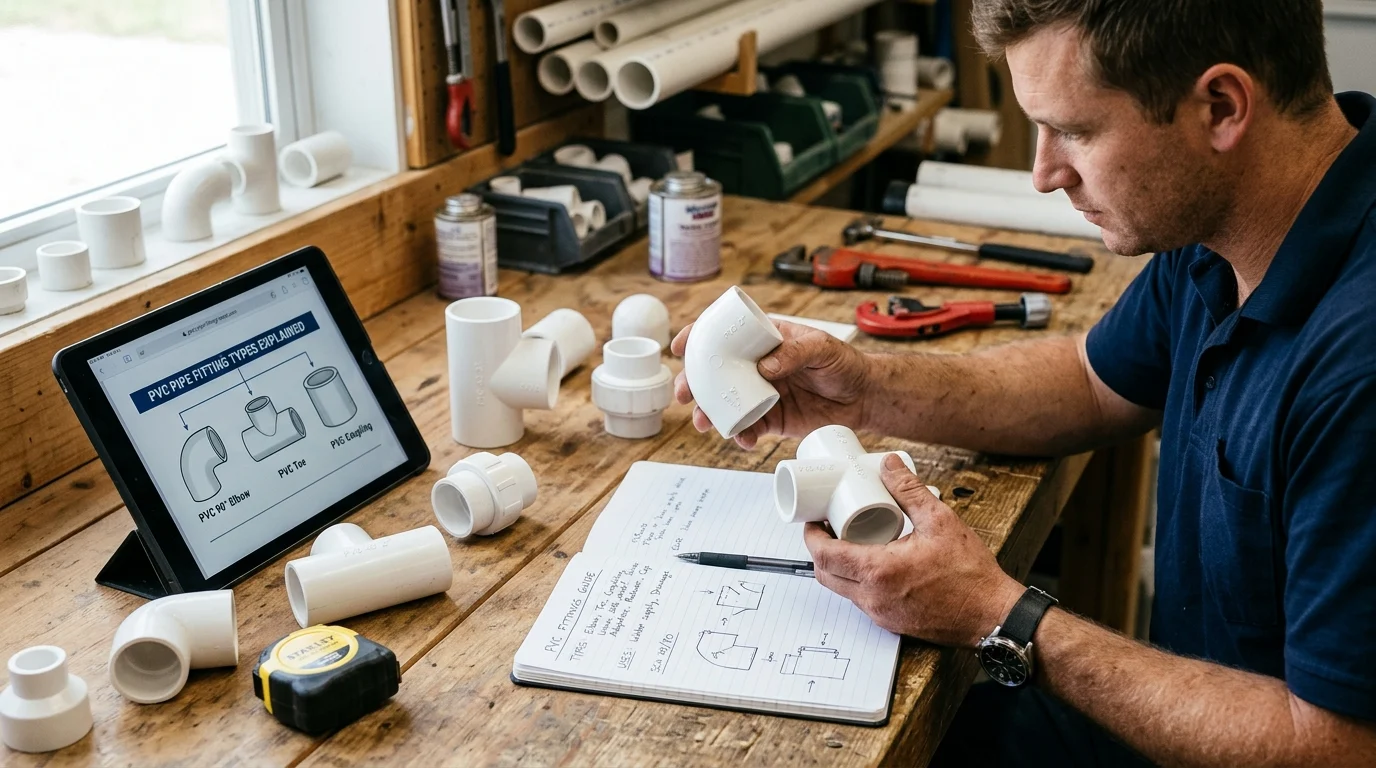
The versatility of PVC piping networks relies heavily on a standardized yet expansive catalog of fitting geometries. Each fitting type is engineered to perform a specific hydraulic function, from simple directional shifts to complex multi-line distributions.
How elbows, tees, wyes, crosses, and couplings are used
Directional and distribution components dictate the physical routing of a pipeline. Elbows, available predominantly in 45-degree and 90-degree configurations, facilitate changes in flow direction while managing the kinetic energy of the fluid. Tees and wyes serve as branching mechanisms; tees split flow at strict 90-degree angles, whereas wyes offer a gentler 45-degree branch to minimize fluid friction and prevent material buildup in wastewater applications.
Crosses connect four pipe segments at a single junction, though they are less common due to the high stress concentrations they introduce. Couplings remain the most fundamental component, used strictly to join two straight sections of pipe linearly without altering the flow diameter or direction.
When to use adapters, reducers, unions, caps, plugs, and valves
System transitions and maintenance access require specialized components. Adapters facilitate connections between dissimilar pipe materials or threading standards, ensuring seamless integration between PVC networks and legacy metallic infrastructure. Reducers are deployed to transition from a larger pipe diameter to a smaller one, actively increasing fluid velocity while maintaining continuous flow.
Unions provide a critical maintenance advantage over standard couplings by allowing the pipe network to be disconnected and reconnected without cutting the PVC. Caps and plugs are utilized to permanently or temporarily terminate flow at the end of a line, while PVC valves—including ball, gate, and check valves—provide manual or automated isolation and flow regulation capabilities.
Which joining methods and pressure classes differ
The mechanical integrity of a PVC network depends heavily on the joining method and the specified pressure class. Schedule 40 fittings, typically white, are engineered for lower-pressure applications, handling up to 450 psi at a 2-inch diameter at ambient temperatures. In contrast, Schedule 80 fittings, distinguished by their gray color and thicker walls, can sustain pressures up to 850 psi for the same diameter.
| Joining Method | Optimal Pressure Range | Curing / Setup Time | Primary Application |
|---|---|---|---|
| Solvent Welding | Low to High (up to 850 psi) | 24 hours (full cure) | Permanent commercial plumbing |
| Threaded | Low to Medium (up to 400 psi) | Immediate | Systems requiring frequent disassembly |
| Flanged | Medium to High (up to 150 psi standard) | Immediate | Industrial processing and tank connections |
How PVC pipe fitting types compare on performance and limits
While PVC is highly regarded for its corrosion resistance and ease of installation, its mechanical performance is bound by strict physical limitations. Evaluating these operational envelopes is essential to prevent premature mechanical fatigue and system failure.
Which criteria best compare fitting performance
Engineers evaluate PVC fittings against specific mechanical thresholds, primarily focusing on tensile strength, modulus of elasticity, and hydrostatic burst pressure. The structural rigidity of the fitting must be capable of withstanding not only the internal fluid pressure but also external mechanical loads, such as soil weight in buried applications or vibrational stress from adjacent industrial machinery.
Surge pressures, commonly known as water hammer, represent a critical performance metric. A sudden valve closure can generate pressure spikes that momentarily exceed the nominal rating of the fitting by 200% to 300%, requiring careful specification of surge arrestors or higher-schedule fittings in dynamic fluid systems.
What limits apply for heat, UV exposure, and chemicals
Environmental and thermal factors define the absolute boundaries of standard PVC application. The material possesses a strict maximum operating temperature of 140°F (60°C). Above this threshold, the polymer softens, resulting in a rapid loss of pressure-bearing capacity and potential structural deformation. For applications requiring higher thermal tolerance, Chlorinated Polyvinyl Chloride (CPVC) is utilized, extending the limit to 200°F (93°C).
Ultraviolet (UV) radiation poses another significant limitation for exterior installations. Prolonged exposure to direct sunlight causes photo-degradation in standard PVC, leading to a reduction in impact strength by as much as 20% to 25% over a two-year period. Furthermore, while highly resistant to acids and alkalis, PVC fittings are susceptible to degradation from specific organic solvents, ketones, and esters, which can dissolve the polymer matrix.
Which standards and installation factors affect results
Regulatory compliance and installation protocols drastically influence field performance. Fittings must conform to rigorous manufacturing standards, such as ASTM D2466 for Schedule 40 socket fittings and ASTM D2467 for Schedule 80 configurations. These standards dictate precise dimensional tolerances and burst pressure minimums.
Installation variables, particularly the application of solvent cement, play a definitive role in achieving laboratory-rated performance. Improper deburring, inadequate application of primer, or failing to observe the mandatory 24-hour cure time at temperatures between 60°F and 100°F will severely compromise the chemical bond, reducing the joint’s maximum pressure capacity by up to 50%.
When metal alternatives should replace PVC fittings
Despite the economic and chemical advantages of thermoplastics, certain industrial environments exceed the physical capabilities of PVC. Recognizing the operational tipping point where metal fittings become necessary is crucial for long-term facility safety and efficiency.
How stainless steel, carbon steel, brass, and copper compare
When temperatures exceed the 140°F limit of standard PVC, or pressures surpass the 850 psi threshold of Schedule 80 configurations, metallic fittings become mandatory. Stainless steel (grades 304 and 316) offers exceptional corrosion resistance and can tolerate temperatures exceeding 1,500°F (815°C), making it indispensable in sanitary processing and high-temperature chemical manufacturing.
Carbon steel fittings are heavily favored in high-pressure petrochemical and steam lines due to their extraordinary tensile strength, though they require protective coatings to prevent oxidation. Brass and copper fittings remain the standard for commercial potable hot water distribution and HVAC refrigerant lines, offering excellent thermal conductivity and inherent antimicrobial properties.
What lifecycle cost and maintenance trade-offs exist
The transition from PVC to metal involves a significant shift in lifecycle economics. Metal fittings typically require an initial capital investment that is 3x to 5x higher than equivalent PVC components. Furthermore, the installation of metal piping demands specialized labor, such as certified welders or pipefitters, substantially increasing upfront deployment costs.
However, this initial expenditure is often offset by operational expenditure (OPEX) advantages over decades of use. In highly abrasive or high-pressure environments, a properly specified stainless steel fitting can boast a service life exceeding 50 years, whereas a PVC counterpart might require frequent replacement, leading to cumulative downtime costs that eclipse the initial savings.
How to decide between PVC and metal fittings
Selecting between PVC and metal alternatives requires a rigorous assessment of operational extremes. Procurement teams must map the maximum anticipated temperature, peak surge pressure, and chemical compatibility of the transported medium before finalizing material selection.
| Material Category | Max Operating Temp | Relative Cost Factor | Ideal Use Case |
|---|---|---|---|
| Standard PVC | 140°F (60°C) | 1.0x (Baseline) | Chilled water, standard chemical transfer |
| CPVC | 200°F (93°C) | 1.5x – 2.0x | Hot water distribution, corrosive processing |
| Carbon Steel | 800°F (426°C) | 2.5x – 3.5x | High-pressure steam, petrochemical lines |
| Stainless Steel | 1500°F+ (815°C+) | 4.0x – 6.0x | Sanitary processing, extreme temperature fluids |
How buyers should specify and source PVC pipe fittings

Procuring commercial-grade PVC fittings requires strict adherence to technical specifications and strategic supplier evaluation. Moving from system design to physical acquisition introduces variables in quality control, supply chain logistics, and total cost analysis.
What steps improve specification accuracy and supplier review
Procurement professionals must move beyond generic part descriptions to mandate exact ASTM standard compliance, resin cell classifications, and dimensional tolerances. Ambiguity in specifications often results in the acquisition of non-compliant, off-brand fittings that compromise system integrity.
Rigorous supplier evaluation should demand documented quality control processes. Buyers should request lot traceability and statistical process control (SPC) data, targeting a manufacturing defect rate of less than 0.5%. Auditing a supplier’s pressure-testing protocols ensures that the components will perform reliably under real-world industrial stresses.
Which logistics, packaging, lead times, and sourcing issues matter
Supply chain mechanics dictate project timelines and inventory holding costs. Standard PVC fittings generally carry a lead time of 2 to 4 weeks, whereas specialized, large-diameter components (exceeding 12 inches) or custom-fabricated manifolds may require 8 to 12 weeks for delivery.
Purchasing scale heavily influences unit economics. Manufacturers and master distributors typically enforce Minimum Order Quantities (MOQs) ranging from 500 to 5,000 units depending on the fitting’s size and complexity. Furthermore, bulk packaging strategies must be evaluated; improper palletization or lack of UV-protective wrapping during transit can degrade the structural integrity of the fittings before they even reach the job site.
What decision framework helps buyers choose the right fitting
A robust procurement framework integrates total cost of ownership with supply chain risk management. Buyers must weigh the immediate unit cost against long-term reliability, factoring in compliance verification, shipping logistics, and the financial risk of potential downtime.
Establishing secondary supplier relationships safeguards against raw material shortages and regional logistical disruptions. Ultimately, the right fitting is chosen through a balanced matrix prioritizing exact technical suitability, verified manufacturer quality, and predictable delivery schedules over the lowest immediate bid.
Key Takeaways
- The most important conclusions and rationale for pvc pipe fitting types
- Specs, compliance, and risk checks worth validating before you commit
- Practical next steps and caveats readers can apply immediately
Frequently Asked Questions
What are the main PVC pipe fitting types used in commercial piping?
Common types include elbows, tees, wyes, couplings, reducers, adapters, unions, caps, plugs, and valves. Each changes direction, branches flow, joins pipe, or allows maintenance access.
When should I choose a wye instead of a tee?
Use a wye when you want smoother flow and less turbulence, especially in drainage or wastewater lines. Use a tee for a simple 90-degree branch where flow disruption is less critical.
What is the difference between Schedule 40 and Schedule 80 PVC fittings?
Schedule 80 has thicker walls and higher pressure capacity than Schedule 40. Choose Schedule 80 for higher-pressure or more demanding industrial service; Schedule 40 is common for standard water distribution.
When are metal alternatives better than PVC fittings?
Metal is usually better for high temperatures, heavy mechanical loads, fire-sensitive areas, or aggressive industrial duty. For transition points, NBFH Metal adapters and press fittings can help connect PVC systems to metal lines.
Which fitting is best if the line needs future maintenance?
A union is usually the best choice. It lets you disconnect and reconnect a section without cutting the pipe, saving time during inspection, repair, or equipment replacement.

Daniel Carter
Post time: Apr-28-2026