
Introduction
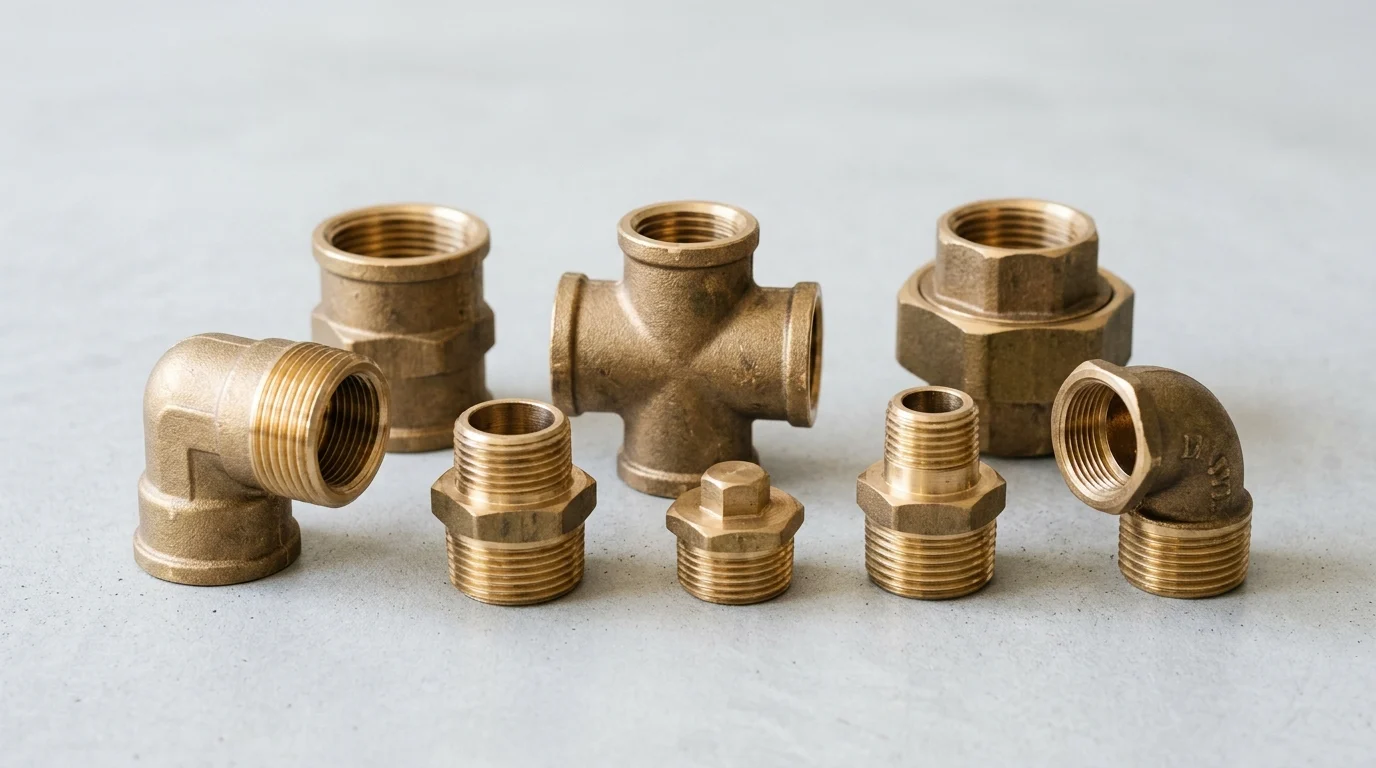
Selecting brass pipe fittings is less about matching thread sizes and more about protecting system reliability over time. Material grade, pressure and temperature limits, corrosion exposure, sealing method, and certification all affect whether a connection will stay leak-free or become a maintenance problem. This article explains the practical criteria behind a good choice, including where brass performs best, which fitting types suit common applications, and what warning signs to watch for when comparing products. By the end, readers will be better equipped to choose fittings that support longer service life, lower downtime, and more predictable performance in plumbing, HVAC, and industrial systems.
Why brass pipe fittings matter for reliable system performance
Brass pipe fittings are the unsung heroes of fluid routing, bridging the gap between heavy-duty steel and lightweight plastics. Industry professionals rely on brass because it strikes an exceptional balance between machinability, corrosion resistance, and mechanical strength. While it is easy to treat these components as generic commodities, selecting the right fitting is a critical step in building systems that last.
When engineers and procurement teams evaluate system architecture, the choice of fitting material directly impacts the bottom line. A failed connection does not just cost the price of a replacement part; it carries the heavy financial burden of downtime, water damage, and emergency labor. Understanding why brass performs so reliably helps teams make better procurement decisions from the start.
Leakage risk, service life, and maintenance intervals
The primary job of any fitting is to keep fluids exactly where they belong. Brass excels here because its inherent softness allows for tighter seals compared to rigid materials like stainless steel, significantly lowering the risk of micro-leaks. When properly torqued, a high-quality brass fitting can easily achieve a service life of 50 years or more in standard plumbing applications.
This longevity directly translates to longer maintenance intervals. In commercial HVAC or industrial cooling systems, swapping out corroded fittings is a labor-intensive nightmare. By specifying the correct brass alloy up front, facility managers can stretch their routine inspection intervals and reduce the overall total cost of ownership.
Operating conditions where brass fittings perform best
Brass fittings perform best in environments that demand moderate to high thermal stability and corrosion resistance. They handle thermal expansion beautifully, which prevents the cracking often seen in rigid plastics. Standard brass fittings are routinely rated for operating temperatures up to 400°F (204°C), making them ideal for hot water lines, steam distribution, and radiant heating systems.
On the pressure side, brass performs exceptionally well. While cast brass fittings comfortably handle standard municipal water pressures of 60 to 80 PSI, heavy-duty forged brass variants can safely manage hydraulic or pneumatic applications hitting up to 1,000 PSI. They are highly effective for non-corrosive gases, compressed air, and potable water, though they should generally be kept away from high-ammonia environments, which can cause stress corrosion cracking.
Key brass pipe fitting specifications to evaluate
Evaluating brass pipe fitting specifications means digging deep into metallurgy and geometry. You cannot simply order a generic brass component and expect it to survive a specialized industrial environment. Buyers need to verify that the physical and chemical properties of the fitting match the exact demands of the system.
Alloy grade, lead content, and dezincification resistance
The foundation of any fitting is its alloy. C36000, known as free-machining brass, is an industry standard due to its ease of manufacturing, but it typically contains 2.5% to 3% lead. Modern regulations for potable water systems require a weighted average lead content of ≤ 0.25%, pushing the market toward lead-free alternatives like C46500 or CW511L.
Beyond lead content, dezincification resistance (DZR) is a crucial specification. In systems with aggressive, high-chloride, or hard water, standard brass can lose its zinc content, leaving behind a porous, fragile copper structure. DZR brass alloys are specially heat-treated to prevent this chemical leaching, ensuring the fitting does not crumble under pressure.
Thread standards, pressure ratings, and temperature limits
A fitting is only as good as its connection. Thread standards must match perfectly to avoid galling and leaks. North American systems heavily rely on NPT (National Pipe Taper), which requires thread sealant, while European and Asian markets lean toward BSPT (tapered) or BSPP (parallel) threads. Mixing these standards is a guaranteed recipe for system failure.
Pressure and temperature ratings must also align with the application. Standard fittings are often categorized by pressure classes. For example, a Class 125 brass fitting is typically rated for 125 PSI of steam or 200 PSI of water, oil, or gas (WOG). Pushing a fitting beyond its designated temperature limit—often capped around 250°F for standard seals or up to 400°F for bare metal—can compromise its structural integrity.
Comparison table for common brass fitting types
To simplify the selection process, buyers often use reference matrices to match the alloy with the intended application. Below is a breakdown of common brass types and their typical specifications:
| Alloy Grade | Common Name | Lead Content | DZR Properties | Best Use Case |
|---|---|---|---|---|
| C36000 | Free-Machining Brass | 2.5% – 3.0% | Low | Pneumatics, non-potable fluids, gas lines |
| C46400 | Naval Brass | ≤ 0.20% | Moderate | Marine environments, saltwater cooling |
| CW617N | European Forging Brass | 1.6% – 2.2% | Low | Standard HVAC, European industrial lines |
| C46500 | Lead-Free DZR Brass | ≤ 0.25% | High | Commercial potable water, aggressive water |
How to compare brass pipe fitting suppliers and quality control
A flawless specification sheet is useless if the manufacturing partner cannot deliver consistent parts. Comparing brass pipe fitting suppliers requires a close look at their quality assurance protocols. Sourcing teams must ensure that the factory floor operates with the same precision as the engineering department.
Certifications, test reports, and traceability
Top-tier suppliers do not just promise quality; they prove it through documentation. Buyers should always request Material Test Reports (MTRs) to verify the exact chemical composition of the brass batch. This ensures the factory isn’t cutting costs by substituting scrap metal with high impurity levels.
Traceability is another critical marker of a reliable supplier. Fittings should ideally be traceable back to their original heat number. Furthermore, a solid manufacturer operating under ISO 9001 standards should be able to demonstrate a defect rate of under 5,000 PPM (0.5%). If a supplier is hesitant to share their scrap rates or testing procedures, it is a clear sign to look elsewhere.
Regional compliance for potable water and industrial use
Depending on where the final system will be installed, regional compliance is non-negotiable. In North America, any fitting touching drinking water must comply with NSF/ANSI 61 (health effects) and NSF/ANSI 372 (verifying the ≤ 0.25% lead limit).
International markets have their own strict hurdles. The UK requires WRAS approval for water fittings, while Germany relies on the DVGW standard, and France mandates ACS certification. Industrial applications might bypass potable water rules but often require UL or FM approvals for fire safety and high-pressure gas systems. A global supplier should be well-versed in navigating these specific regional acronyms.
Practical process for choosing brass pipe fittings
Moving from technical specifications to actual procurement requires a structured approach. Without a practical workflow, buyers risk overpaying for over-engineered parts or suffering project delays due to logistical bottlenecks. A systematic selection process keeps projects on time and on budget.
Step-by-step selection process
The selection process starts by defining the system’s absolute limits: maximum pressure, peak temperature, and fluid type. Once those baselines are set, procurement teams must map out the regulatory requirements, such as whether the project demands a lead-free DZR alloy.
Next comes the geometric matching. Teams must finalize the thread standards (NPT vs. BSPT) and physical dimensions. Before placing a bulk order, it is always recommended to request physical samples and their accompanying MTRs. Running a small trial batch through the actual assembly line helps identify thread galling or wrench clearance issues before they become costly mass-production problems.
MOQ, lead time, packaging, and inventory planning
Logistics play a massive role in supplier selection. For standard, off-the-shelf C36000 fittings, buyers can often find low Minimum Order Quantities (MOQs) starting around 100 to 500 pieces. However, custom forgings or specialized lead-free alloys typically push MOQs to 2,000 or even 5,000 units to justify the factory’s tooling and setup time.
Lead times and packaging also require careful planning. Standard bulk orders generally carry a 4-to-8-week lead time, but custom runs can stretch to 12 weeks. Inventory planners must also specify packaging—bulk bins are cheaper but risk thread damage during transit, whereas blister packs or individually partitioned boxes protect the threads but add to the final unit cost.
| Procurement Type | Typical MOQ | Average Lead Time | Packaging Norm | Cost Profile |
|---|---|---|---|---|
| Standard Off-the-Shelf | 100 – 500 units | 1 – 3 weeks | Bulk bags/bins | Baseline |
| Standard Lead-Free | 500 – 1,000 units | 3 – 5 weeks | Bulk bins | +15% to 25% |
| Custom Forged Profile | 2,000 – 5,000 units | 8 – 12 weeks | Partitioned boxes | High Setup / Tooling |
Final decision criteria for choosing brass pipe fittings with confidence

Making the final call on a brass fitting order comes down to vigilance and balance. Even with all the right certifications on paper, physical inspections and financial trade-offs will ultimately determine the success of the procurement cycle. Knowing what to look out for helps buyers sign purchase orders with total confidence.
Red flags that signal poor-fit fittings
Physical red flags can quickly reveal a poor-quality fitting. For cast brass, surface porosity—tiny pinholes or a rough, sponge-like texture—is a massive warning sign. These imperfections compromise the structural integrity and often lead to micro-leaks under pressure. For machined fittings, burrs left on the threads indicate rushed manufacturing and poor quality control.
Weight inconsistency is another major red flag. If an approved sample weighs 55 grams, but the production batch averages 48 grams, the factory has likely thinned the internal walls to save on raw material costs. A weight variance greater than 5% should trigger an immediate quality review, as thin walls drastically reduce the fitting’s pressure rating and lifespan.
How to balance performance, compliance, and cost
Ultimately, choosing the right fitting is an exercise in balancing performance, compliance, and cost. Opting for lead-free DZR brass might introduce a 20% to 30% cost premium over standard alloys. While this stings the initial project budget, it is a necessary insurance policy against the devastating liability of heavy metal contamination in drinking water.
For closed-loop industrial systems where potable water regulations do not apply, buyers can safely save money by specifying standard C36000 brass. By aligning the exact alloy and manufacturing method with the system’s true operational demands, procurement teams can secure reliable, high-performance fittings without needlessly inflating their materials budget.
Key Takeaways
- The most important conclusions and rationale for brass pipe fittings
- Specs, compliance, and risk checks worth validating before you commit
- Practical next steps and caveats readers can apply immediately
Frequently Asked Questions
Which brass alloy is best for potable water systems?
Choose lead-free brass with weighted lead content at or below 0.25%, such as C46500 or CW511L. Confirm compliance on the supplier datasheet before ordering.
When should I choose DZR brass fittings?
Use DZR brass in hard, high-chloride, or otherwise aggressive water. It helps prevent dezincification and extends service life in demanding plumbing and HVAC systems.
How do I avoid thread mismatch with brass pipe fittings?
Verify the exact thread standard before purchase: NPT, BSPT, or BSPP. Never mix them, and use the correct sealant when the thread type requires it.
What pressure and temperature limits should I check first?
Check the fitting’s rated PSI, media type, and maximum temperature against your real operating conditions. Include pressure spikes and seal limits, not just normal system averages.
Can nbfh-metal help with brass fitting selection for OEM or bulk orders?
Yes. On nbfh-metal.com, you can review fitting options and contact the team with your media, thread standard, pressure, and temperature requirements for a faster recommendation.

Daniel Carter
Post time: Apr-27-2026