
Introduction
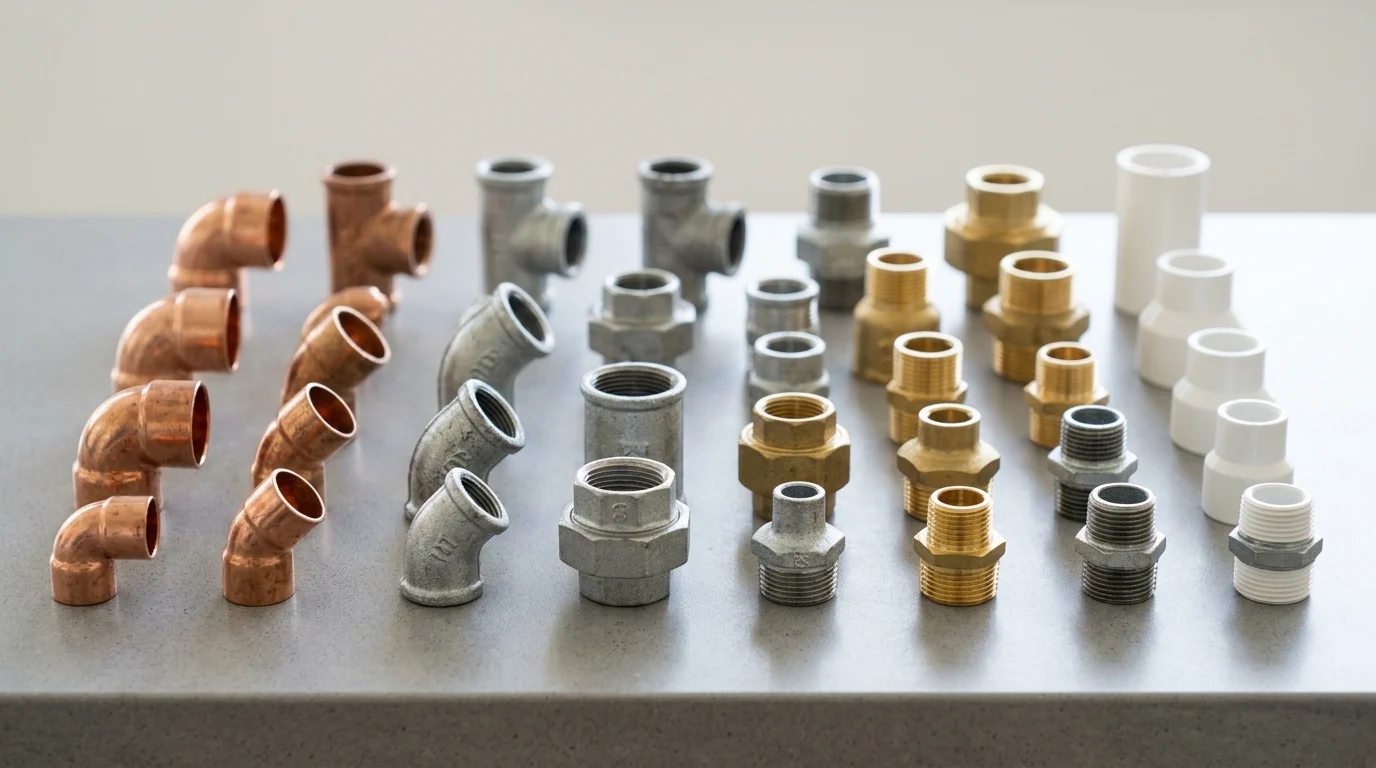
Choosing among water pipe fittings types affects more than layout and installation speed; it directly shapes leak risk, maintenance demands, and long-term system cost. In commercial plumbing, brass fittings are often favored because they combine corrosion resistance, strength, and reliable performance across a wide range of pressures and temperatures. This guide explains the main brass fitting types, how their connection methods differ, and where each option works best in practice. By the end, readers will have a clearer basis for comparing configurations, selecting suitable fittings for specific applications, and avoiding common specification mistakes that can shorten service life or increase failure risk.
Why Water Pipe Fitting Types Matter in Commercial Plumbing
In commercial and industrial plumbing systems, the selection of appropriate water pipe fittings types is a critical engineering decision that extends far beyond basic fluid conveyance. Fittings represent the most vulnerable points in any pressurized piping network. While the raw material cost of a single fitting may seem negligible in the context of a multimillion-dollar construction project, a catastrophic failure at a single joint can result in upwards of $50,000 in immediate water damage, operational downtime, and remediation costs.
System designers and procurement professionals must evaluate fittings based on metallurgical properties, geometric configurations, and connection mechanics. Among the various materials available, brass remains a cornerstone in commercial plumbing due to its exceptional durability, machinability, and thermal resilience. Understanding the nuances of these components ensures system longevity and strict adherence to modern building codes.
Lifecycle Cost and Leak Risk
When evaluating commercial plumbing networks, the initial procurement cost of fittings typically accounts for only 10% to 15% of the total lifecycle expense. The remaining 85% to 90% is consumed by installation labor, routine maintenance, and the mitigation of potential leak liabilities. Specifying high-quality brass fittings fundamentally alters this cost equation by providing an operational lifespan that frequently exceeds 30 to 50 years under standard conditions.
Leak risk is directly correlated to the structural integrity of the fitting and the reliability of its connection method. Inferior fittings are prone to microscopic casting defects or improper threading, which escalate the probability of slow, undetected leaks behind walls or in mechanical rooms. By standardizing on precision-machined brass components with verified dimensional tolerances, contractors can reduce post-installation joint failure rates to near absolute zero.
Brass vs Plastic Applications
The debate between utilizing brass versus modern polymers like Cross-linked Polyethylene (PEX) or Polyvinyl Chloride (PVC) hinges on operational thresholds and environmental exposures. Plastics offer distinct advantages in raw material cost and flexibility but suffer from severe limitations in high-temperature and high-stress environments.
Commercial-grade brass easily withstands continuous operating temperatures exceeding 200°F (93°C) and resists structural deformation under heavy mechanical loads. In contrast, standard PVC is structurally compromised at temperatures above 140°F (60°C). Furthermore, brass provides superior resistance to ultraviolet (UV) degradation, making it the mandatory choice for exposed mechanical installations, boiler room manifolds, and exterior water distribution networks where plastics would rapidly become brittle.
Key Water Pipe Fitting Types and Connection Styles
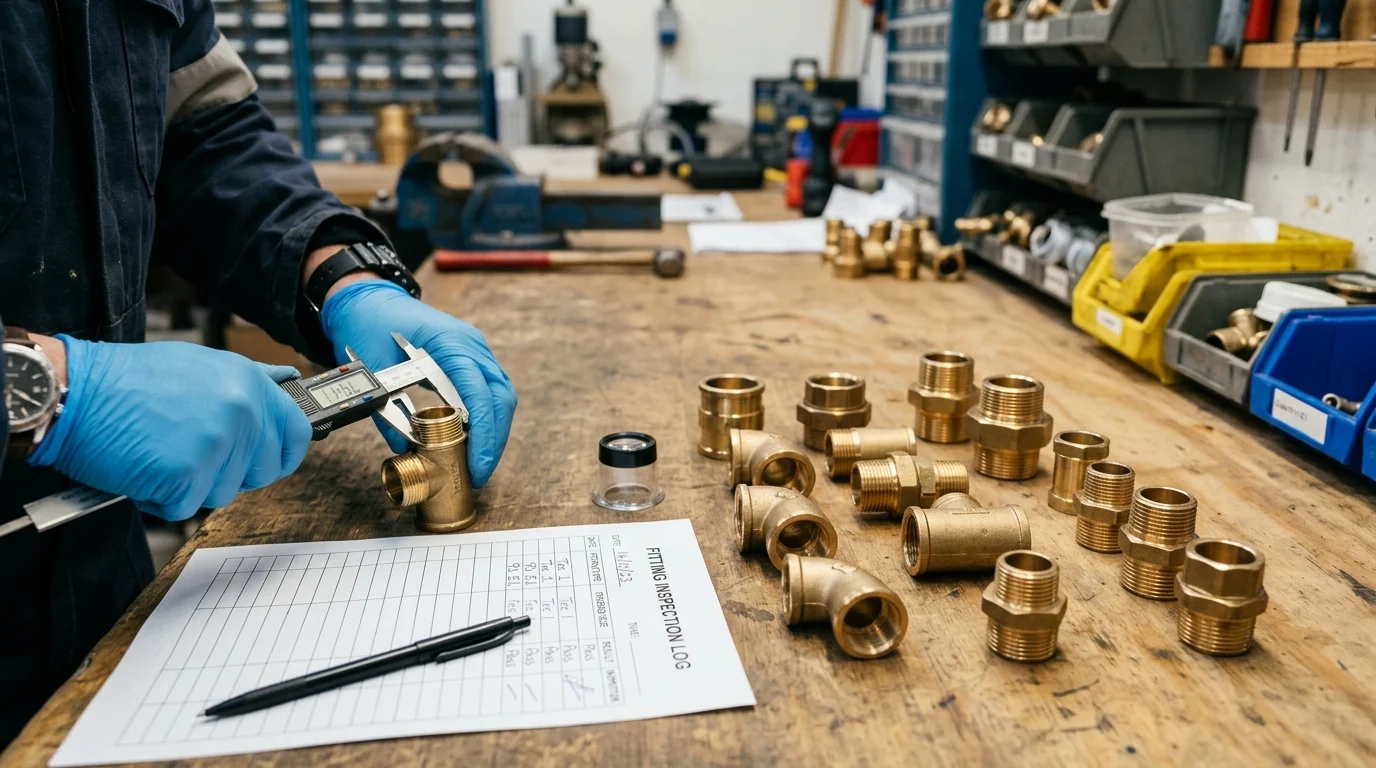
Navigating the diverse landscape of water pipe fittings types requires a thorough understanding of component geometry and joining techniques. The configuration dictates the directional flow and volume distribution, while the connection style determines the mechanical strength of the joint. Standardizing on specific connection methodologies across a facility can reduce overall installation times by up to 30%, significantly lowering labor expenditures.
Common Fitting Configurations
The fundamental building blocks of any piping network include elbows, tees, couplings, reducers, and unions. Elbows, typically available in 45-degree and 90-degree variants, facilitate directional changes but introduce flow resistance; a standard 90-degree elbow creates a pressure drop equivalent to approximately 2.5 feet of straight pipe.
Tees enable fluid distribution by splitting flow into secondary branches, while reducers seamlessly transition networks between different pipe diameters to maintain optimal fluid velocity. Unions are particularly critical in commercial applications, providing a disconnectable joint that allows for the rapid removal and replacement of inline equipment, such as pumps and valves, without requiring the destructive cutting of the pipe system.
Threaded vs Compression vs Press
The method used to join a fitting to a pipe is as crucial as the fitting itself. Threaded fittings utilize standardized profiles (such as National Pipe Thread or NPT) to create a mechanical seal that requires thread sealant or PTFE tape to prevent micro-leaks. They are highly reliable but require significant manual labor to torque correctly.
Compression fittings utilize a threaded nut to compress a metallic or elastomeric ferrule against the pipe exterior. This creates a watertight seal without the need for specialized tools or open flames, making them ideal for retrofits in tight or sensitive spaces. Press fittings represent the modern standard for high-volume commercial installations; utilizing specialized electro-hydraulic tools, contractors can permanently crimp an O-ring-equipped fitting onto a pipe, reducing labor time per joint by more than 50% compared to traditional soldering or threading.
Pressure Rating Comparison
Pressure handling capabilities vary dramatically based on the connection style and wall thickness of the fitting. Engineers must specify components that not only handle the standard operating pressure but also accommodate sudden hydraulic shocks or water hammer effects.
| Connection Style | Typical Max Pressure (PSI at 73°F) | Primary Advantage | Common Application |
|---|---|---|---|
| Threaded (NPT) | 300 – 600 PSI | High mechanical strength | Heavy commercial, Industrial |
| Compression | 150 – 400 PSI | Ease of disassembly | Exposed fixtures, Instrumentation |
| Press-Fit | 200 – 300 PSI | Rapid installation speed | Commercial potable water, HVAC |
Selecting a fitting with a pressure rating below the system’s peak surge threshold is a primary cause of catastrophic joint separation in multi-story building risers.
How to Assess Brass Fitting Specifications
Procuring brass fittings based solely on dimensional compatibility is a high-risk strategy. The metallurgical composition of the brass and the manufacturing standards to which it adheres dictate the component’s performance in aggressive water chemistries. Engineers must rigorously assess material specifications to prevent premature failures caused by corrosion or non-compliance with health regulations.
Material Grades and Alloys
Brass is an alloy primarily composed of copper and zinc, but the specific ratios and trace additives define its grade. Historically, C36000 (Free-Machining Brass) was the industry standard due to its excellent machinability, aided by the inclusion of up to 3% lead. However, modern potable water regulations have necessitated a shift in alloy selection.
Today, lead-free alloys such as C46400 (Naval Brass) or C69300 (ECO BRASS, utilizing silicon instead of lead) are mandated for drinking water systems. These alloys maintain high tensile strength while complying with the strict requirement that wetted surfaces contain a weighted average lead content of ≤ 0.25%. In European markets, CW617N remains a prominent standard for non-potable heating and industrial applications.
Standards and Certifications
Verification of material grades is achieved through rigorous third-party certifications. For any potable water application in North America, fittings must carry NSF/ANSI 61 certification, which evaluates the amount of contaminants that leach into the drinking water. Additionally, NSF/ANSI 372 verifies compliance with the ≤ 0.25% lead content mandate.
Beyond chemical safety, mechanical standards such as ASME B16.15 govern the dimensional tolerances and pressure-temperature ratings of cast bronze and brass threaded fittings. Utilizing uncertified fittings introduces severe liability; data shows that uncertified components possess a 25% higher risk of failing municipal compliance audits, leading to forced tear-outs and costly project delays.
Common Failure Modes
Even high-quality fittings can fail if misapplied or subjected to incompatible environmental conditions. Dezincification is a highly destructive form of corrosion where zinc selectively leaches out of the brass alloy, leaving behind a porous, structurally compromised copper matrix. This phenomenon accelerates in water systems with high chloride concentrations (above 50 mg/L) or a pH below 7.0. In such environments, specifying Dezincification Resistant (DZR) brass is mandatory.
Another prevalent failure mode is Stress Corrosion Cracking (SCC), which occurs when a brass fitting is subjected to simultaneous tensile stress and a corrosive environment, such as exposure to ammonia-based cleaning compounds. SCC is frequently triggered by improper installation practices, specifically over-torquing threaded joints beyond the standard manufacturer recommendation of 30 to 40 ft-lbs.
How Procurement Teams Should Choose Fittings
For procurement teams, sourcing the correct water pipe fittings types involves navigating complex global supply chains while balancing unit costs, delivery schedules, and stringent quality assurance protocols. An ad-hoc purchasing strategy frequently leads to inconsistent material quality, mismatched tolerances, and project bottlenecks. Establishing a rigorous sourcing methodology is essential for maintaining operational efficiency.
Step-by-Step Selection Process
The selection process must begin with a comprehensive technical brief provided by the engineering department. Buyers must identify the fluid medium, peak operating temperatures, maximum system pressure, and required connection methodologies before engaging suppliers. Once these parameters are locked, procurement can filter potential vendors based on manufacturing capabilities.
When sourcing directly from overseas manufacturers to achieve economies of scale, procurement teams must negotiate Minimum Order Quantities (MOQs). Standard MOQs for brass fittings typically range from 1,000 to 5,000 units per SKU, depending on the complexity of the casting or machining required. Batching orders across multiple projects is a common strategy to meet these thresholds without inflating standing inventory.
Supplier Quality and Traceability
Supplier reliability is paramount; a cheap fitting is inherently expensive if it results in a system leak. Procurement should mandate that all manufacturing partners hold current ISO 9001 certifications to ensure consistent process controls. Furthermore, buyers should require Material Test Reports (MTRs) with every shipment to verify the exact chemical composition of the brass alloy.
Top-tier manufacturers utilize automated optical inspection and pressure decay testing on the assembly line to identify micro-porosity in castings. Procurement teams should establish Service Level Agreements (SLAs) that cap permissible defect rates at strict thresholds, typically below 0.5% (500 Parts Per Million). Consistent failure to meet this metric should trigger an immediate supplier audit.
Catalog vs Custom Sourcing
A critical decision in the sourcing process is choosing between standard catalog items and custom-engineered fittings. Standard off-the-shelf catalog fittings benefit from established tooling, immediate availability, and typical lead times of 2 to 4 weeks. They are the most cost-effective solution for roughly 90% of commercial plumbing applications.
However, complex mechanical rooms or specialized OEM equipment may necessitate custom sourcing. Custom-machined fittings require the development of bespoke molds or CNC programming, which introduces upfront tooling costs ranging from $1,500 to $5,000. Additionally, custom components extend lead times to 8 to 12 weeks for the initial production run. Procurement must weigh these upfront costs and delays against the specific performance advantages the custom geometry provides to the final assembly.
A Practical Decision Framework for Fitting Selection
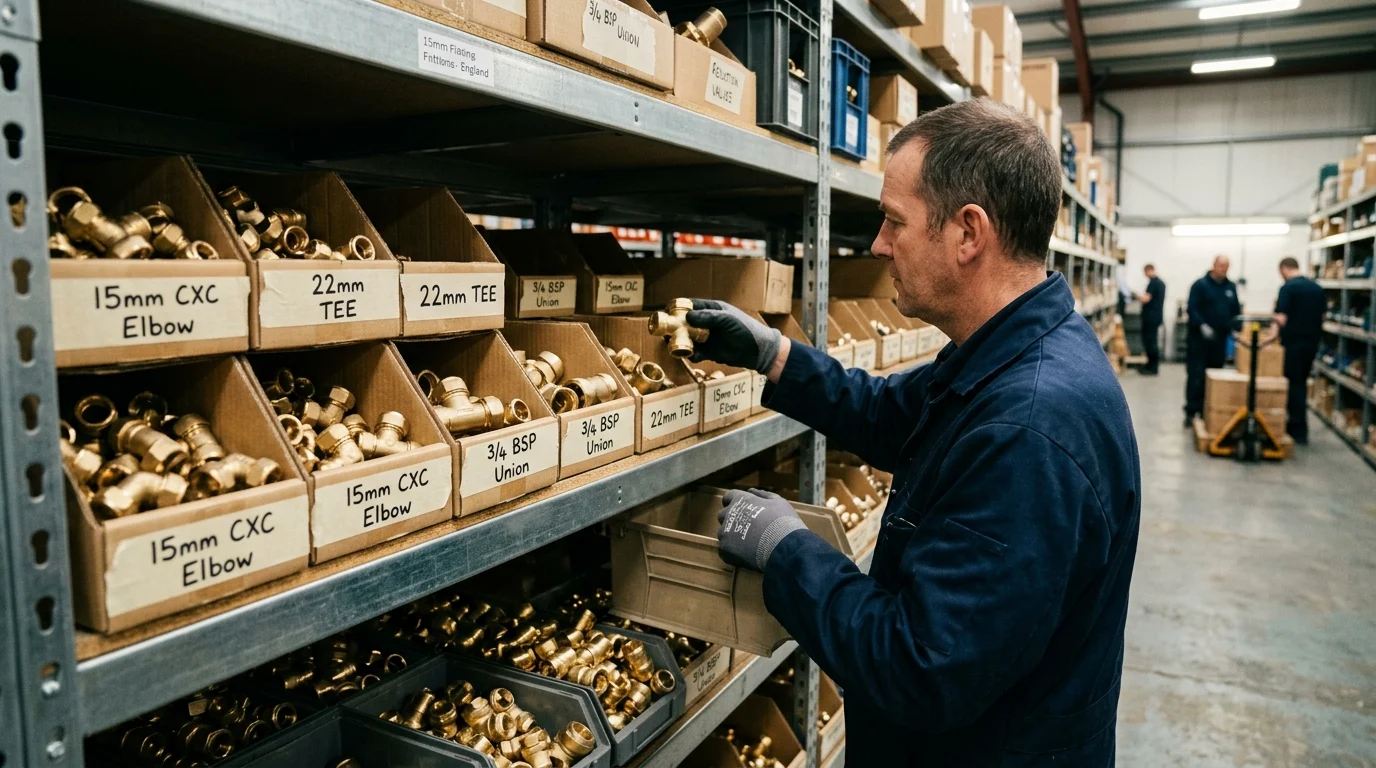
Bridging the gap between engineering requirements and procurement realities requires a structured decision framework. Stakeholders must align on the intended application of the water pipe fittings types, ensuring that the chosen components meet both operational demands and budgetary constraints without compromising regulatory compliance.
Application-Specific Recommendations
Different commercial environments subject fittings to vastly different thermal, chemical, and mechanical stresses. Applying a one-size-fits-all approach inevitably leads to either premature system failure or unnecessary capital expenditure through over-specification.
| Application Domain | Recommended Brass Alloy | Optimal Connection Style | Key Compliance Focus |
|---|---|---|---|
| Commercial Potable Water | Lead-Free (C69300 / ECO BRASS) | Press-Fit or Threaded | NSF/ANSI 61 & 372 |
| Closed-Loop HVAC | Standard DZR Brass (CW602N) | Sweat (Solder) or Press | High-Temperature Tolerance |
| Industrial Pneumatics | Free-Machining (C36000) | Compression or NPT | High Pressure (Up to 600 PSI) |
By matching the metallurgical properties and joining methods strictly to the application, facility managers can optimize both the initial installation speed and the long-term maintenance cycles.
Balancing Price and Compliance
The most significant friction point in fitting selection is the balance between upfront price and long-term compliance. Transitioning from standard industrial brass to certified lead-free alloys introduces a noticeable cost premium, typically increasing unit prices by 15% to 30%. This is driven by the increased difficulty in machining silicon-bismuth brass alloys compared to traditional leaded brass, which increases tool wear and production time.
However, attempting to circumvent these premiums by using non-compliant fittings in potable water systems carries severe financial and legal risks. Regulatory bodies actively inspect commercial installations, and the discovery of non-compliant materials can result in fines exceeding $10,000 per violation, alongside mandates to strip and replace the affected infrastructure. Ultimately, investing in the correct, fully certified water pipe fittings types is a foundational requirement for risk management in modern commercial construction.
Key Takeaways
- The most important conclusions and rationale for water pipe fittings types
- Specs, compliance, and risk checks worth validating before you commit
- Practical next steps and caveats readers can apply immediately
Frequently Asked Questions
Which brass water pipe fittings types are most common in commercial plumbing?
The core types are elbows, tees, couplings, reducers, and unions. Each serves a specific layout need: changing direction, branching flow, joining runs, changing size, or allowing equipment removal.
When should brass fittings be chosen over plastic fittings?
Use brass for high-temperature lines, exposed installations, boiler rooms, and areas with mechanical stress or UV exposure. Brass handles over 200°F better and offers longer service life than standard PVC.
What is the difference between threaded, compression, and press fittings?
Threaded fittings use pipe threads plus sealant, compression fittings seal by tightening a nut and ferrule, and press fittings use a pressing tool for fast installation. Choice depends on labor time, tools, and service conditions.
Why do fitting quality and tolerances matter so much?
Poorly made fittings can have casting flaws or inaccurate threads that cause hidden leaks. Precision-machined brass fittings with verified tolerances help reduce joint failures and costly downtime in commercial systems.
Where can buyers source reliable brass water pipe fittings for commercial projects?
Buyers can review brass fitting options directly from nbfh-metal.com, focusing on material quality, dimensional consistency, and application fit. For large projects, request specifications and product details before procurement.

Daniel Carter
Post time: Apr-23-2026