
Introduction
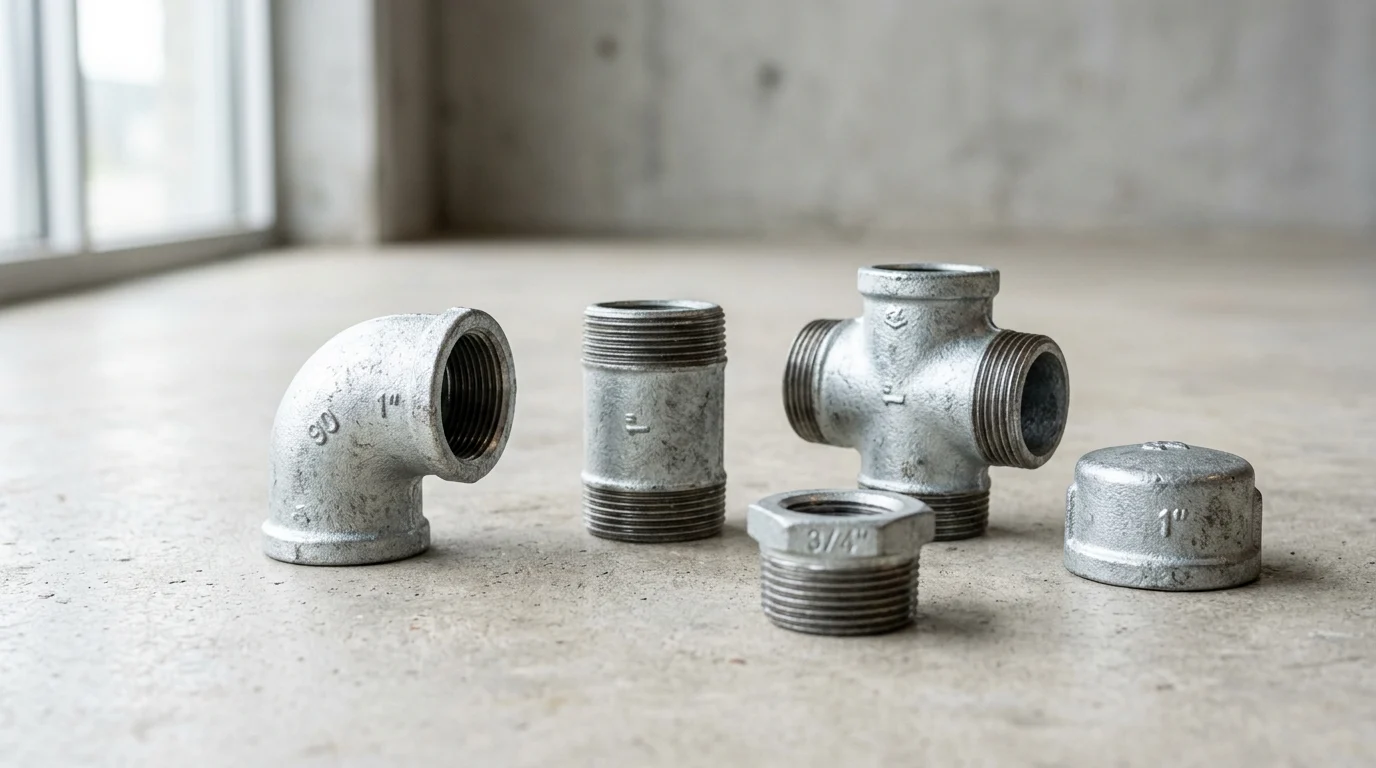
Selecting galvanized steel pipe fittings by standard helps ensure that every elbow, tee, coupling, and union matches the mechanical, dimensional, and corrosion-resistance demands of the piping system. Standards define key factors such as material grade, wall thickness, thread accuracy, pressure rating, and zinc coating quality, all of which affect safety and service life. This guide explains how to compare common specifications, verify compliance, and avoid mismatched or low-quality fittings in industrial, commercial, and utility applications. By understanding what each standard controls, buyers and engineers can make more reliable choices and reduce installation, maintenance, and failure risks.
Why Standards Matter for Galvanized Steel Pipe Fittings
Galvanized steel pipe fittings serve as the critical connective tissue in fluid and gas transport systems, offering robust mechanical strength combined with enhanced corrosion resistance. The application of a zinc coating, typically achieved through hot-dip galvanizing, creates a metallurgical bond that protects the underlying steel from oxidation. However, the performance and longevity of these components rely entirely on strict adherence to established manufacturing and material standards.
Without standardized specifications governing material composition, dimensional tolerances, and galvanizing thickness, system integrity cannot be guaranteed. Industry baselines typically require a minimum zinc coating thickness of 86 micrometers (µm) for hot-dip galvanized components to ensure adequate service life in demanding industrial environments. Selecting fittings by standard is not merely a compliance exercise; it is the primary method for ensuring predictable mechanical behavior across complex piping networks.
Project risk and reliability
Selecting fittings based on rigorous standards directly mitigates project risk by ensuring reliable performance under mechanical and thermal stress. Non-standardized fittings frequently exhibit inconsistent wall thicknesses, internal porosity, or inadequate threading. In high-vibration or variable-pressure systems, these manufacturing defects can increase the probability of catastrophic failure or micro-leaks by over 40%.
For commercial and industrial systems operating at standard pressures, such as 150 psi or 300 psi, utilizing fittings that explicitly meet designated pressure-temperature ratings is non-negotiable. Standardized testing protocols ensure that the fittings yield predictably, maintaining operational safety and preventing costly facility downtime caused by unexpected fluid loss.
When standard-based selection matters most
Strict adherence to standards becomes paramount in life-safety systems, critical infrastructure, and high-liability industrial applications. For instance, commercial fire protection systems governed by NFPA 13 require all galvanized fittings to possess UL listing and FM approval, which necessitates rigorous hydrostatic testing to withstand minimum burst pressures exceeding five times their working rating.
Similarly, in municipal water distribution and aggressive chemical processing, specifying standard-compliant fittings ensures the zinc coating weight meets the minimum thresholds required to prevent premature structural degradation. In these environments, adherence to standards helps the system achieve a targeted 20- to 30-year lifecycle without requiring premature component replacement.
Key Standards for Galvanized Steel Pipe Fittings
The global landscape of piping components is governed by several major standardization bodies, each defining specific criteria for metallurgical properties, dimensions, and thread types. Navigating these standards is essential for engineers and procurement specialists to ensure seamless integration into existing or newly designed systems.
Understanding the distinctions between American, European, and international standards prevents costly incompatibilities during installation and guarantees that the selected galvanized fittings will perform safely under the intended operational loads.
ASTM, ASME, EN, ISO, and BS overview
Different regional bodies dictate the specifications for galvanized steel pipe fittings. ASME and ASTM standards dominate the North American market, while EN, ISO, and BS standards are prevalent in Europe and international markets.
| Standard | Region / Body | Primary Application | Key Specification Focus |
|---|---|---|---|
| ASME B16.3 | North America | Malleable Iron Threaded Fittings | Defines dimensions, threading, and Class 150/300 pressure ratings |
| EN 10242 | Europe | Threaded Pipe Fittings | Specifies malleable cast iron fittings with BSP threads |
| ASTM A153 | Global | Zinc Coating (Hot-Dip) | Mandates minimum zinc coating weight of 610 g/m² |
| ISO 49 | International | Malleable Cast Iron Fittings | General international dimensions and material grades |
Material, dimensions, and thread compatibility
One of the most critical aspects of standard compliance is thread compatibility. North American systems primarily utilize National Pipe Taper (NPT) threads governed by ASME B1.20.1, featuring a 60-degree thread angle. Conversely, European and international systems frequently use British Standard Pipe Taper (BSPT) threads governed by ISO 7-1, which utilize a 55-degree thread angle.
Attempting to mate an NPT fitting with a BSPT pipe—or vice versa—results in improper thread engagement. Even if the components initially appear to thread together, the differing angles and pitch will prevent a proper seal, leading to a near 100% leak probability at operational pressures exceeding 50 psi. Dimensional standards also dictate minimum wall thicknesses to ensure the fitting can handle the torque applied during installation without cracking.
How to match fitting and pipe standards
To achieve a cohesive system, the standard of the galvanized fitting must align with the standard of the steel pipe. For example, when utilizing ASTM A53 standard weight (Schedule 40) galvanized steel pipe, engineers typically specify ASME B16.3 Class 150 malleable iron fittings.
For heavier-duty applications utilizing Schedule 80 pipe, Class 300 fittings are required to maintain the system’s pressure rating integrity. Matching these standards ensures that the weakest point in the piping network is not the threaded joint, thereby maintaining a uniform pressure boundary throughout the entire fluid transport system.
How to Evaluate Quality and Compliance
Evaluating the quality and compliance of galvanized steel pipe fittings requires a systematic approach to verifying both physical characteristics and documented metallurgical properties. Procurement teams must look beyond superficial appearance to confirm that the products meet the rigorous demands of their intended applications.
Effective quality evaluation combines visual inspection, dimensional verification, and documentation review to ensure that the fittings will deliver long-term reliability without succumbing to premature corrosion or mechanical failure.
Quality markers to check
Quality markers begin with the integrity of the galvanization. The zinc coating must be continuous, uniform, and free from black spots, uncoated areas, or excessive zinc pooling (drips) that could interfere with threading. For hot-dip galvanizing, standards typically require a minimum coating weight of 610 g/m² to ensure adequate environmental protection.
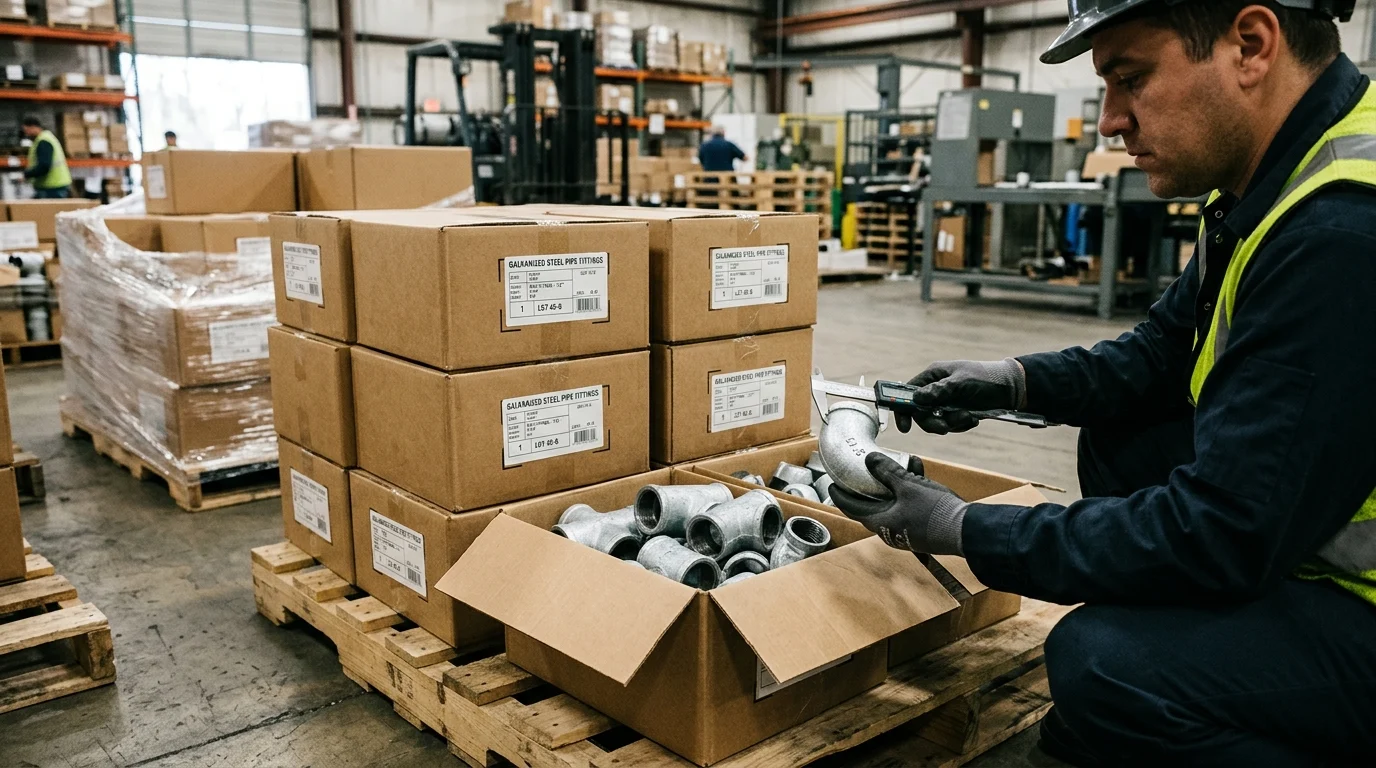
Dimensional accuracy is equally critical. Thread engagement should be verified using standardized plug and ring gauges, ensuring tolerances are maintained within +/- 1.5 turns of the basic gauge notch. Furthermore, high-quality fittings undergo individual hydrostatic testing at the manufacturing facility, typically at 1.5 times their maximum working pressure—such as testing a 150 psi-rated fitting at 225 psi—to guarantee structural soundness.
Application conditions and service requirements
Compliance evaluation must be contextualized by the specific service requirements of the application. Galvanized malleable iron fittings are generally rated for continuous service within a temperature range of -20°C to 200°C. Exceeding these thermal limits can compromise the mechanical integrity of the base metal or accelerate the degradation of the zinc layer.
Additionally, the chemical nature of the transported fluid dictates quality requirements. While galvanized fittings excel in potable water and compressed air systems, their zinc coating is highly reactive to localized pH levels below 6.0 or above 10.5. Evaluating service conditions ensures that the specified standard aligns with the actual chemical and thermal stresses the fitting will encounter.
Required documents and test reports
Physical verification must always be supported by traceable documentation. Reputable manufacturers provide Mill Test Reports (MTRs) or EN 10204 Type 3.1 certificates with every batch of fittings. These documents trace the product back to the original steel heat and verify the chemical composition and mechanical properties.
A compliant test report for standard malleable iron fittings should confirm that carbon content remains below 0.25% and sulfur below 0.05%, ensuring the material retains sufficient ductility to absorb mechanical shocks without brittle fracture. Missing or incomplete test reports are a primary indicator of substandard manufacturing and should disqualify a supplier from the selection process.
Best Practices for Sourcing and Selection
Sourcing galvanized steel pipe fittings requires balancing stringent technical specifications with commercial realities. Establishing a robust procurement strategy involves evaluating supplier capabilities, understanding logistical constraints, and implementing a rigorous approval process.
By systematically comparing sourcing channels and understanding the cost drivers associated with packaging and freight, organizations can secure high-quality standard-compliant fittings while optimizing their overall supply chain expenditures.
Compare domestic and import suppliers
Procurement teams face a fundamental choice between utilizing domestic distributors or sourcing directly from overseas import mills. Domestic suppliers offer the distinct advantage of short lead times—often fulfilling orders within 3 to 7 days—and readily available technical support. However, this convenience typically carries a 20% to 30% price premium.
Conversely, importing directly from overseas manufacturers can significantly reduce unit costs, particularly for high-volume projects. The trade-off involves extended lead times ranging from 45 to 90 days and the necessity for a much stricter internal quality assurance program to verify that the imported batches strictly adhere to the required ASTM or EN standards before shipment.
Cost, packaging, and logistics factors
Logistics and packaging play a substantial role in the final landed cost of galvanized fittings. Direct mill sourcing usually requires a Minimum Order Quantity (MOQ) ranging from 3 to 5 metric tons, making it suitable only for large-scale construction or long-term inventory stocking.
| Sourcing Model | Typical MOQ | Average Lead Time | Estimated Cost Index |
|---|---|---|---|
| Domestic Distributor | 100 to 500 pieces | 3 to 7 Days | 1.3x to 1.5x |
| Regional Wholesaler | 1 Pallet | 2 to 3 Weeks | 1.15x |
| Direct Overseas Mill | 3 to 5 Metric Tons | 45 to 90 Days | 1.0x (Baseline) |
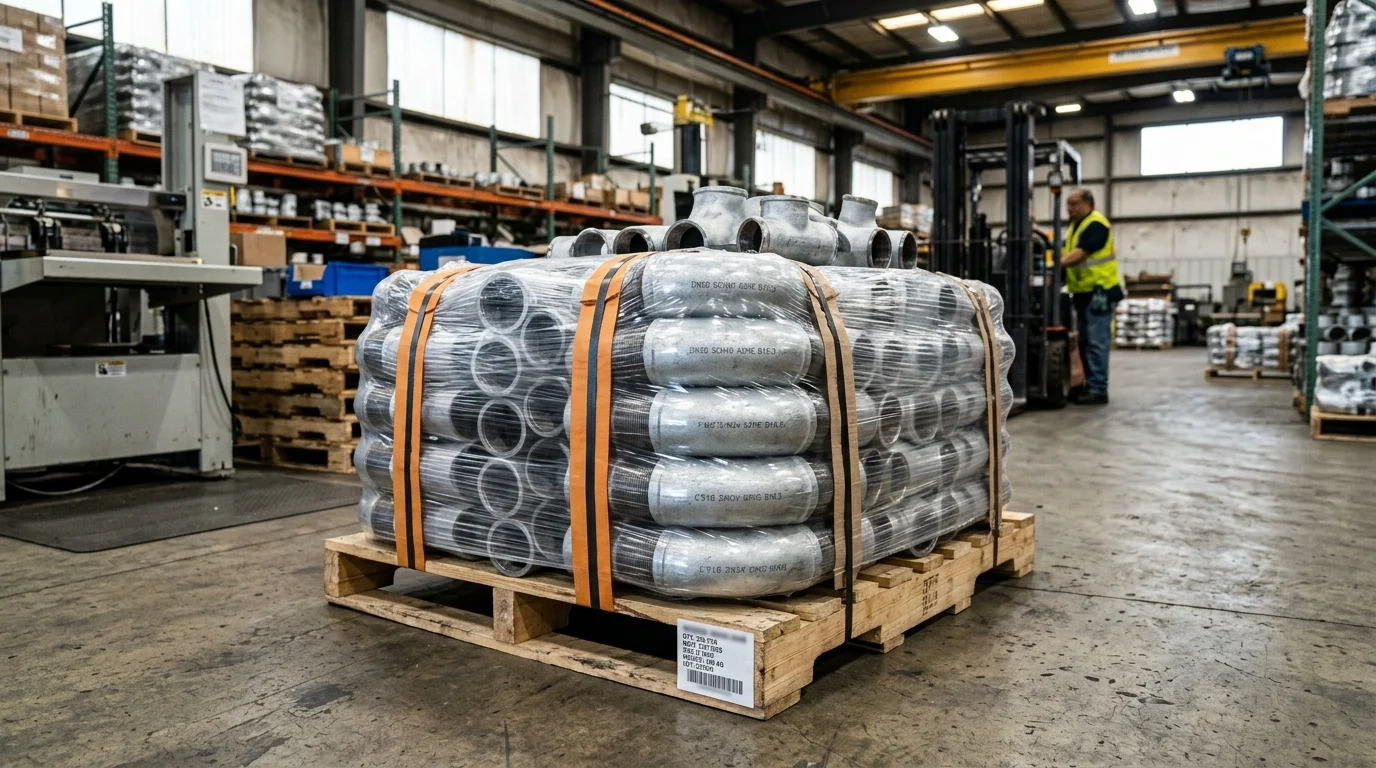
Packaging standards also impact quality upon arrival. Fittings must be shipped in heavy-duty wooden crates or pallets with rust-proof plastic linings and desiccants to prevent white rust formation on the zinc coating during prolonged maritime transit.
Specification and approval process
Implementing a formal specification and approval process protects the buyer from receiving substandard components. For significant procurement contracts, especially those exceeding $50,000 in value, the process should begin with a comprehensive submittal package that includes technical data sheets, MTRs, and independent laboratory testing certifications.
Before committing to bulk production, buyers should require physical samples for evaluation. In some cases, contracting a third-party inspection agency, such as SGS or TUV, to perform pre-shipment inspections at the factory provides an essential layer of risk mitigation, ensuring that the dimensional tolerances and galvanizing thickness precisely match the approved standard.
How to Make the Final Selection
Making the final selection for galvanized steel pipe fittings requires synthesizing the technical standards, quality evaluations, and supply chain constraints into a cohesive procurement decision.
By aligning the fitting specifications precisely with the application’s demands and establishing a structured decision matrix, engineers and buyers can ensure system safety, regulatory compliance, and cost efficiency.
Selection paths by application
The path to final selection diverges based on the criticality of the application. For low-pressure plumbing, irrigation, or basic compressed air systems, standard Class 150 fittings compliant with ASME B16.3 or EN 10242 are generally sufficient. In these scenarios, procurement can optimize for cost and immediate availability, provided baseline zinc coating and dimensional standards are met.
Conversely, heavy industrial applications, high-pressure fluid lines, or systems subject to significant mechanical vibration demand a more rigorous path. These applications dictate the use of Class 300 fittings, prioritizing manufacturers who perform 100% non-destructive testing (NDT) and provide full material traceability, even if it requires longer lead times and higher initial capital expenditure.
Final decision criteria
The ultimate decision should be driven by a weighted criteria matrix to remove subjectivity from the procurement process. A standard best-practice matrix assigns a 40% weight to technical and standard compliance, ensuring safety is never compromised.
The remaining criteria typically allocate 30% to total landed cost, 20% to lead time and logistical reliability, and 10% to the supplier’s historical track record and warranty terms. By applying this structured approach, organizations guarantee that their final selection of galvanized steel pipe fittings delivers optimal performance, regulatory adherence, and long-term value.
Key Takeaways
- The most important conclusions and rationale for galvanized steel pipe fittings
- Specs, compliance, and risk checks worth validating before you commit
- Practical next steps and caveats readers can apply immediately
Frequently Asked Questions
Which standard should I choose for galvanized steel pipe fittings?
Match the system and market: ASME/ASTM for North America, EN or BS for Europe, and ISO for international projects. Confirm the project spec before ordering.
How can I tell if a fitting will match my pipe threads?
Check thread standard first: NPT follows ASME B1.20.1, while BSPT follows ISO 7-1. Do not mix them, or leakage is very likely under pressure.
What galvanizing requirement is important when comparing fittings?
Verify the hot-dip zinc coating meets ASTM A153 or equivalent. A practical benchmark is about 86 µm or 610 g/m² minimum for solid corrosion protection.
What pressure rating should I look for on galvanized fittings?
Use fittings with clearly stated Class 150 or Class 300 ratings, depending on your system design. The rating must align with your operating pressure and temperature.
Where can I verify compliance details before buying from nbfh-metal.com?
Review the product specifications and certificate pages on nbfh-metal.com. Confirm the listed standard, thread type, pressure class, and coating requirement before placing an order.

Daniel Carter
Post time: Apr-23-2026