
Introduction
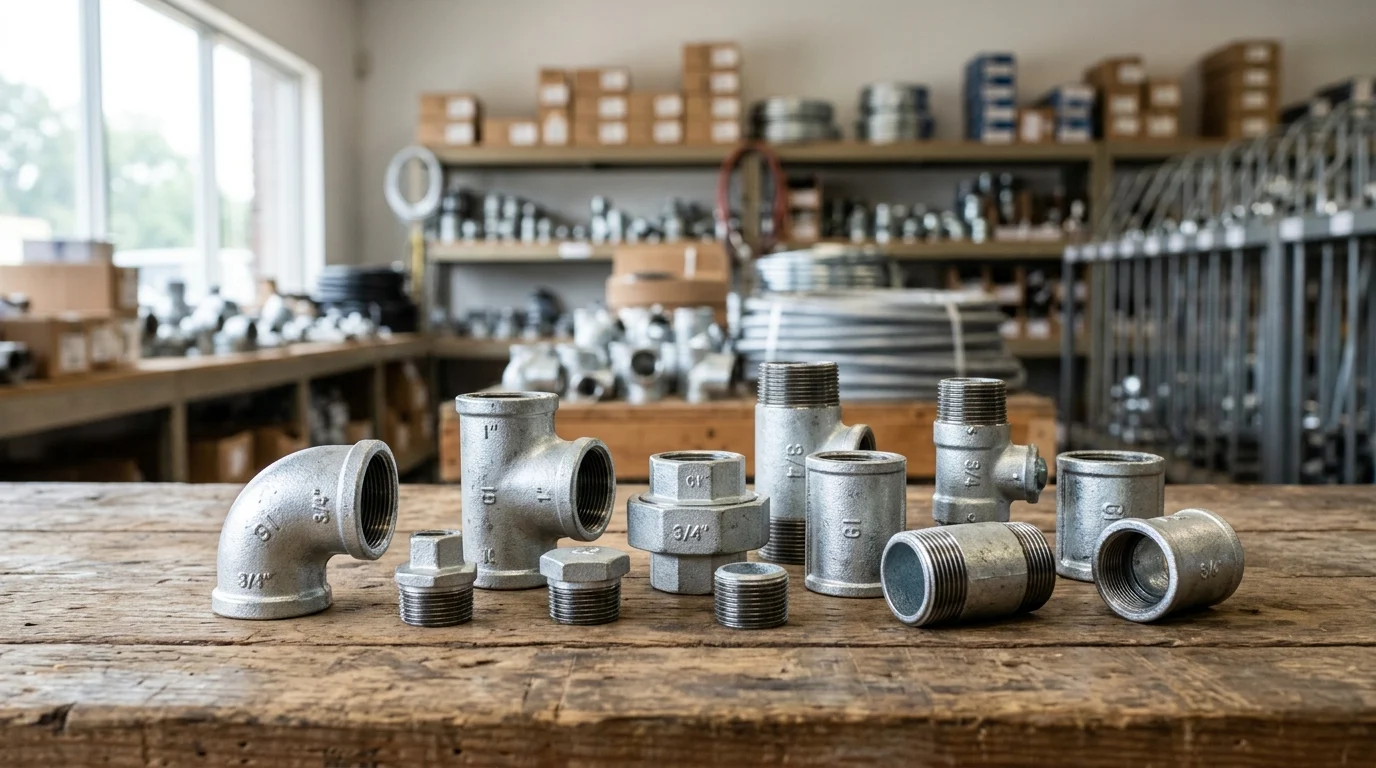
Choosing a reliable GI pipe fittings supplier affects far more than unit price: it shapes system durability, installation efficiency, safety, and long-term maintenance costs. For industrial lines and plumbing networks alike, supplier quality influences thread accuracy, galvanization consistency, standards compliance, and the ability to deliver the right fittings on schedule. This article explains the practical criteria to compare suppliers, from material quality and certifications to production capacity, lead times, and technical support. By the end, you will be better prepared to identify a supplier that matches your project’s pressure, environment, budget, and performance requirements before you move into detailed evaluation.
Why the right GI pipe fittings supplier matters
Galvanized iron (GI) pipe fittings serve as the critical connective tissue in countless industrial, commercial, and residential piping networks. Because these components govern the directional flow, pressure regulation, and structural integrity of fluid and gas transport systems, selecting a highly capable supplier is far more than a routine procurement task.
The quality of the fittings directly dictates the resilience of the entire pipeline. When sourcing these components, procurement professionals must recognize that a supplier’s manufacturing capabilities, quality control rigor, and material integrity ultimately define the operational success and safety of the installation.
How supplier choice affects project outcomes
The correlation between supplier capability and project success is direct and measurable. When a supplier adheres to strict metallurgical standards, the resulting fittings ensure a leak-free network capable of achieving an operational lifespan of 25 to 50 years, depending on the environment. Conversely, procuring from a manufacturer with inconsistent casting processes or inadequate zinc application introduces severe vulnerabilities.
Poor threading precision can lead to immediate pressure drops and micro-leaks during commissioning, while substandard galvanization may result in localized corrosion within just three to five years. These premature failures escalate labor costs, force unplanned system downtimes, and inflate the total cost of ownership far beyond any initial procurement savings.
Which project types demand higher supplier performance
While all installations require baseline reliability, specific project categories impose rigorous demands that only top-tier suppliers can meet. Heavy industrial applications, such as chemical processing plants or high-pressure steam lines, strictly require fittings rated for Class 300 (300 lbs) rather than the standard Class 150. These environments subject the fittings to extreme thermal cycling and mechanical stress.
Similarly, municipal water distribution networks and large-scale commercial HVAC systems demand exceptionally tight tolerances to prevent massive fluid loss over miles of piping. In these high-stakes scenarios, buyers must partner with suppliers capable of providing comprehensive traceability, consistent dimensional accuracy, and verifiable burst-pressure resilience.
Key technical and commercial evaluation criteria
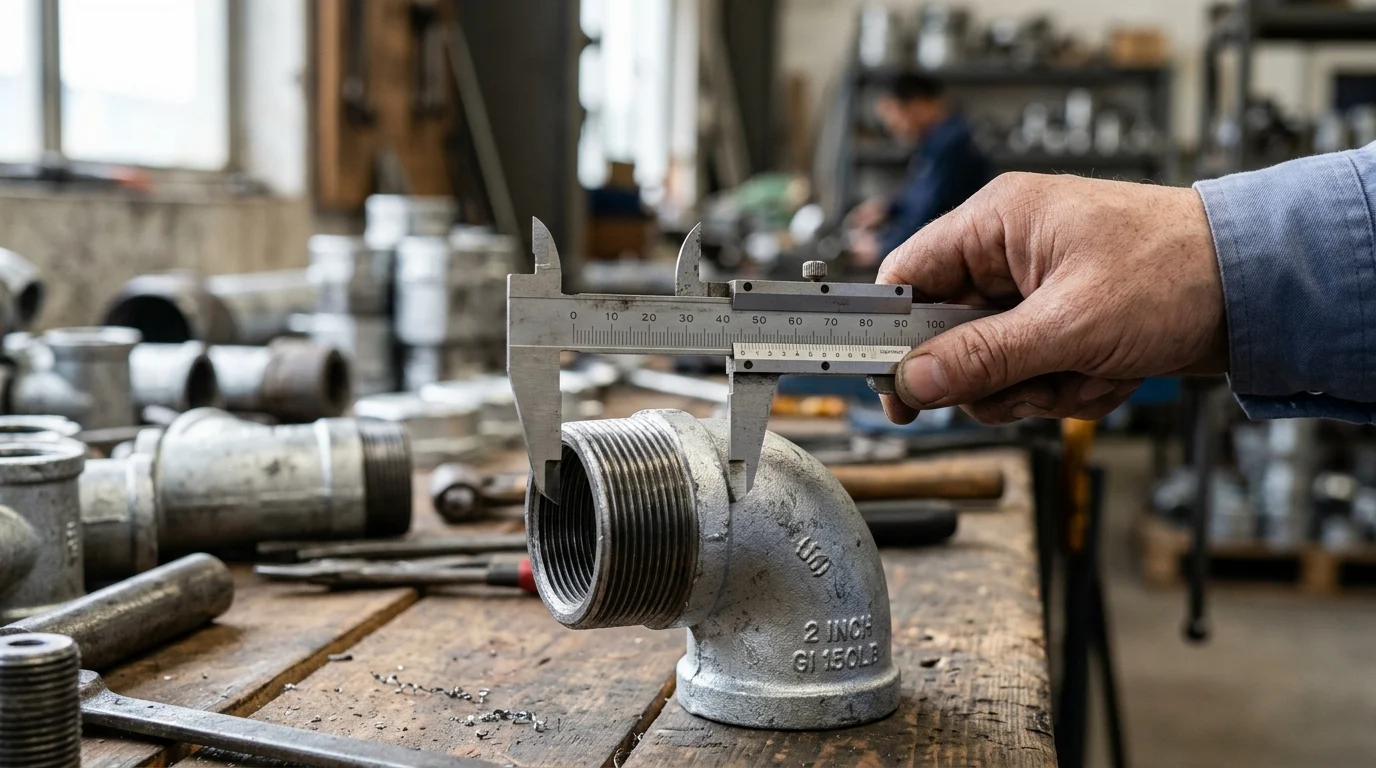
Evaluating a GI pipe fittings supplier requires a dual approach, balancing stringent technical specifications with pragmatic commercial realities. Procurement teams must look beyond surface-level marketing to scrutinize the foundational materials and the financial frameworks governing the transaction.
A holistic evaluation guarantees that the chosen supplier can deliver not only the required physical product but also the necessary economic stability to support long-term project demands.
Which specifications, materials, and coatings to compare
The technical evaluation must begin with the core metallurgy and the protective coating. High-quality GI fittings are typically manufactured from malleable iron conforming to ASTM A197 or equivalent international standards, ensuring the necessary tensile strength and ductility. The galvanization process itself is a critical differentiator.
Hot-dip galvanizing is the industry standard for durability, requiring a minimum zinc coating thickness of 70 to 85 micrometers (µm) to provide adequate cathodic protection against rust. Buyers must also verify thread standards—such as NPT (National Pipe Thread) for North American markets or BSPT (British Standard Pipe Taper) for European and Asian markets—to ensure seamless integration with existing piping inventories.
| Galvanization Method | Minimum Coating Thickness (µm) | Expected Lifespan (Normal Conditions) | Cost Relative to Baseline |
|---|---|---|---|
| Electro-Galvanized (Cold) | 10 – 15 µm | 5 – 10 Years | Baseline (Lowest Cost) |
| Hot-Dip Galvanized | 70 – 85 µm | 25 – 50+ Years | +15% to +25% |
| Epoxy-Coated Hot-Dip | > 100 µm | 50+ Years (Harsh Environments) | +40% to +60% |
How to evaluate pricing, MOQ, and payment terms
On the commercial front, buyers must assess Minimum Order Quantities (MOQs), pricing structures, and payment terms to ensure alignment with project cash flows and inventory capacity. Factory-direct suppliers typically enforce MOQs ranging from one to five metric tons per order, or often mandate a 20-foot shipping container as the minimum viable volume for export pricing.
While lower unit prices are attractive, they must be weighed against the cost of capital tied up in inventory. Standard international payment terms usually involve a 30% T/T (Telegraphic Transfer) advance deposit, with the remaining 70% payable against the copy of the Bill of Lading (B/L). However, for exceptionally large or recurring contracts, buyers should negotiate Letters of Credit (L/C) at sight to mitigate financial risk.
How to compare suppliers consistently
To navigate these variables objectively, procurement professionals should utilize a weighted supplier evaluation matrix. This matrix assigns specific percentage values to technical compliance, price competitiveness, financial stability, and lead times.
By scoring each potential vendor against a standardized rubric, buyers can neutralize inherent biases. This ensures that a supplier offering a slightly higher price but vastly superior coating thickness and favorable payment terms rightfully outscores a vendor competing solely on aggressive, bottom-tier pricing.
How to assess quality, compliance, and manufacturing
A supplier’s ability to consistently deliver high-grade GI pipe fittings is inextricably linked to their quality assurance protocols and manufacturing discipline. Evaluating these operational elements is essential to mitigating the risk of receiving a shipment riddled with casting defects or non-compliant dimensions.
Without rigorous oversight at the factory level, buyers expose their projects to unacceptable levels of material variance and structural liability.
Which standards, certifications, and test reports matter
The presence of recognized international certifications is the first filter in quality assessment. Reliable suppliers operate under ISO 9001-certified quality management systems and manufacture fittings that comply with rigorous product standards such as EN 10242 or ASME B16.3. Compliance with these standards guarantees that the fittings possess the correct metallurgical composition and dimensional proportions.
Furthermore, test reports are non-negotiable. Buyers must request documentation of hydrostatic testing, verifying that the fittings have been individually tested at pressures up to 300 psi (approximately 2.0 MPa) without exhibiting porosity or leakage. Certifications for the zinc coating, such as RoHS compliance for restricted substances or specific regional drinking water approvals (like WRAS or NSF/ANSI 61), are also mandatory for plumbing applications.
How to review factory audits, samples, and traceability
Beyond paper certificates, buyers must scrutinize the actual manufacturing environment through factory audits, whether conducted in-person or via reputable third-party agencies like SGS or TÜV. An audit should evaluate the condition of the casting furnaces, the automation of the threading machinery, and the calibration of inspection tools.
Sampling is another critical step; buyers should request random production samples rather than pre-selected golden samples to verify thread engagement, weight consistency, and coating uniformity. Additionally, traceability is a hallmark of top-tier manufacturing. The supplier should be able to track every batch of fittings back to its original heat number and Material Test Report (MTR), ensuring that if the defect rate ever exceeds the industry benchmark of 0.5%, the root cause can be isolated and rectified immediately.
Sourcing, logistics, and service factors
Even the highest-quality GI pipe fittings are of little use if they arrive damaged, late, or entangled in export compliance issues. A supplier’s logistical infrastructure and commitment to customer service are pivotal components of their overall reliability.
A streamlined supply chain ensures that construction schedules are maintained and that indirect costs associated with transit damage or customs delays are minimized.
How delivery, packaging, and export capability affect reliability
The journey from the foundry to the project site is fraught with potential hazards, making robust packaging and expert export handling critical. Standard export packaging for GI fittings typically involves inner plastic liners or double-woven bags packed into heavy-duty, fumigated wooden pallet boxes. This multi-layered approach prevents moisture ingress and physical impact damage during oceanic transit.
Furthermore, buyers must evaluate the supplier’s lead times and export capacity. A capable manufacturer should consistently fulfill orders for a 40-foot High Cube (40HQ) container within a 30- to 45-day production window. Suppliers with established relationships with global freight forwarders and a deep understanding of customs documentation significantly reduce the risk of costly demurrage charges at the destination port.
| Packaging Tier | Configuration | Moisture Protection | Best Suited For |
|---|---|---|---|
| Standard Cartons | Corrugated boxes on standard pallets | Low | Domestic transit, short-term storage |
| Woven Bags in Crates | Poly-woven bags inside wooden crates | Medium | Standard LCL/FCL ocean freight |
| Premium Export | Vacuum-sealed bags, fumigated heavy-duty crates | High | Long-duration transit, humid environments |
Which communication and after-sales practices to expect
Responsive communication and structured after-sales support distinguish transactional vendors from strategic partners. Given the complexities of international trade and time zone differences, buyers should expect a communication protocol that guarantees responses to technical inquiries or order updates within 24 hours.
After-sales practices are equally telling; a reliable supplier will clearly define their warranty terms, typically offering a 12- to 24-month guarantee against manufacturing defects. Moreover, they will have a documented corrective action process to handle claims, offering swift replacements or credit notes without forcing the buyer into prolonged, adversarial negotiations.
What supplier selection process buyers should follow
To secure these logistical and service advantages, buyers should execute a phased selection process. This begins with a Request for Information (RFI) to filter suppliers based on capacity and certifications, followed by a detailed Request for Quotation (RFQ) that clearly stipulates packaging requirements, Incoterms (e.g., FOB, CIF, or DDP), and delivery schedules.
The final phase should involve a trial order—typically a mixed pallet or a Less than Container Load (LCL) shipment—allowing the buyer to evaluate the supplier’s logistical execution, communication transparency, and product quality under real-world conditions before committing to high-volume contracts.
How to make the final supplier decision
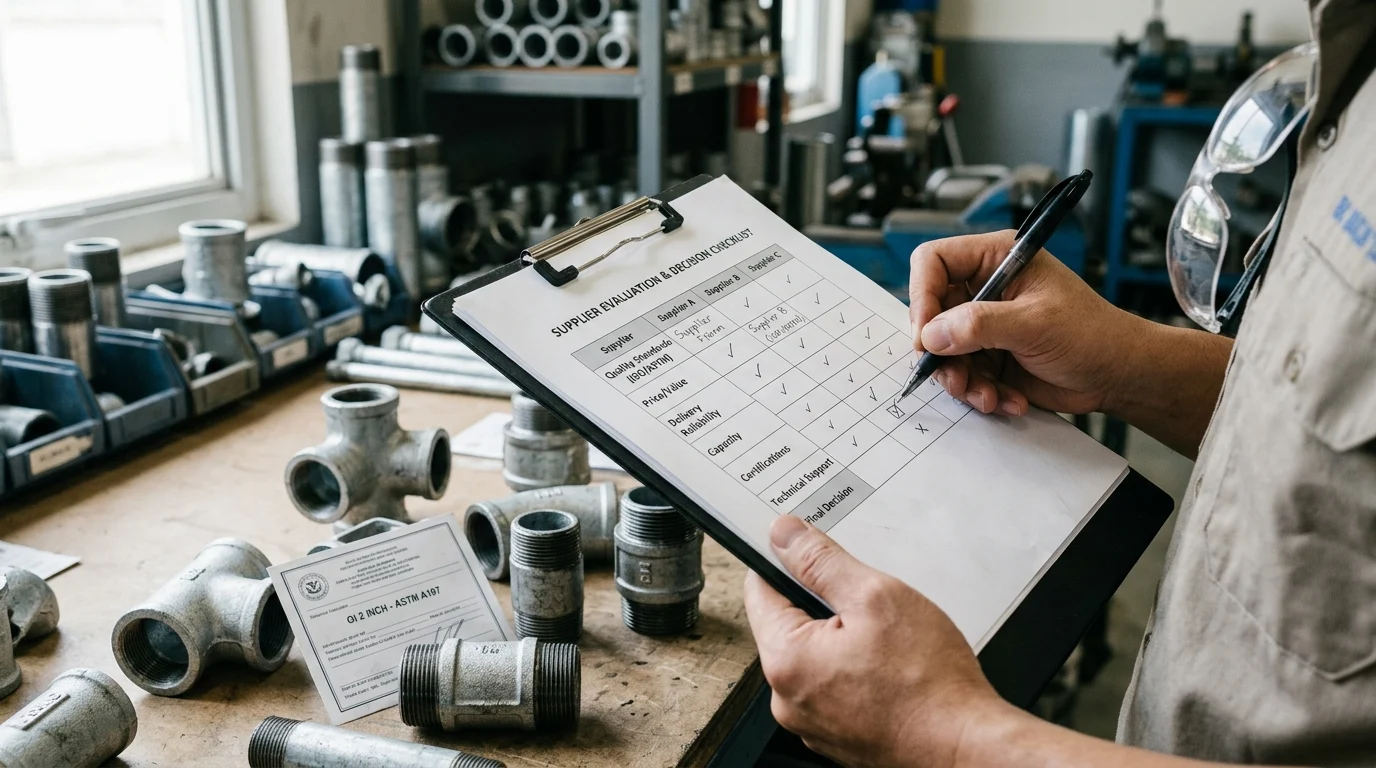
The culmination of the procurement process is the final supplier selection, a decision that will impact project timelines, budgets, and long-term infrastructure integrity. Making this choice requires synthesizing all technical, commercial, and operational data into a cohesive strategy.
A successful procurement outcome does not merely secure components; it establishes a resilient supply channel that actively supports the operational goals of the broader enterprise.
When the lowest-price supplier is the wrong choice
One of the most common and damaging pitfalls in industrial procurement is defaulting to the lowest bidder. While a 10% to 15% reduction in upfront unit costs may appear advantageous on a spreadsheet, it frequently masks severe deficiencies in material quality, zinc coating thickness, or quality control.
Opting for a lowest-price supplier often results in a false economy; the initial savings are quickly obliterated by the costs associated with delayed shipments, high on-site rejection rates, and premature system failures. In extreme cases, a slightly cheaper but substandard fitting can lead to catastrophic leaks, resulting in a 300% or greater increase in lifecycle maintenance costs over a five-year period, alongside potential liability for water or chemical damage.
How to balance technical fit, compliance, and total value
The optimal decision hinges on calculating the Total Cost of Ownership (TCO) and balancing technical fit with comprehensive value. Buyers must weigh the supplier’s adherence to stringent metallurgical standards and compliance certifications against their pricing and logistical reliability.
A supplier offering consistent dimensional accuracy, verifiable 85 µm hot-dip galvanization, and a proven track record of on-time delivery provides immense strategic value, even if they command a slight price premium. Ultimately, the goal is to forge a partnership with a manufacturer whose operational capabilities align seamlessly with the specific risk profile and lifespan requirements of the project, ensuring a resilient, leak-free infrastructure for decades to come.
Key Takeaways
- The most important conclusions and rationale for gi pipe fittings supplier
- Specs, compliance, and risk checks worth validating before you commit
- Practical next steps and caveats readers can apply immediately
Frequently Asked Questions
What should I check first in a GI pipe fittings supplier?
Start with material and quality proof: ASTM A197 or equivalent, hot-dip galvanizing, and valid certificates. Also confirm the supplier can meet your pressure class and thread standard.
How can I verify a supplier’s product quality before ordering?
Ask for test reports, zinc coating data, thread inspection records, and factory certifications. On nbfh-metal.com, review the factory tour and certificate pages for manufacturing and quality control details.
Which GI fitting specifications matter most for project compatibility?
Check pressure rating, thread type, fitting size, base material, and coating thickness. Match NPT or BSPT threads to your existing system to avoid leaks and rework.
Is hot-dip galvanized better than electro-galvanized fittings?
Yes for most industrial and long-life plumbing uses. Hot-dip coatings are much thicker and usually last far longer, making them a better choice for corrosion resistance and lower lifetime cost.
What commercial terms should I confirm with a GI pipe fittings supplier?
Confirm MOQ, lead time, export packing, payment terms, and total landed cost. For factory-direct orders, also ask whether pricing requires a minimum tonnage or a full 20-foot container.
Post time: May-07-2026