
Introduction
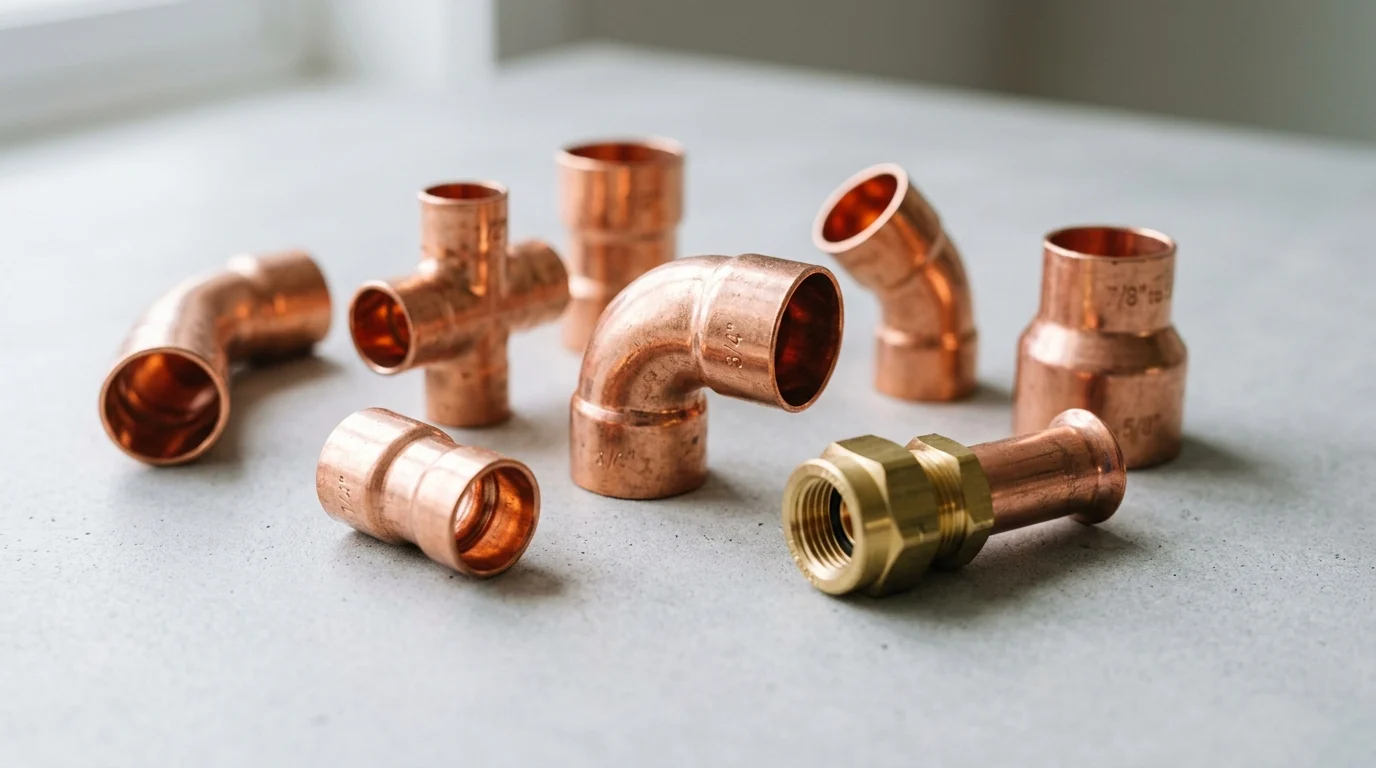
Choosing copper pipe fittings for an air conditioner is not just a matter of matching sizes. The fitting type, wall thickness, pressure rating, and connection method all affect refrigerant flow, leak resistance, installation quality, and long-term system reliability. A poor choice can reduce efficiency, shorten equipment life, and increase maintenance costs, especially in high-pressure systems using modern refrigerants. This article explains the main types of air conditioner copper pipe fittings, the key specifications to check, and the practical factors that help you select the right option for residential or commercial HVAC work.
Why air conditioner copper pipe fittings matter
Air conditioner copper pipe fittings serve as the critical circulatory infrastructure for modern heating, ventilation, and air conditioning (HVAC) systems. Their primary function is to route refrigerant between the compressor, condenser, and evaporator without compromising system integrity under extreme thermal and mechanical stress.
How fittings affect refrigerant flow and sealing
The geometry and internal surface finish of copper fittings directly influence refrigerant flow dynamics. Improperly manufactured fittings can introduce turbulence and pressure drops, forcing the compressor to consume more energy to maintain the required flow rate. Furthermore, sealing is paramount; modern systems utilizing refrigerants like R410A or R32 operate at high discharge pressures frequently exceeding 400 psi. To ensure a safe operational margin, high-quality fittings are engineered to withstand burst pressures upwards of 2,000 psi, preventing catastrophic ruptures during pressure spikes.
Key commercial and operational reasons to choose carefully
From a commercial standpoint, the failure of a single inexpensive fitting can lead to extensive system downtime and severe repair costs. Refrigerant leaks not only degrade cooling performance but also expose operators to environmental fines and high replacement costs, with modern synthetic refrigerants often costing between $10 and $20 per pound. Selecting precision-engineered fittings minimizes the risk of micro-leaks at brazed joints, thereby preserving system efficiency, reducing maintenance overhead, and protecting the facility’s bottom line over the equipment’s 15-to-20-year lifecycle.
Common types of air conditioner copper pipe fittings
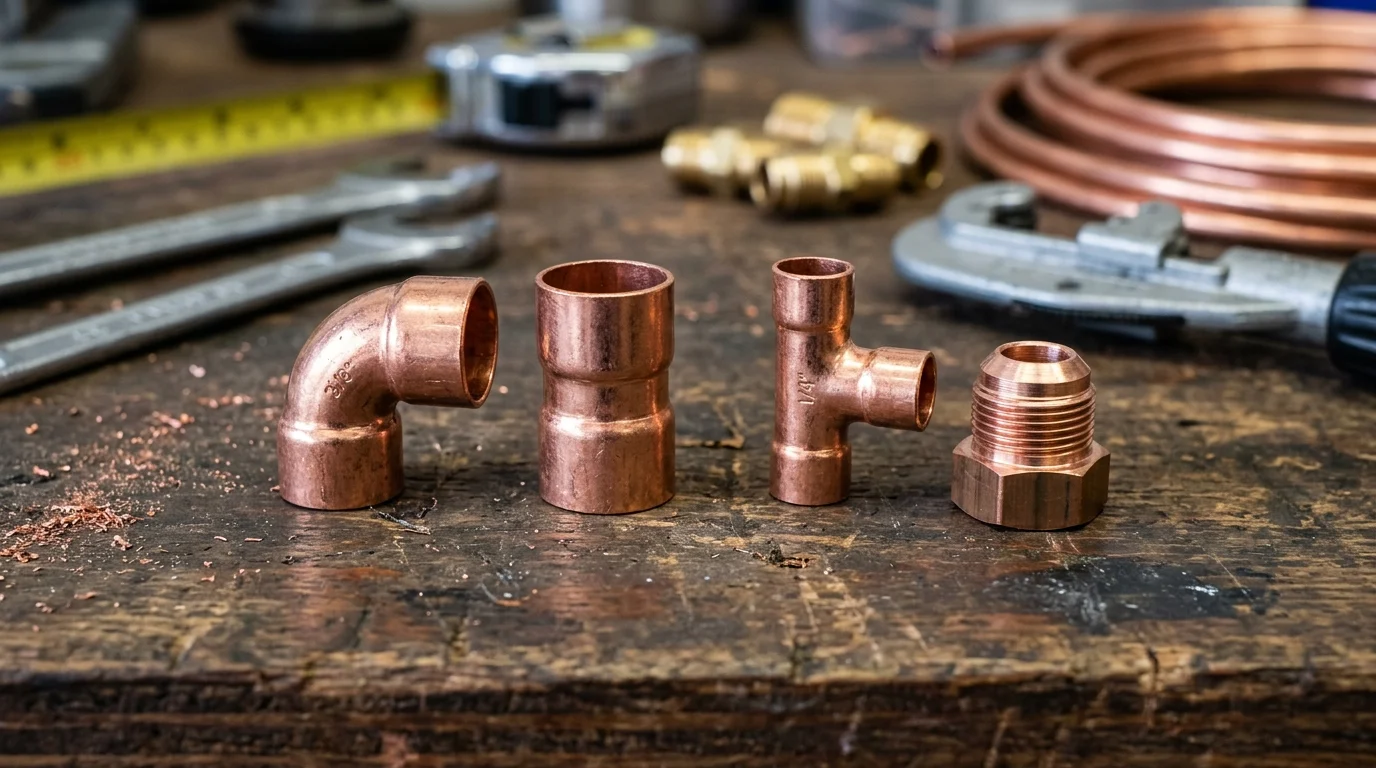
The diversity of HVAC architectures necessitates a wide array of fitting configurations. Each type is designed to execute specific directional changes, diameter transitions, or flow divisions within the tightly constrained spaces of a refrigerant circuit.
Most widely used fitting types
The most ubiquitous fitting types include elbows, available primarily in 90-degree and 45-degree angles, which are essential for navigating structural obstacles. Tees are utilized for branching refrigerant lines to multiple indoor units. Couplings are employed to securely join two straight lengths of copper tubing, while U-bends are heavily integrated within the heat exchanger coils themselves. Reducers play a crucial role when transitioning between different pipe diameters to maintain optimal refrigerant velocity.
Specifications buyers should compare
When evaluating these components, buyers must scrutinize several critical specifications. Outer diameter (OD) is the primary metric, with standard fractional sizes ranging from 1/4-inch for residential liquid lines up to 1-5/8-inch or larger for commercial suction lines. Wall thickness is equally vital for pressure retention, typically spanning from 0.8mm for standard low-pressure residential applications to 1.5mm or more for high-capacity commercial systems.
A simple comparison table for fitting options
To streamline the evaluation process, the following table outlines the most common fitting types alongside their typical size ranges and primary operational applications.
| Fitting Type | Typical OD Range | Primary Application |
|---|---|---|
| 90° / 45° Elbows | 1/4″ – 2-1/8″ | Navigating corners and tight structural routing |
| Tees | 3/8″ – 2-1/8″ | Branching refrigerant flow to multiple zones |
| Reducers | 3/8″ – 1-5/8″ | Stepping down pipe diameters to maintain velocity |
| U-Bends | 1/4″ – 3/4″ | Heat exchanger coil construction and return lines |
| Couplings | 1/4″ – 2-1/8″ | Joining straight lengths of copper tubing safely |
How to evaluate quality and standards
Ensuring the long-term reliability of an HVAC installation requires rigorous validation of the fittings’ manufacturing quality and adherence to global metallurgical standards. Substandard materials can lead to rapid degradation, particularly under the constant thermal cycling of a refrigeration system.
Material, cleanliness, and dimensional checks
Premium air conditioner copper pipe fittings are typically manufactured from phosphorus-deoxidized copper, widely designated as C12200. This grade ensures a minimum copper purity of 99.9%, providing optimal thermal conductivity and excellent capillary action during brazing. Internal cleanliness is another critical quality metric; residual manufacturing oils and oxidation must be strictly controlled to prevent compressor valve contamination. Industry best practices dictate that internal residues should not exceed 0.3 milligrams per square decimeter. Additionally, dimensional tolerances must be held tight—often within ±0.05mm—to guarantee a perfect fit and prevent weak joints.
Standards, certifications, and refrigerant compatibility
Compliance with recognized industry standards is non-negotiable for commercial procurement. Fittings should adhere to specifications such as ASME B16.22 for wrought copper and copper alloy solder-joint pressure fittings, or the European equivalent EN 1254-1. Furthermore, manufacturers should operate under ISO 9001 certified quality management systems to ensure batch-to-batch consistency. Buyers must also verify refrigerant compatibility, ensuring the fittings are certified for the specific pressures and chemical properties of modern high-pressure refrigerants and emerging mildly flammable (A2L) blends.
How to select the right fittings for each application
Specifying the correct fitting extends beyond basic quality checks; it requires aligning the component’s physical properties with the specific volumetric and pressure demands of the HVAC architecture.
A step-by-step selection process
The selection process should follow a systematic, engineering-led approach. First, system designers must calculate the maximum operating pressure and peak temperature of the specific line, whether it is a liquid, suction, or discharge line. Next, they select the appropriate outer diameter and wall thickness required to handle that pressure with an adequate safety factor. Finally, the specific fitting geometry is chosen to optimize the piping route while minimizing the total number of brazed joints, as every joint represents a potential point of failure.
Application factors for split systems, VRF, and commercial HVAC
Application requirements vary significantly across system types. Standard residential split systems generally utilize smaller diameters ranging from 1/4-inch to 5/8-inch with standard wall thicknesses. In contrast, Variable Refrigerant Flow (VRF) or Variable Refrigerant Volume (VRV) systems operate at significantly higher pressures—often approaching 600 psi—and require specialized Y-branches and headers to distribute refrigerant proportionally without creating noise or turbulence. Large-scale commercial chillers demand heavy-wall fittings with outer diameters frequently exceeding 2-1/8 inches to accommodate massive volumetric flow rates.
Cost and performance trade-offs
Balancing cost and performance is a constant challenge in HVAC procurement. While standard fittings may offer lower upfront costs, opting for heavy-wall fittings in high-stress applications typically incurs a 15% to 20% cost premium. However, this premium is easily justified by the reduction in lifecycle costs associated with leak repairs, refrigerant top-offs, and system downtime. For commercial projects with long warranty periods, over-specifying wall thickness marginally is a widely accepted risk mitigation strategy that protects the broader investment.
Procurement and specification best practices

Effective procurement of copper fittings relies on establishing robust supply chain protocols and clearly communicating technical requirements to manufacturing partners to avoid costly delays or failures.
How to assess supplier capability and batch consistency
Assessing a supplier’s capability involves analyzing their production capacity, quality control infrastructure, and historical batch consistency. Commercial buyers should target suppliers capable of maintaining a defect rate below 0.1% (1,000 Parts Per Million). Procurement teams must also navigate Minimum Order Quantities (MOQs), which typically range from 5,000 to 10,000 pieces for custom-tooled fittings, whereas standard sizes may be available in smaller, off-the-shelf batches. Standard production lead times usually span 3 to 6 weeks, necessitating accurate demand forecasting and buffer stock management to prevent site delays.
A final specification checklist for buyers
To ensure all technical and commercial requirements are met, procurement teams should utilize a standardized checklist before finalizing purchase orders and contracts.
| Specification Category | Key Verification Points | Target Metric / Standard |
|---|---|---|
| Material & Purity | Alloy grade and copper content | C12200, ≥ 99.9% Cu |
| Dimensions | OD, wall thickness, and tolerances | Application specific, ±0.05mm tolerance |
| Cleanliness | Internal residue limits | < 0.3 mg/dm² |
| Compliance | Manufacturing and testing standards | ASME B16.22, EN 1254-1, ISO 9001 |
| Commercial Terms | Lead time, MOQ, and defect rate | 3-6 weeks, < 0.1% defect rate |
Key Takeaways
- The most important conclusions and rationale for air conditioner copper pipe fittings
- Specs, compliance, and risk checks worth validating before you commit
- Practical next steps and caveats readers can apply immediately
Frequently Asked Questions
Which copper fitting types are most common in air conditioners?
Elbows handle direction changes, tees split flow, couplings join straight tubes, reducers change diameter, and U-bends are used in coils and return sections.
How do I choose the right fitting size for an AC system?
Match the tube outer diameter exactly, then confirm wall thickness fits the system pressure. Typical HVAC sizes run from 1/4 inch to 2-1/8 inch.
What material is best for air conditioner copper pipe fittings?
Choose phosphorus-deoxidized copper C12200. It offers high purity, reliable brazing, and good pressure performance for common refrigerants such as R410A and R32.
What quality checks should buyers request from a supplier?
Ask for OD tolerance, wall thickness, burst-pressure data, cleanliness level, and material certification. For tight HVAC assembly, tolerances around ±0.05 mm are a useful benchmark.
Can NBFH Metal support custom HVAC copper fittings?
Yes, buyers can contact NBFH Metal for fitting details, size requirements, and production capabilities to confirm suitable copper fittings for specific air conditioning applications.
Post time: May-01-2026