
Introduction
Across industrial systems, brass hose connectors are valued for one simple reason: they offer a practical balance of durability, corrosion resistance, machinability, and cost. Whether used in water lines, air systems, fuel transfer, or general fluid handling, these fittings help create secure connections between hoses and equipment under demanding conditions. This article explains the main benefits of brass hose connectors, outlines the most common size standards buyers and engineers encounter, and shows where they fit best across industrial applications. With that context, it becomes easier to compare brass with alternatives and choose the right connector for performance, compatibility, and service life.
Why choose brass hose connectors for industrial use
Brass hose connectors remain a foundational component in industrial fluid and pneumatic routing, bridging the gap between rigid piping infrastructure and flexible hose lines. Their enduring prevalence across manufacturing, chemical processing, and commercial plumbing is rooted in the material’s unique metallurgical profile. For industrial engineers and procurement specialists, understanding the operational advantages of brass is the first step in designing resilient, cost-effective fluid transfer systems.
Corrosion resistance, machinability, and cost balance
The metallurgical properties of brass, an alloy primarily composed of copper and zinc, provide a highly favorable combination of corrosion resistance, structural integrity, and manufacturability. Standard free-machining brass (such as alloy C36000) sets the industry benchmark with a machinability index of 100%, allowing for rapid, high-precision CNC manufacturing. This ease of machining translates directly to lower production costs and tighter tolerances compared to harder metals.
Furthermore, brass exhibits excellent resistance to atmospheric corrosion and water, though specialized alloys like dezincification-resistant (DZR) brass are required for highly aggressive water conditions. By balancing raw material costs with manufacturing efficiency, brass connectors typically enter the market at a price point 30% to 50% lower than comparable stainless steel fittings, offering an optimized cost-to-performance ratio for mid-range industrial applications.
When brass is preferred over plastic or stainless steel
Selecting brass over alternative materials like plastics or stainless steel depends heavily on the operating environment’s physical demands. Compared to standard industrial plastics (such as PVC or nylon), brass offers vastly superior tensile strength, generally ranging from 300 to 400 MPa. This structural rigidity allows brass connectors to withstand significant mechanical shock, vibration, and thermal expansion without cracking or deforming—failures commonly associated with polymer fittings under stress.
While 316 stainless steel outperforms brass in highly acidic or saline environments, brass is predominantly favored in non-corrosive, neutral pH applications (such as compressed air, potable water, and hydraulic oils). The lower material hardness of brass also allows it to create a tighter, more forgiving metal-to-metal seal on threaded connections without the severe risk of thread galling that plagues stainless steel assemblies.
What are the main brass hose connector types and specifications
Specifying the correct brass hose connector requires a comprehensive understanding of available configurations, thread geometries, and performance thresholds. Industrial systems rely on standardized specifications to ensure interoperability across global supply chains and to guarantee safety under pressurized conditions.
Connector types, thread standards, and hose ends
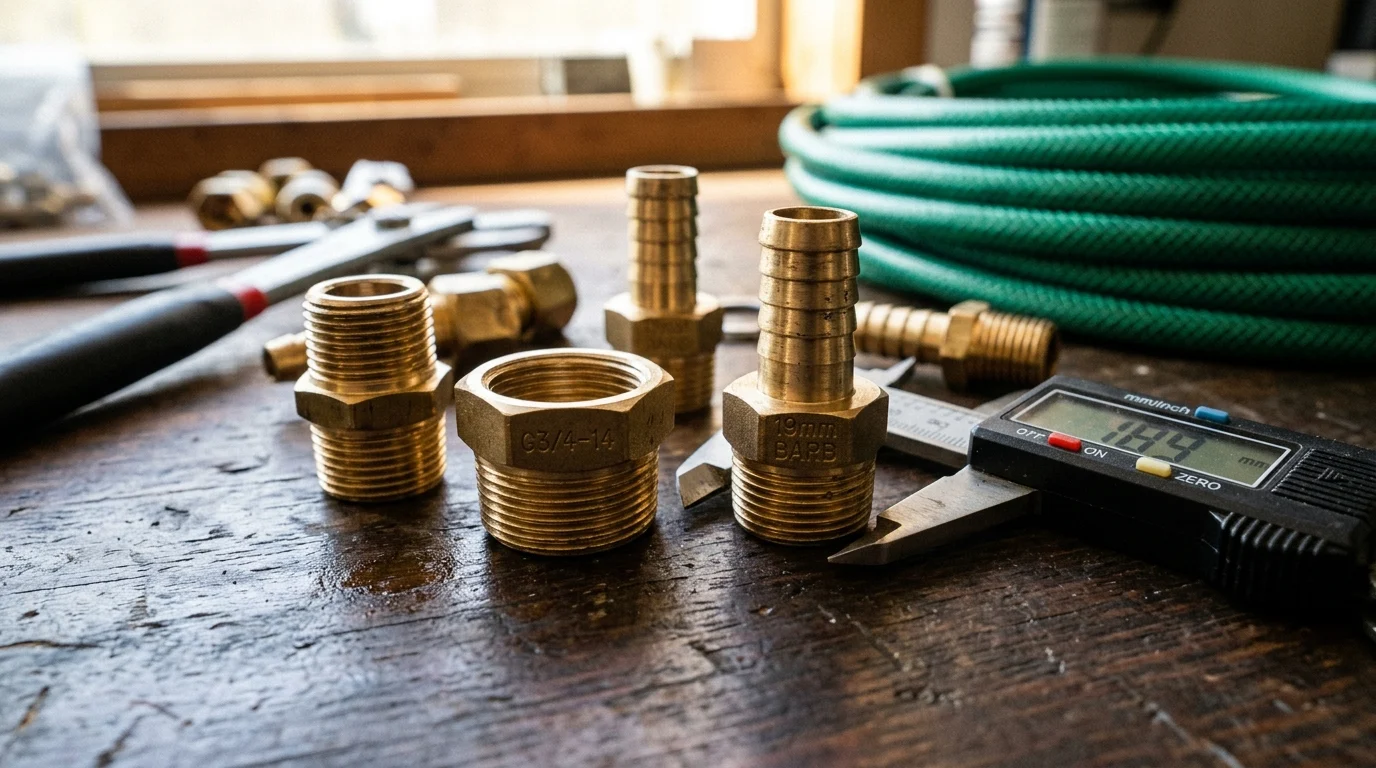
Industrial fluid systems utilize a diverse array of connector types tailored to specific hose materials and coupling frequencies. Barbed fittings (hose nibs) are universally employed for flexible elastomer hoses, relying on mechanical clamps for security. Push-to-connect (PTC) fittings offer rapid assembly for semi-rigid tubing like polyurethane or PTFE, utilizing internal collets and O-rings.
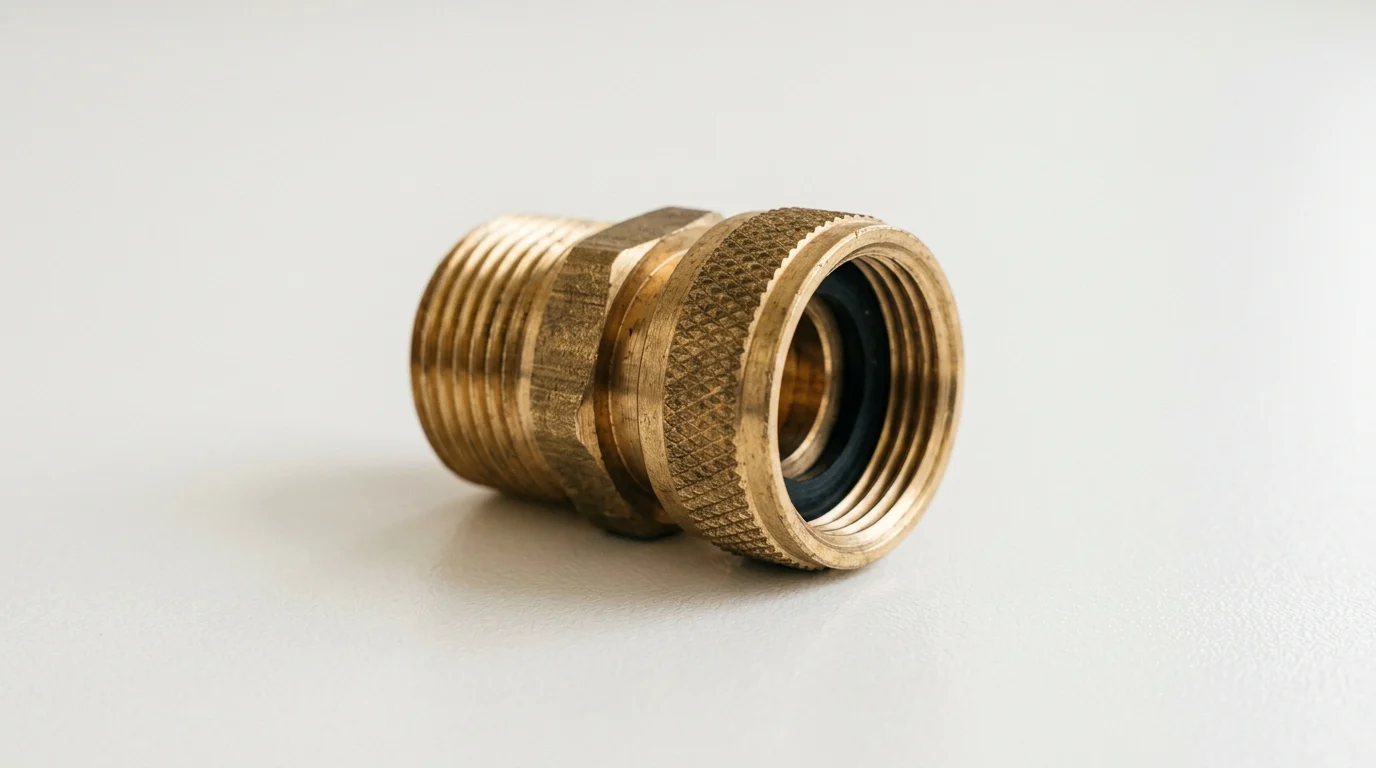
Thread standards dictate how these connectors interface with system manifolds. National Pipe Taper (NPT) is standard in North America, relying on thread deformation for sealing, while British Standard Pipe (BSP—both parallel and tapered) dominates European and Asian markets. For specialized water routing, Garden Hose Thread (GHT), typically 3/4-inch diameter with a pitch of 11.5 threads per inch, remains a staple.
Common sizes and dimensional standards
Dimensional standardization ensures consistent flow rates and seamless integration into existing infrastructure. Nominal pipe sizes (NPS) for industrial brass connectors typically range from 1/8-inch up to 2-inch diameters, with the 1/4-inch, 3/8-inch, and 1/2-inch variants representing the bulk of pneumatic and light hydraulic applications.
| Thread Standard | Region/Use Case | Sealing Mechanism | Common Sizes (Nominal) |
|---|---|---|---|
| NPT (National Pipe Taper) | North America / General Industrial | Thread interference & sealant | 1/8″, 1/4″, 3/8″, 1/2″, 1″ |
| BSPT (British Standard Pipe Taper) | Europe & Asia / General Industrial | Thread interference & sealant | 1/8″, 1/4″, 3/8″, 1/2″, 1″ |
| BSPP (British Standard Pipe Parallel) | Global / High Pressure | Bonded seal / O-ring | 1/4″, 3/8″, 1/2″, 3/4″ |
| GHT (Garden Hose Thread) | North America / Water routing | Washer / Gasket | 3/4″ (11.5 TPI) |
Pressure, temperature, flow, and sealing requirements
Performance ratings dictate the safe operational limits of brass connectors. Heavy-duty forged brass fittings can comfortably handle working pressures up to 1,000 PSI depending on the diameter and wall thickness, though standard extruded barbed fittings are typically rated for 150 to 300 PSI. Temperature resilience is another critical factor; standard brass alloys operate reliably across a broad thermal band from -65°F to +250°F (-54°C to 121°C).
Sealing requirements vary by thread type and pressure. Tapered threads demand PTFE tape or anaerobic liquid sealants to fill microscopic voids, whereas parallel threads rely entirely on elastomeric gaskets or O-rings (such as NBR, EPDM, or FKM) which must be chemically compatible with the media being transferred.
How should buyers compare brass hose connectors
Procurement teams and design engineers must evaluate brass hose connectors beyond simple dimensional compatibility. Assessing supplier capabilities, regulatory compliance, and manufacturing consistency is essential to mitigating supply chain risks and ensuring long-term system reliability.
Key comparison criteria and supplier evaluation
When auditing potential suppliers, buyers should analyze production capacity, lead times, and quality assurance metrics. For custom or application-specific connectors, suppliers typically enforce Minimum Order Quantities (MOQs) ranging from 1,000 to 5,000 units. Lead times for standard catalog items should be under 2 weeks, while custom tooling may require 6 to 8 weeks.
A critical evaluation metric is the supplier’s defect rate. Top-tier manufacturers maintain defect rates below 0.5% (5,000 PPM) through automated optical inspection and automated thread gauging. Buyers should request statistical process control (SPC) data to verify that the supplier consistently meets dimensional specifications across high-volume production runs.
Certifications, compliance, and quality control
Regulatory compliance is a non-negotiable aspect of connector procurement, particularly in food processing, medical, and potable water sectors. In the United States, the Safe Drinking Water Act (SDWA) alongside NSF/ANSI 372 and 61 standards mandates that brass components in contact with potable water must have a weighted average lead content of less than 0.25%.
Globally, compliance with the Restriction of Hazardous Substances (RoHS) and the Registration, Evaluation, Authorisation and Restriction of Chemicals (REACH) directives is imperative. Suppliers must provide material test reports (MTRs) certifying the chemical composition of the brass alloy, proving the absence of restricted heavy metals and ensuring environmental compliance.
Manufacturing methods, plating, and tolerance consistency
The manufacturing method heavily influences the mechanical properties of the final connector. Hot forging produces a denser, more isotropic grain structure, ideal for high-pressure applications (up to 1,000 PSI) and complex geometries like tees and elbows. Conversely, CNC machining from extruded bar stock is highly efficient for straight connectors and guarantees superior surface finishes.
Tolerance consistency is paramount; precision machined threads should hold tolerances of +/- 0.005 inches to ensure proper engagement and sealing. Additionally, buyers should consider surface treatments. Nickel-plated brass is frequently specified for food-grade applications or harsh environments, providing an extra barrier against tarnishing, oxidation, and mild chemical attack while maintaining the underlying machinability and cost benefits of the brass core.
Where are brass hose connectors used and how should they
The reliability of an industrial fluid network is heavily dependent on the correct deployment and installation of its connectors. Even the highest-grade brass fittings will fail if improperly matched to the application or installed without adherence to established mechanical guidelines.
Industrial applications in plumbing, air, and fluid systems
Brass connectors are ubiquitous across multiple industrial sectors. In commercial plumbing and HVAC systems, they are utilized for coolant routing, chilled water lines, and refrigerant gas transfer. In automation and manufacturing, brass push-to-connect and barbed fittings are the standard for pneumatic logic circuits and compressed air lines, which typically operate at constant pressures between 90 and 150 PSI.
Furthermore, low-pressure hydraulic return lines and lubrication systems frequently rely on brass due to its excellent compatibility with mineral oils and synthetic lubricants. However, care must be taken in chemical processing plants; brass should be strictly avoided in systems transporting anhydrous ammonia, acetylene, or highly concentrated acids, which cause rapid metallurgical degradation.
Selection and installation practices to prevent leaks
Proper installation practices are vital to preventing leaks and mechanical failures. The most common cause of failure in tapered brass threads is over-tightening, which can split female ports or distort the brass body. Installers must adhere to specific torque values based on the nominal pipe size and thread type.
| Nominal Size (NPT) | Recommended Torque (ft-lbs) | Recommended Torque (Nm) | Turns Past Finger Tight (T.P.F.T) |
|---|---|---|---|
| 1/4″ | 10 – 15 | 14 – 20 | 1.5 – 2.0 |
| 3/8″ | 15 – 25 | 20 – 34 | 1.5 – 2.0 |
| 1/2″ | 20 – 30 | 27 – 41 | 1.5 – 2.0 |
| 3/4″ | 25 – 35 | 34 – 47 | 1.5 – 2.0 |
When installing NPT fittings, high-density PTFE tape (minimum 3.5 mil thickness) or a compatible anaerobic thread sealant should be applied to the male threads to ensure a leak-proof seal. Additionally, installers must be wary of galvanic corrosion; connecting brass directly to aluminum or galvanized steel in the presence of an electrolyte (like water) will accelerate corrosion. Dielectric unions or compatible sealant barriers should be used to isolate dissimilar metals.
How can organizations select the right brass hose connectors
Strategic selection of brass hose connectors requires a holistic approach that balances immediate technical requirements with long-term operational costs. Organizations must align their engineering specifications with lifecycle expectations to optimize return on investment.
Selection criteria by media, pressure, and environment
Media compatibility dictates the viability of brass in any given system. While brass excels with water, compressed air, and petroleum-based fluids, it is vulnerable to specific chemical attacks. Organizations must evaluate the pH level of the media; environments with a pH below 5.0 or above 9.5 can cause accelerated leaching of zinc (dezincification), leading to structural porosity and eventual rupture.
Operating pressure and environmental conditions also drive selection. For dynamic systems subject to severe pressure spikes or water hammer, heavy-wall forged brass should be specified over lighter extruded variants. In marine or high-chloride environments, standard brass may degrade, necessitating a shift to nickel-plated brass or marine-grade bronze to maintain a safe operational threshold.
Aligning specifications with sourcing and lifecycle cost
Aligning component specifications with lifecycle costs involves evaluating the Total Cost of Ownership (TCO). While 316 stainless steel offers superior ultimate longevity in harsh conditions, brass provides a 30% to 50% upfront cost savings. In non-corrosive, controlled indoor environments, high-quality brass connectors boast an expected service life of 10 to 20 years, making the premium for stainless steel economically unjustifiable.
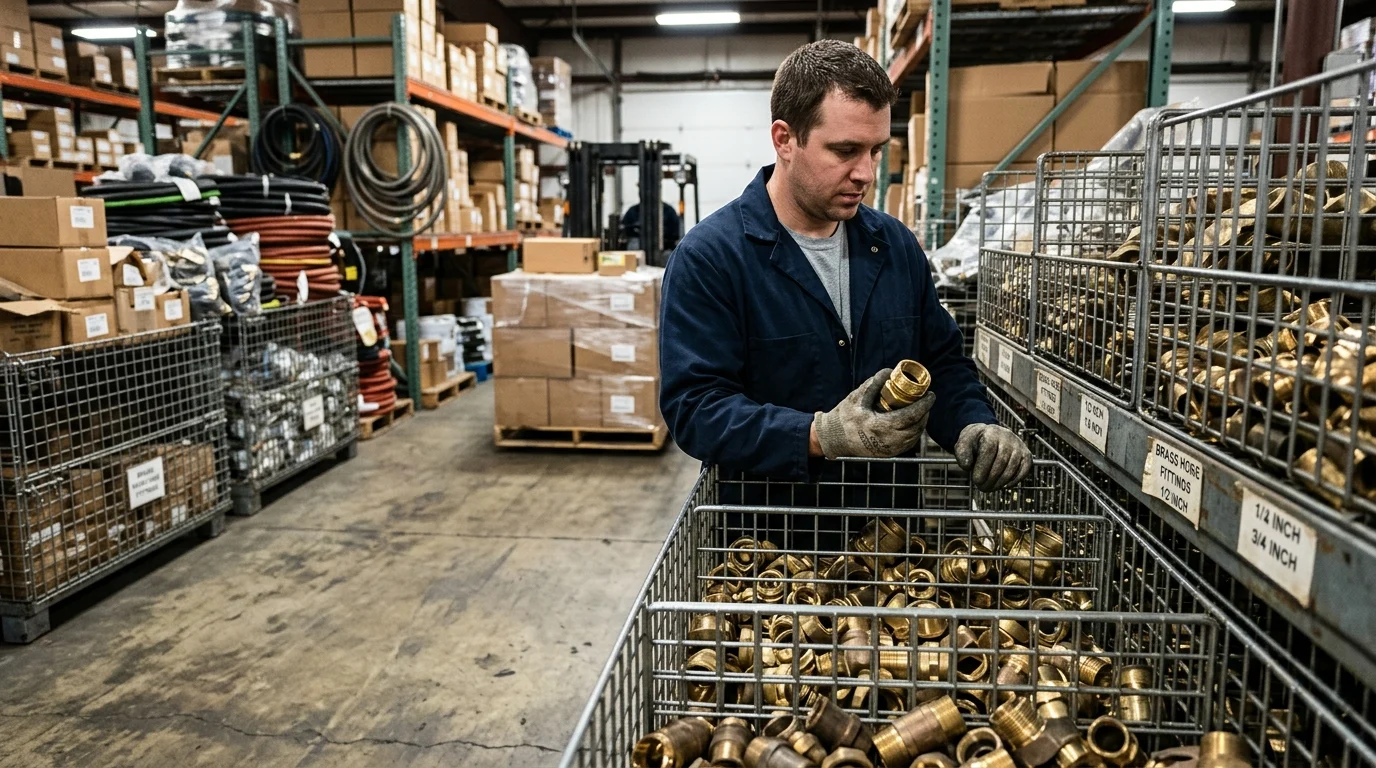
Organizations should standardize their connector inventory to reduce SKU proliferation and simplify maintenance. By selecting a unified thread standard (e.g., standardizing on NPT across all North American facilities) and partnering with suppliers capable of meeting strict defect rates (<0.5%) and high-volume MOQs, procurement teams can significantly reduce downtime, streamline sourcing, and lower overall maintenance expenditures.
Key Takeaways
- The most important conclusions and rationale for brass hose connectors
- Specs, compliance, and risk checks worth validating before you commit
- Practical next steps and caveats readers can apply immediately
Frequently Asked Questions
Why are brass hose connectors widely used in industry?
They balance corrosion resistance, strength, and cost. Brass also machines easily, making connectors more affordable than many stainless steel options for air, water, and light oil systems.
What brass hose connector sizes are most common?
The most common industrial sizes are 1/4″, 3/8″, and 1/2″. Larger systems may use 3/4″, 1″, or up to 2″, depending on required flow and hose diameter.
How do I choose between NPT, BSP, and GHT threads?
Match the thread standard to your equipment and region: NPT for North America, BSPT/BSPP for Europe and Asia, and GHT mainly for water hose connections. Always confirm sealing method before ordering.
When should brass be chosen instead of plastic or stainless steel?
Choose brass for neutral, non-saline services needing better strength than plastic at lower cost than stainless steel. Use stainless steel for highly corrosive, acidic, or marine environments.
Can nbfh-metal.com supply custom brass hose connectors?
Yes, custom brass hose connector solutions are typically available for thread type, size, and application needs. Check product specifications or contact NBFH Metal with your drawings or connection standards.
Post time: May-19-2026