
Introduction
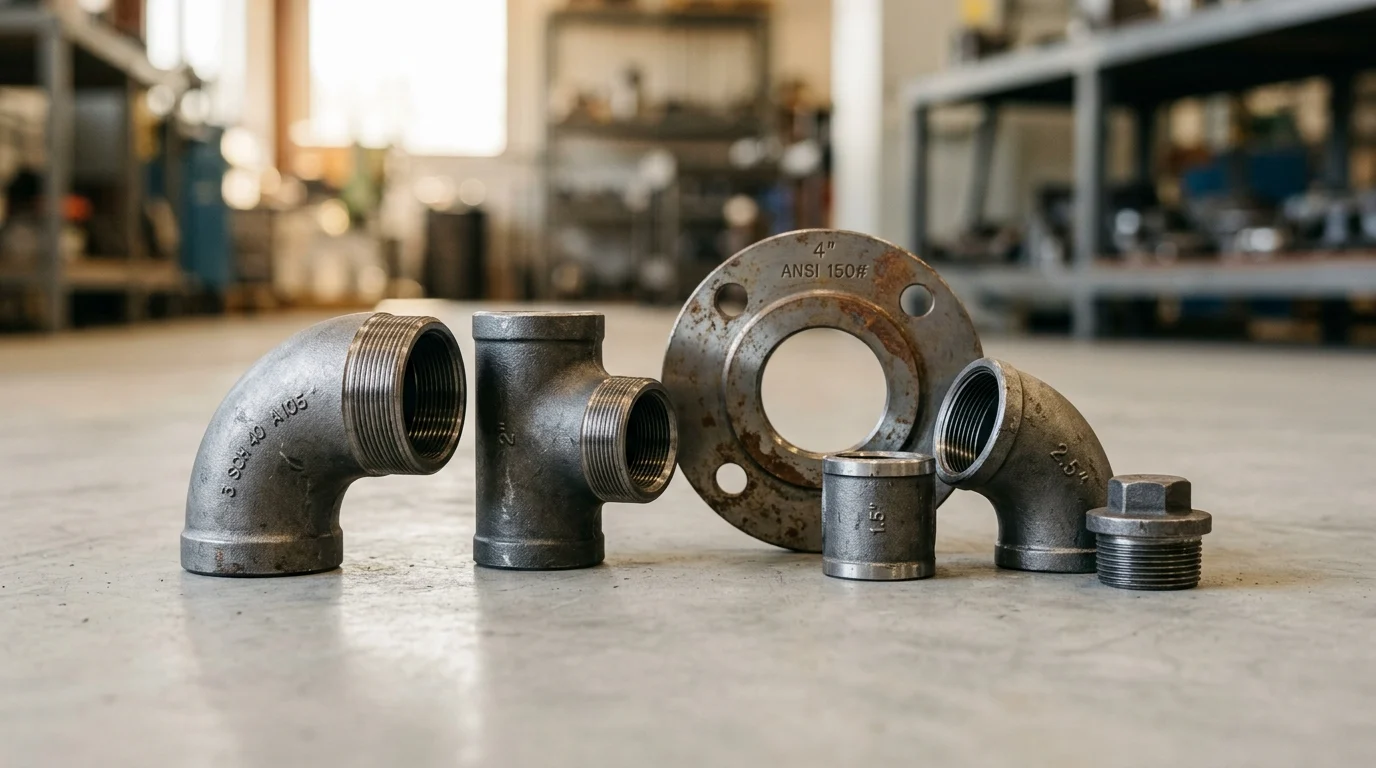
Choosing the right pipe fitting affects far more than how pipes connect. In industrial systems, fittings determine flow direction, pressure loss, sealing performance, maintenance frequency, and safety under demanding operating conditions. This article outlines the main fitting types, the materials used to make them, and where each option fits best across process plants, utilities, and heavy industry. By the end, you’ll have a practical framework for comparing elbows, tees, reducers, couplings, and related components based on service conditions, corrosion resistance, strength, and application requirements.
Why Industrial Pipe Fittings Matter
Industrial pipe fittings serve as the critical nodes within complex fluid transport networks. Their primary function is to connect, terminate, control, or change the direction of flow in piping systems across sectors ranging from petrochemical processing to municipal water treatment.
Definition and role in piping systems
Fittings encompass a broad category of components—such as elbows, tees, reducers, and valves—that directly manipulate fluid dynamics. In a standard 1,000-foot run of industrial piping, up to 30% of the total pressure drop can be attributed entirely to the friction introduced by fittings. This underscores their profound impact on pump sizing, energy consumption, and overall system efficiency.
Impact on reliability, safety, and downtime
The structural integrity of fittings dictates the safety margin of the entire operation. A failure in a high-pressure fitting can result in catastrophic leaks, exposing facilities to hazardous material spills and unplanned outages. Industry data indicates that fitting-related leaks and improper joint assemblies account for roughly 15% to 20% of fugitive emissions in chemical processing plants, making proper specification essential for environmental compliance, worker safety, and the minimization of operational downtime.
Cost and lifecycle considerations
While fittings may represent only 10% to 15% of the initial capital expenditure in a large-scale piping project, they disproportionately influence long-term maintenance budgets. Specifying a fitting with a 20-year design life rather than a cheaper, lower-grade 5-year alternative can reduce lifecycle replacement costs by up to 60%. This calculation factors in the direct replacement costs alongside the labor, scaffolding requirements, and lost production revenue associated with scheduled plant turnarounds.
Types of Industrial Pipe Fittings
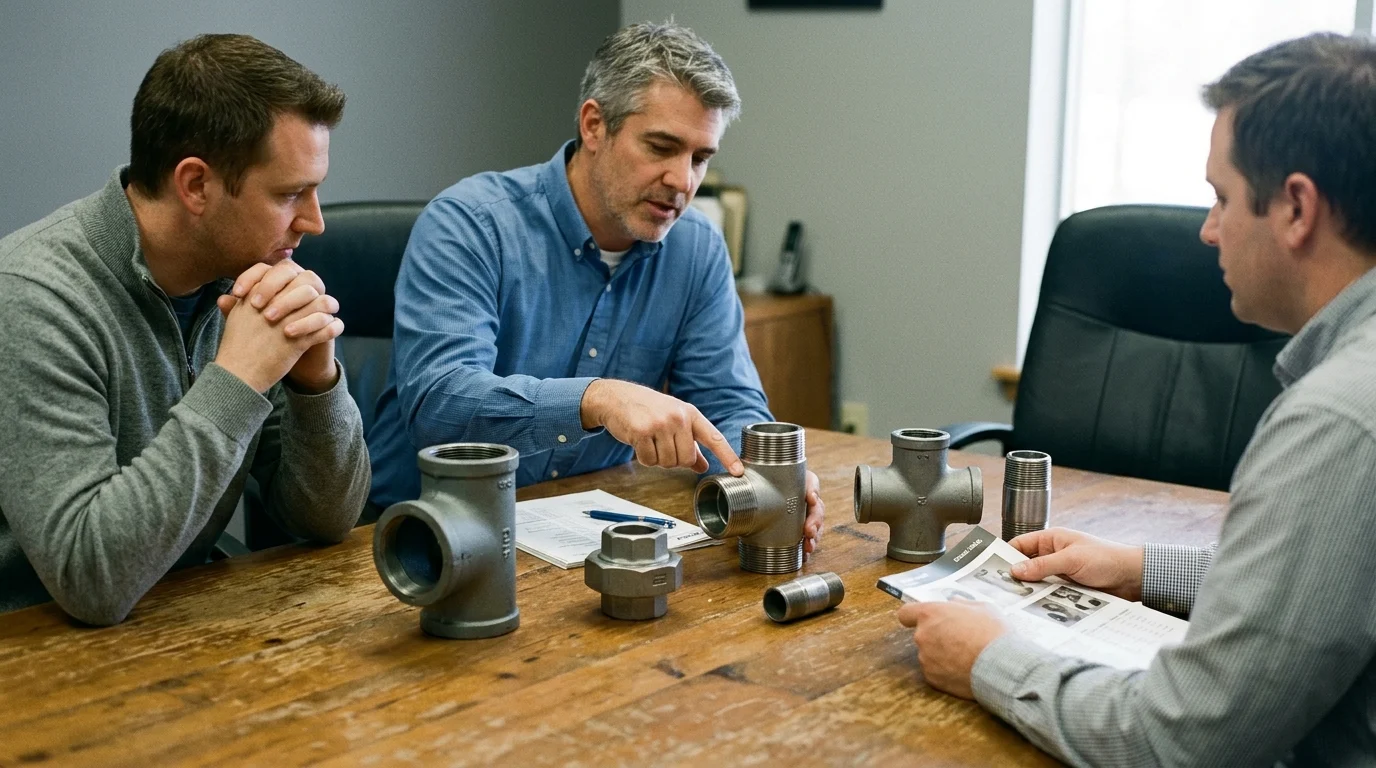
The geometric configuration and connection mechanism of a fitting determine its suitability for specific fluid dynamic requirements, assembly conditions, and maintenance schedules.
Common fitting shapes and functions
The shape of a fitting dictates how fluid navigates a system. Elbows (typically manufactured in 45° and 90° angles) alter flow direction, while tees and crosses split or combine flow streams. Reducers transition pipe diameters to control fluid velocity, coming in concentric (symmetrical) and eccentric (asymmetrical) configurations. Eccentric reducers are specifically deployed in horizontal liquid lines with the flat side up to prevent air pocket formation, which is critical for maintaining a steady pump suction head.
Connection methods and when to use them
Connection methodologies dictate both assembly speed and maximum pressure tolerance. Butt-weld fittings provide the highest structural integrity for high-pressure lines (often exceeding 3,000 psi) but require highly skilled welding and radiography testing. Socket-weld fittings are preferred for smaller bore pipes (under 2 inches NPS) where internal weld spatter must be avoided. Threaded connections (such as NPT or BSPT) allow for rapid assembly in low-pressure, non-critical applications, while flanged connections facilitate frequent maintenance and rapid disassembly.
Type and connection comparison
Selecting the optimal fitting type requires a direct comparison of physical limitations, assembly logistics, and operational demands.
Table 1: Comparison of Fitting Connection Methods
| Connection Type | Typical NPS Range | Pressure Rating Limit | Assembly Speed | Ideal Application |
|---|---|---|---|---|
| Butt-Weld | 2″ to 48″+ | Up to 10,000 psi | Slow | High-stress, permanent lines |
| Socket-Weld | 1/8″ to 2″ | Class 3000, 6000, 9000 | Moderate | Small bore, flammable fluids |
| Threaded | 1/8″ to 4″ | Class 2000 to 6000 | Fast | Low-pressure, utility lines |
| Flanged | 1/2″ to 60″ | Class 150 to 2500 | Moderate | Systems requiring frequent access |
Materials for Industrial Pipe Fittings
Material selection is arguably the most critical variable in specifying industrial pipe fittings. The chosen alloy or polymer must withstand the chemical composition of the media, the operating temperature range, and the internal pressure profile without yielding to accelerated degradation.
Common materials and typical uses
Carbon steel (e.g., ASTM A234 WPB) is the industry workhorse, heavily favored for non-corrosive, high-stress environments like steam and water transport. Stainless steel (such as grades 304/304L and 316/316L) provides essential corrosion resistance; 316L specifically contains 2% to 3% molybdenum to resist chloride pitting. For highly aggressive media, exotic alloys like Hastelloy, Monel, or Titanium are deployed. Conversely, non-metallic options like PVC, CPVC, and PTFE dominate high-purity and acidic applications operating at ambient or moderately elevated temperatures.
Temperature, corrosion, and pressure trade-offs
Engineers constantly balance temperature limits, corrosion resistance, and yield strength against procurement budgets. For instance, while standard carbon steel loses significant tensile strength above 400°C (750°F), alloy steels doped with chromium and molybdenum (like P11 or P22) maintain structural stability up to 600°C (1,112°F). However, these alloy additions can increase raw material costs by 150% to 300% compared to baseline carbon steel. Similarly, while plastics offer exceptional acid resistance, their pressure-handling capacity drops precipitously as temperatures approach 93°C (200°F).
Material selection comparison
The following table illustrates the performance thresholds and economic realities of common fitting materials.
Table 2: Material Performance Trade-offs
| Material Grade | Max Operating Temp | Primary Benefit | Relative Cost Factor | Typical Application |
|---|---|---|---|---|
| Carbon Steel (A234 WPB) | 400°C (750°F) | High strength, low cost | 1.0x (Baseline) | Steam, water, oil |
| Stainless Steel (316L) | 815°C (1,500°F) | Chloride/pitting resistance | 3.5x – 4.5x | Food grade, chemical processing |
| Duplex SS (2205) | 300°C (572°F) | High yield strength, SCC resistance | 5.0x – 6.0x | Offshore oil & gas, desalination |
| CPVC (Polymer) | 93°C (200°F) | Excellent acid resistance | 0.8x – 1.2x | Corrosive chemical transport |
Selection Standards and Applications
Rigorous adherence to engineering standards ensures that a fitting will perform predictably under specified conditions. Global standards organizations provide the frameworks that govern dimensions, material properties, and pressure-temperature ratings.
Application-specific selection factors
The nature of the transported fluid dictates baseline geometric and surface finish requirements. Abrasive slurries in mining require heavy-wall fittings with wear-resistant linings, while biopharmaceutical applications demand ultra-high purity (UHP) stainless steel. In pharmaceutical environments, internal surface finishes must be electropolished to a roughness average (Ra) of 15 microinches or less to prevent bacterial colonization and ensure complete cleanability.
Codes, standards, and pressure ratings
The American Society of Mechanical Engineers (ASME) sets the primary dimensional and pressure frameworks used globally. ASME B16.9 covers factory-made wrought buttwelding fittings, while ASME B16.11 governs forged fittings (socket-welding and threaded). Pressure ratings are not absolute; a Class 3000 forged fitting, for example, is matched to Schedule 80 pipe wall thickness, but its actual maximum allowable working pressure (MAWP) derates linearly as operating temperatures climb. Similarly, flanges governed by ASME B16.5 see their pressure capacities drop significantly at elevated temperatures across Class 150 to Class 2500 designations.
Step-by-step fitting selection process
The specification process follows a deterministic sequence to ensure safety and compliance. First, engineers define the media constraints, including chemical composition, maximum operating temperature, and peak surge pressure. Second, the required pipe schedule (wall thickness) is calculated based on the MAWP. Third, the corresponding fitting class and connection type are selected (e.g., Schedule 40 butt-weld or Class 3000 threaded). Finally, material compatibility is verified against industry corrosion tables, ensuring the expected corrosion allowance remains below 0.1 mm per year for a standard 20-year operational lifecycle.
How to Make the Final Buying Decision
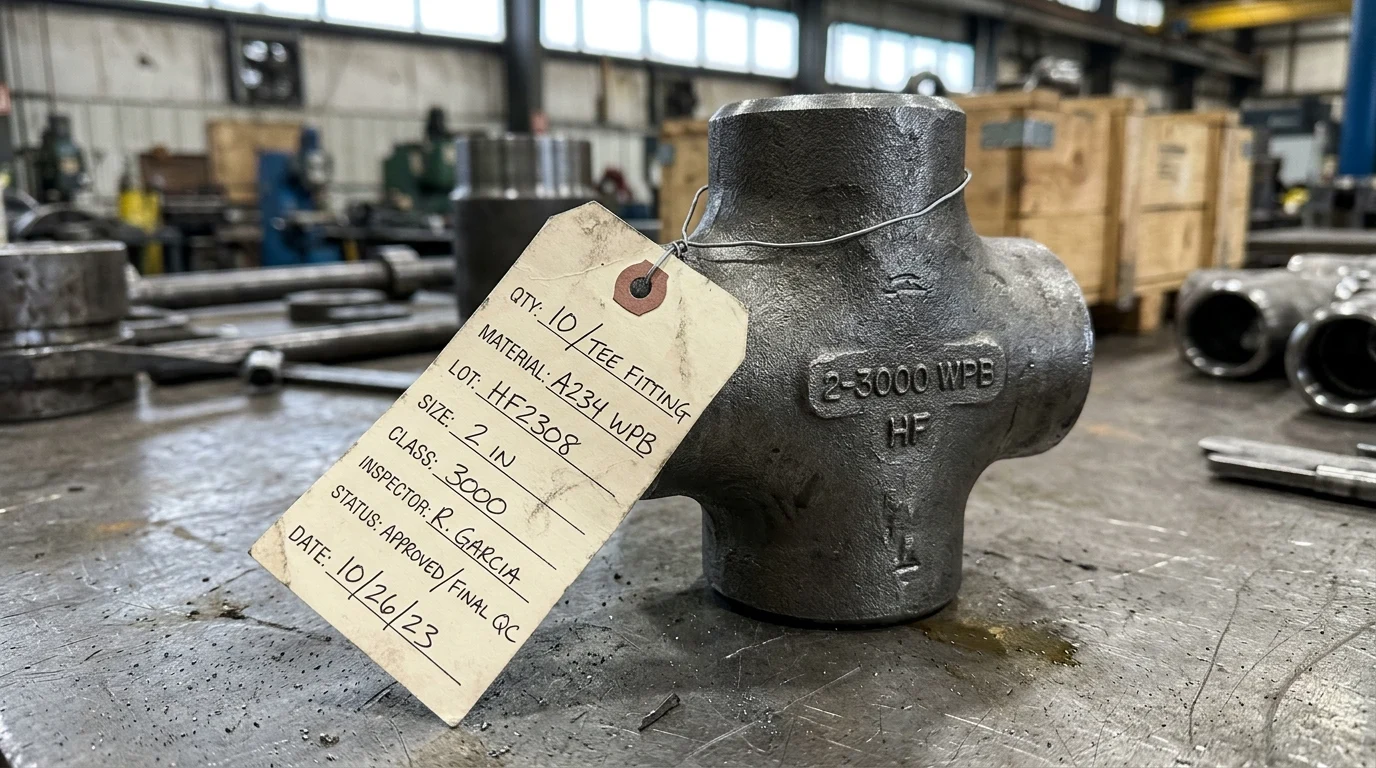
Transitioning from engineering specification to procurement requires evaluating both the physical product and the reliability of the supply chain. A mathematically perfect specification is useless if the supplier delivers out-of-tolerance components or fails to provide proper metallurgical documentation.
Technical and sourcing evaluation criteria
Quality assurance is the foremost sourcing criterion. Buyers must mandate Material Test Reports (MTRs) compliant with EN 10204 Type 3.1 to verify chemical composition and mechanical properties. Furthermore, supply chain stability dictates assessing a manufacturer’s Minimum Order Quantity (MOQ) and lead times. For standard carbon steel fittings, a lead time of 2 to 4 weeks is typical, whereas custom-forged exotic alloys can demand 16 to 24 weeks, potentially derailing project schedules if not procured proactively. Acceptable defect rates should be strictly negotiated in the master service agreement, targeting less than 0.5% for critical infrastructure components.
Final decision checklist
Procurement teams should utilize a rigorous evaluation matrix before issuing a purchase order. This involves verifying that the supplier holds active ISO 9001 and relevant API or ASME certifications. It requires cross-referencing the quoted material grades, dimensions, and pressure classes against the original piping and instrumentation diagram (P&ID). Additionally, buyers must confirm logistical details, including packaging standards (such as plastic end-cap protection for beveled butt-weld fittings to prevent transit damage) and the availability of third-party inspection (TPI) hold points during the manufacturing process.
Key Takeaways
- The most important conclusions and rationale for Industrial Pipe Fittings
- Specs, compliance, and risk checks worth validating before you commit
- Practical next steps and caveats readers can apply immediately
Frequently Asked Questions
What are the most common industrial pipe fitting types?
Elbows change direction, tees split or combine flow, reducers change pipe size, and caps or plugs terminate lines. Choose based on flow path, pressure, and maintenance needs.
Which fitting material is best for corrosive or high-temperature service?
Stainless steel is a common choice for corrosion resistance and heat. For harsher media, confirm the exact grade and compatibility with your fluid, temperature, and pressure conditions.
When should I use butt-weld instead of threaded fittings?
Use butt-weld for high-pressure, permanent, or critical lines. Use threaded fittings for smaller, low-pressure utility systems where faster installation and simpler maintenance are priorities.
How do I choose the right reducer for a horizontal liquid line?
Use an eccentric reducer with the flat side up to reduce the risk of air pockets. This helps maintain steady pump suction and smoother liquid flow.
Can nbfh-metal.com supply different industrial pipe fitting connection types?
Yes. nbfh-metal.com offers industrial metal fittings and related connection options. Match the fitting type to your pipe size, pressure class, material, and service environment before ordering.

Daniel Carter
Post time: Apr-24-2026