
Introduction
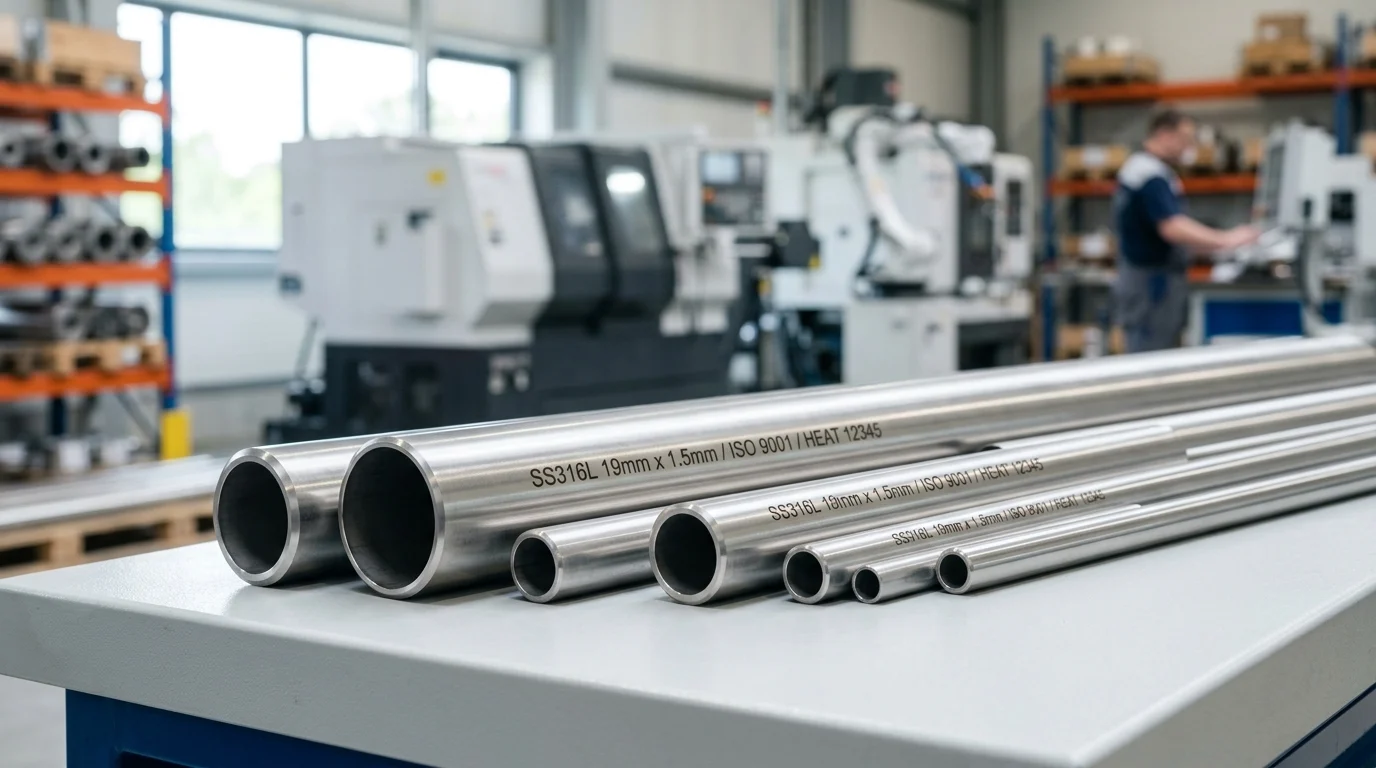
In industrial systems where pressure, purity, and dimensional accuracy directly affect performance, the choice of pipe supplier is a technical decision, not a purchasing formality. A precision pipe manufacturer delivers tighter tolerances, cleaner internal surfaces, and more consistent metallurgy than standard tubing sources, helping reduce leakage risk, flow disruption, contamination, and premature failure. This article explains what defines precision pipe manufacturing, why those capabilities matter in high-accuracy applications, and which industries depend on them most. It also provides a practical framework for evaluating manufacturers based on tolerance control, surface finish, material quality, and process reliability.
Why a Precision Pipe Manufacturer Matters
Highly demanding industrial applications require specialized piping systems; off-the-shelf structural tubing is often insufficient. Partnering with a dedicated precision pipe manufacturer ensures that critical fluid and gas transfer systems function without catastrophic failure.
Unlike standard commodity suppliers, precision manufacturers focus on absolute metallurgical integrity and exact geometries, providing components engineered for extreme environments and zero-defect tolerances.
Tolerance, Surface Finish, and Dimensional Consistency
Precision pipe is defined by its rigorous adherence to exact dimensional parameters. While standard commercial pipes may allow for outer diameter (OD) variances of several millimeters, a precision pipe manufacturer routinely holds OD and inner diameter (ID) tolerances to ±0.015 mm or tighter.
Surface finish is equally critical. Specialized cold drawing and electro-polishing techniques achieve internal roughness averages (Ra) below 0.4 µm. This ultra-smooth finish is essential for minimizing pressure drops, reducing friction, and preventing particulate accumulation or bacterial growth in high-purity systems.
Industries That Depend on Precision Pipe
The demand for highly accurate piping spans multiple advanced sectors. In the semiconductor industry, ultra-high purity (UHP) gas lines rely on flawless internal surfaces to prevent micro-contamination during wafer fabrication.
Medical device manufacturing utilizes precision capillary tubing for surgical instruments, stents, and implantable devices where biocompatibility and exact dimensions are non-negotiable. Similarly, aerospace and high-pressure hydraulics require seamless pipes capable of withstanding operating pressures exceeding 10,000 PSI without structural deformation or fatigue failure.
Specifications Buyers Should Evaluate
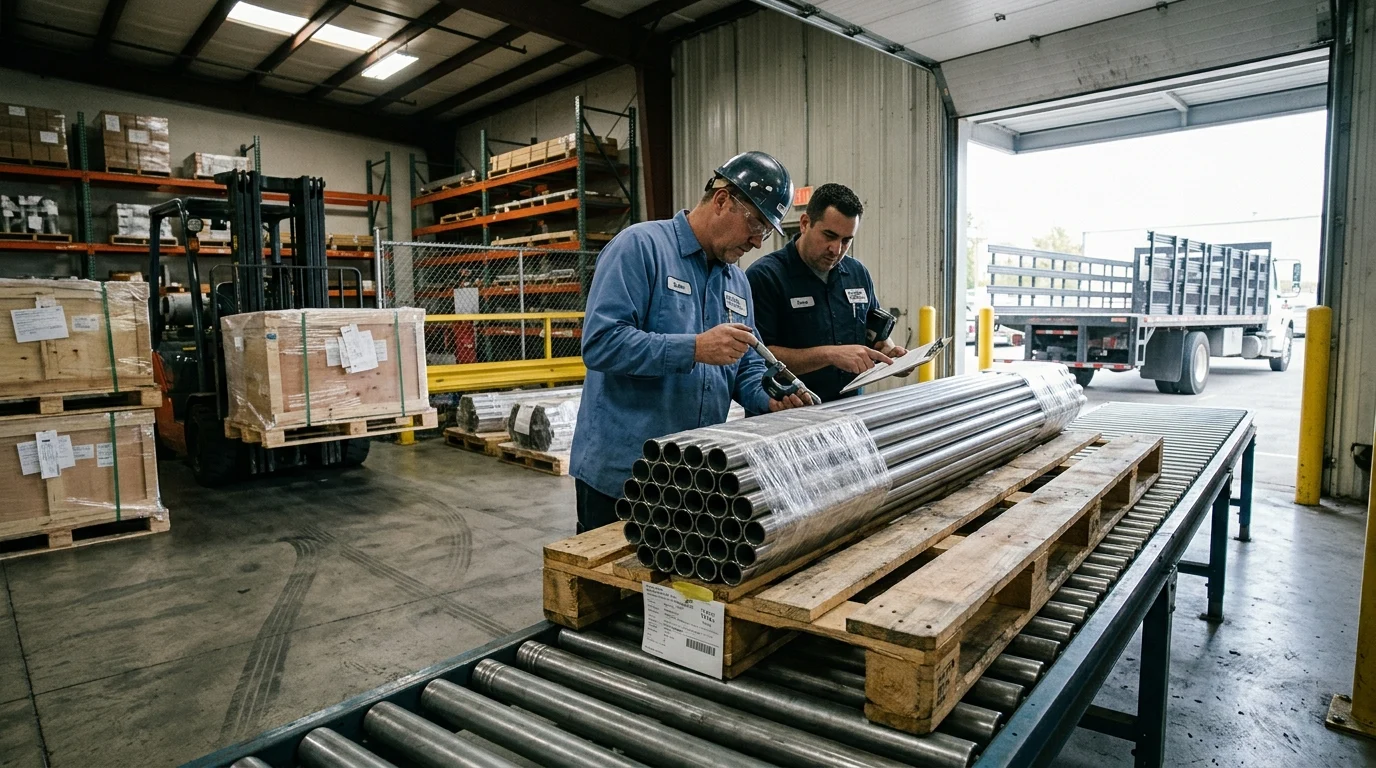
Evaluating a precision pipe manufacturer requires a deep dive into technical capabilities and the specific material parameters they can reliably control. Procurement engineers must look beyond basic dimensions to assess the comprehensive metallurgical profile of the products.
Material Options and Grade Selection
Material selection dictates the operational limits of the piping system. Common high-performance alloys include 316L stainless steel for corrosion resistance, titanium for superior strength-to-weight ratios, and specialized nickel alloys for extreme temperature environments.
Complex industrial assemblies often require compatibility with specific joining components, such as brass pipe fittings, which necessitates precise threading and mating tolerances to ensure leak-free connections. A reputable manufacturer will certify mechanical properties, ensuring yield strengths meet minimum engineering thresholds, such as a guaranteed 205 MPa for annealed 316L stainless steel.
Manufacturing and Inspection Capabilities
The methodology used to produce the pipe directly impacts its structural integrity. Seamless manufacturing, achieved through billet extrusion and subsequent cold drawing, offers superior pressure containment and uniform grain structure compared to welded-and-drawn alternatives.
Buyers must heavily evaluate the manufacturer’s non-destructive testing (NDT) capabilities. Implementing 100% inline eddy current testing and ultrasonic inspection is mandatory for identifying subsurface micro-cracks, inclusions, or wall thinning that standard visual inspections cannot detect.
Tolerance, Wall Thickness, and Size Comparison
Dimensional accuracy is the primary differentiator between standard and precision production. Wall thickness eccentricity must be tightly controlled to ensure uniform burst pressure ratings across the entire pipe length. Evaluating these specifications side-by-side reveals the operational advantages of precision manufacturing.
| Specification | Standard Commercial Pipe | Precision Pipe |
|---|---|---|
| OD Tolerance Variance | ± 0.5% of diameter | ± 0.05% of diameter |
| Wall Thickness Variance | ± 10.0% | ± 2.5% |
| Internal Surface Finish (Ra) | 3.2 µm to 6.4 µm | < 0.4 µm |
| Straightness Deviation | 1.0 mm per meter | 0.2 mm per meter |
How to Compare Manufacturer Quality
Quality assurance distinguishes top-tier precision pipe manufacturers from standard commercial suppliers. Evaluating quality requires analyzing a manufacturer’s documented processes, historical yield data, and strict adherence to international regulatory standards.
Certifications, Traceability, and Test Documents
Comprehensive documentation is non-negotiable in highly regulated industries. A qualified manufacturer must maintain active, audited certifications such as ISO 9001 for general quality management, AS9100 for aerospace applications, or ISO 13485 for medical devices.
Absolute material traceability is required from the raw billet to the finished pipe. Buyers should demand EN 10204 Type 3.1 or 3.2 Material Test Reports (MTRs) for every batch. These documents confirm exact chemical compositions, heat lot numbers, and verified mechanical test results.
Scrap Rate, Machining Yield, and Joining Compatibility
The true cost of a pipe includes the efficiency of downstream processing. Pipes with poor concentricity, ovality issues, or varying hardness levels lead to high scrap rates during automated CNC machining, bending, or orbital welding.
By sourcing from a high-quality precision pipe manufacturer, facilities can reduce their incoming defect rates from an industry average of 3–5% down to less than 0.5%. This dimensional consistency ensures seamless joining compatibility, reducing setup times, minimizing tool wear, and eliminating the need for manual rework during final assembly.
Precision Manufacturers vs Standard Tube Suppliers
Understanding the structural and operational differences between supplier tiers helps clarify procurement strategies. Standard suppliers focus on high-volume, low-margin structural applications, whereas precision manufacturers prioritize metallurgical perfection.
| Capability Metric | Standard Tube Supplier | Precision Pipe Manufacturer |
|---|---|---|
| Process Control Focus | High volume and throughput | Dimensional and surface accuracy |
| Defect Tolerance | AQL sampling (e.g., 1.5% allowable) | Zero-defect target (100% NDT inspection) |
| Typical Process Capability (Cpk) | < 1.00 (High variance) | > 1.33 (Statistically stable) |
| Customization Scope | Standard catalog sizes only | Custom OD/ID, custom alloys, and tempers |
How to Qualify a Supplier
Transitioning to a new precision pipe manufacturer introduces inherent supply chain risk. A structured, data-driven qualification process is essential to validate the supplier’s technical capabilities and commercial reliability before committing to high-volume production.
Step-by-Step Supplier Qualification Process
The qualification journey begins with a comprehensive desktop audit of the manufacturer’s quality manual, followed by an on-site facility inspection to verify equipment maintenance and calibration protocols.
Procurement teams should then mandate a First Article Inspection (FAI) run. During this phase, critical dimensions are measured against the engineering drawing under strictly controlled conditions. Quality engineers must calculate the Process Capability Index (Cpk) for the pilot run; a Cpk greater than 1.33 indicates that the manufacturer’s process is statistically stable and capable of maintaining tolerances well within the specified limits over long production cycles.
Lead Time, Minimum Order Quantity, and Supply Reliability
Commercial viability is just as critical as technical capability. Precision drawing, pilgering, and custom extrusion processes require significant setup times and specialized tooling, which directly impact lead times and minimum order quantities (MOQs).
Buyers should anticipate typical lead times of 8 to 12 weeks for custom precision runs, compared to off-the-shelf availability for standard pipes. Manufacturers often enforce MOQs ranging from 300 to 500 meters, or equivalent weight minimums, to offset the costs of machine calibration and billet sourcing. Securing supply reliability requires negotiating safety stock agreements, vendor-managed inventory (VMI), or long-term blanket purchase orders.
How to Choose the Right Manufacturer
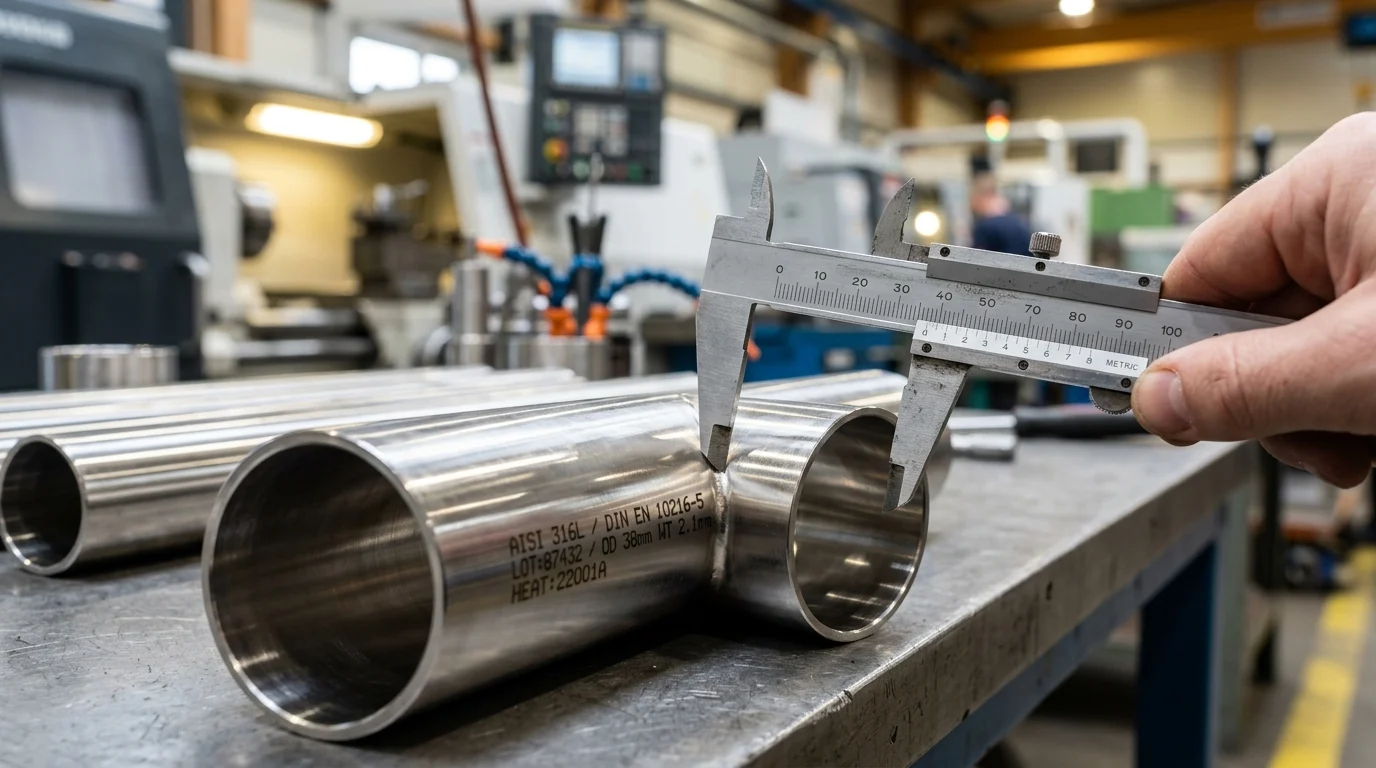
The final selection of a precision pipe manufacturer must align the technical demands of the specific application with the commercial realities of the project budget, production volume, and lifecycle risk.
Matching Application Risk, Volume, and Budget
Not all applications require the tightest available tolerances. Specifying ultra-high precision for a low-risk structural component introduces unnecessary costs, as precision manufacturing can carry a 30% to 50% price premium over standard production.
Conversely, in high-risk environments like aerospace hydraulics, semiconductor gas delivery, or nuclear cooling, the upfront premium serves as a negligible insurance policy against catastrophic system failure. Buyers must balance the initial procurement cost against the total cost of ownership, factoring in the 10% to 15% yield improvements and reduced maintenance costs gained during downstream assembly and long-term operation.
Final Selection Framework
A robust final selection framework weighs three primary pillars: metallurgical capability, quality control infrastructure, and supply chain flexibility.
The ideal manufacturing partner not only meets the exacting dimensional tolerances required but also demonstrates transparent communication, robust non-destructive testing protocols, and the financial stability to support long-term production contracts. By systematically scoring potential vendors across these precise metrics, procurement professionals can secure a resilient, highly capable supply chain.
Key Takeaways
- The most important conclusions and rationale for precision pipe manufacturer
- Specs, compliance, and risk checks worth validating before you commit
- Practical next steps and caveats readers can apply immediately
Frequently Asked Questions
What makes a precision pipe manufacturer different from a standard pipe supplier?
A precision manufacturer controls OD/ID tolerances, wall thickness, and surface finish much more tightly, often using seamless cold-drawn production and full inspection for critical applications.
Which industries need precision pipe most?
Semiconductor, medical device, aerospace, and high-pressure hydraulic systems commonly require precision pipe because they need clean internal surfaces, exact dimensions, and reliable pressure performance.
What specifications should buyers check before ordering precision pipe?
Review material grade, OD/ID tolerance, wall thickness variation, internal Ra, straightness, pressure rating, and whether the pipe is seamless and supported by MTRs and NDT reports.
How can I verify a precision pipe manufacturer’s quality system?
Ask for ISO certifications, EN 10204 3.1 or 3.2 test reports, full traceability records, and proof of 100% inline eddy current or ultrasonic inspection.
Can NBFH Metal help match precision pipe with fittings and related components?
Yes, NBFH Metal also offers compatible fittings and product support, which helps buyers confirm proper threading, mating tolerances, and leak-free assembly for industrial systems.

Daniel Carter
Post time: Apr-28-2026