
Introduction
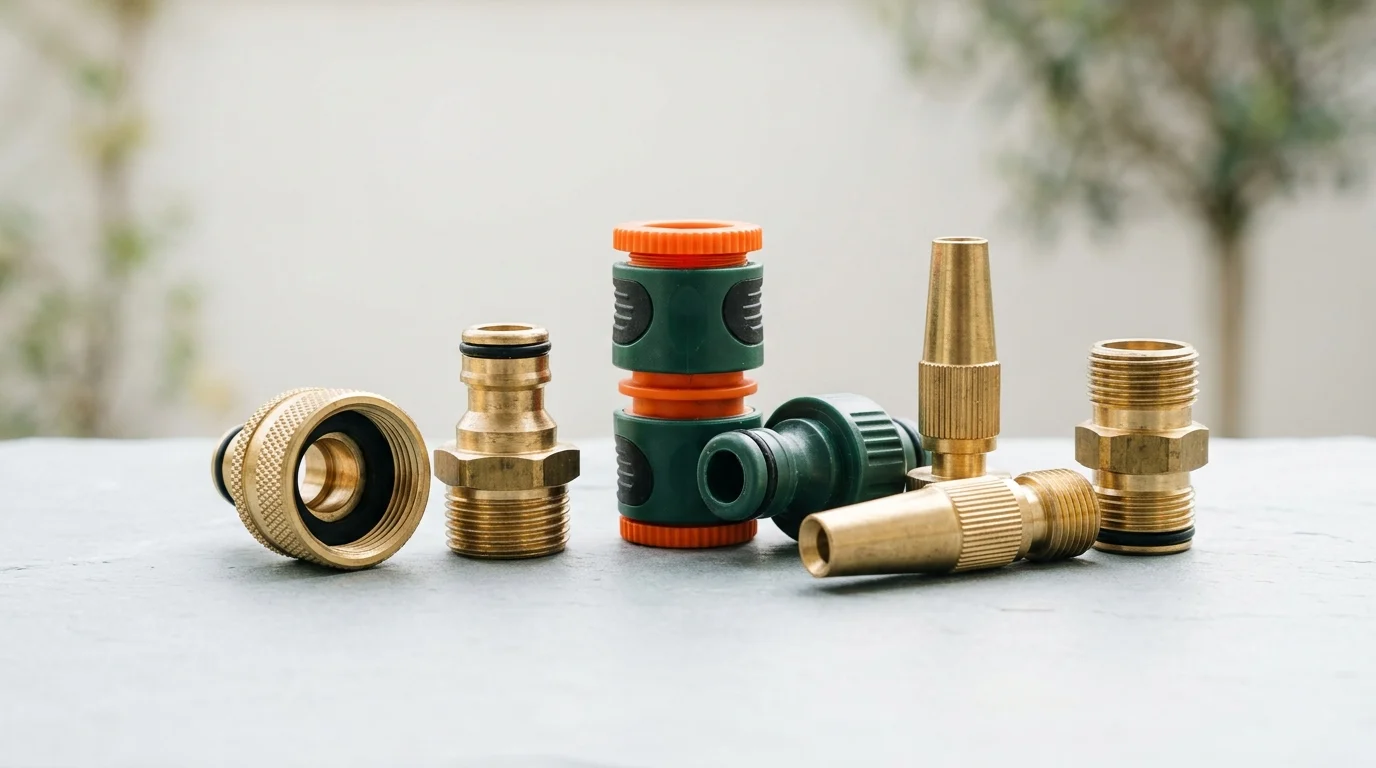
In demanding water transfer systems, connector quality has a direct impact on uptime, safety, and maintenance costs. Brass hose fittings are widely used because they resist wear, handle repeated connections, and maintain a secure seal under pressure better than many lightweight alternatives. This article explains why water hose connectors matter, how durable brass construction helps reduce leaks and failures, and which operating conditions call for higher-performance fittings. It also sets up the key factors to consider when selecting connectors for industrial, agricultural, and commercial use, so readers can better match fitting performance to real working conditions.
Why Water Hose Connectors Matter
Industrial, agricultural, and commercial fluid transfer systems rely heavily on the integrity of their connection points. Water hose connectors serve as the critical linkage between hoses, fixtures, and heavy equipment, directly influencing overall system efficiency and safety. While they are often viewed as minor or interchangeable components, substandard fittings can lead to catastrophic system failures. A sudden disconnection or progressive leak can result in severe operational disruptions, costly fluid loss, and potential safety hazards for personnel operating nearby.
How durable brass fittings reduce leaks and downtime
Brass fittings offer superior mechanical strength and resilience compared to standard polymer alternatives. By utilizing durable brass water hose connectors, facilities can effectively mitigate the risk of stress fractures and thread stripping, even after hundreds of connection and disconnection cycles. High-quality brass components routinely withstand burst pressures exceeding 800 PSI, significantly reducing the likelihood of unexpected ruptures during pressure spikes or water hammer events. This structural integrity translates directly to minimized maintenance downtime, ensuring continuous operation in high-demand industrial processes where every minute of offline time equates to lost revenue.
Which environments require high-performance connectors
High-performance connectors are absolutely essential in environments characterized by extreme temperatures, intense mechanical vibration, or prolonged exposure to harsh environmental elements. Agricultural irrigation systems, commercial landscaping operations, and heavy-duty industrial washdown stations frequently subject fittings to these rigorous conditions. For instance, washdown stations in food processing facilities often operate at continuous water temperatures up to 160°F (71°C). These applications require connectors that resist thermal expansion and contraction without compromising the seal—a technical specification easily met by industrial-grade brass but problematic for standard plastics.
Key Specifications for Brass Water Hose Connectors

Specifying the correct water hose connectors requires a thorough understanding of system requirements and fluid dynamics. Engineers and procurement specialists must carefully evaluate several technical parameters to ensure optimal performance, compatibility, and longevity across their infrastructure.
Material, thread, pressure, and temperature requirements
The foundational specifications for any hose connector include its material composition, thread compatibility, and pressure-temperature ratings. Thread types must be explicitly identified; for example, standard Garden Hose Threads (GHT) utilize straight threads requiring a gasket, whereas National Pipe Threads (NPT) rely on tapered threads to form a mechanical seal. Commercially viable brass connectors are typically engineered for standard working pressures between 150 and 200 PSI. Furthermore, industrial variants must maintain operational integrity across broad temperature ranges, frequently spanning from -40°F to 210°F (-40°C to 99°C), depending on the specific application.
Brass alloy, sealing design, and surface treatment
The specific brass alloy utilized dictates the connector’s performance profile and environmental suitability. C36000 free-machining brass is the industry standard for general fluid transfer applications, offering excellent machinability and durability. However, C46400 naval brass provides essential dezincification resistance, making it mandatory for marine environments or systems handling high-salinity water. Sealing mechanisms, primarily utilizing EPDM or NBR O-rings, are integrated to ensure watertight connections under dynamic pressures. Additionally, surface treatments such as nickel or chrome plating can be applied to significantly enhance external corrosion resistance and reduce friction during coupling.
Brass vs plastic vs stainless steel comparison
When selecting materials, buyers frequently weigh brass against plastic and stainless steel to find the most cost-effective solution. The following table illustrates the comparative advantages of each material class:
| Material | Average Cost | Max Working Pressure | Corrosion Resistance | Best Application |
|---|---|---|---|---|
| Standard Brass | Moderate | 200+ PSI | Good | General industrial, commercial watering |
| Plastic (POM/ABS) | Low | < 100 PSI | Excellent | Light residential, temporary setups |
| Stainless Steel (316) | High | 500+ PSI | Superior | Chemical processing, food grade |
Brass strikes an optimal balance for most operations, providing robust durability and high pressure tolerance without the prohibitive cost premiums associated with stainless steel components.
How to Evaluate Quality and Compliance
Ensuring the long-term reliability of water hose connectors involves rigorous quality control and strict adherence to international regulatory standards. Buyers must scrutinize supplier manufacturing processes to guarantee consistent product performance and risk mitigation.
Manufacturing and inspection checkpoints
Premium manufacturers implement stringent inspection checkpoints throughout the entire production cycle. Precision CNC machining is required to maintain tight thread tolerances, typically within ±0.002 inches, which prevents micro-leaks at the connection interface. Go/No-Go gauging is employed to verify thread accuracy on the factory floor, while hydrostatic batch testing ensures structural integrity. This testing is often conducted at 1.5 times the stated working pressure, meaning a 200 PSI-rated fitting is subjected to a 300 PSI test environment. Reputable suppliers consistently maintain strict quality assurance protocols, driving defect rates well below the industry benchmark of 0.5%.
Certifications and potable water requirements
Regulatory compliance is paramount, particularly when connectors interface with potable water systems or food processing equipment. Fittings intended for human consumption or agricultural applications involving food crops must adhere strictly to NSF/ANSI 61 and NSF/ANSI 372 standards. These regulations mandate a weighted average lead content of ≤ 0.25% across the wetted surfaces of the component. Verification of these material certifications, alongside general RoHS and REACH compliance, protects buyers from severe legal liabilities and ensures both environmental sustainability and public health safety.
How to Select the Right Water Hose Connectors
Navigating the procurement process requires a structured, data-driven approach to balance technical requirements with commercial realities. A methodical selection strategy prevents costly specification mismatches and minimizes supply chain bottlenecks.
Step-by-step product selection process
The product selection process begins with a comprehensive site and system assessment. Buyers must precisely define the required flow rate, internal diameter (e.g., standard 5/8″ versus high-flow 3/4″ hoses), and specific thread standards applicable to their region. Following the establishment of these technical specifications, the focus shifts to ergonomic and functional features. Attributes such as knurled grips, swivel joints, or quick-connect mechanisms become critical differentiators, facilitating efficient coupling and uncoupling in high-use commercial environments.
How to compare price, freight, and lead time
Commercial evaluation extends far beyond the quoted per-unit cost. Buyers must analyze pricing tiers, freight logistics, and manufacturing lead times. Standard minimum order quantities (MOQs) typically range from 1,000 to 5,000 units for custom or branded brass fittings. Lead times for standard off-the-shelf configurations average 4 to 6 weeks, while custom tooling and prototyping may extend delivery timelines to 8 to 12 weeks. Furthermore, the choice between sea and air freight, along with specific incoterms (such as FOB vs. EXW), can drastically alter landed costs, adding anywhere from $0.10 to $0.50 per unit depending on the routing.
Decision matrix for buyers
To streamline vendor evaluation and remove bias, procurement teams frequently utilize decision matrices to objectively score potential suppliers across multiple operational dimensions.
| Evaluation Criteria | Weight | Supplier A (Domestic) | Supplier B (Overseas) |
|---|---|---|---|
| Unit Cost | 35% | 2/5 | 5/5 |
| Quality / Tolerances | 30% | 5/5 | 4/5 |
| Lead Time | 20% | 5/5 | 2/5 |
| Technical Support | 15% | 4/5 | 3/5 |
| Total Weighted Score | 100% | 3.80 | 3.80 |
This analytical framework ensures that purchasing decisions align seamlessly with overarching corporate objectives, whether a project demands rapid domestic delivery or aggressive cost minimization at scale.
Practical Purchasing Strategy
A resilient purchasing strategy safeguards operations against supply chain volatility while optimizing the total cost of ownership over the component’s lifecycle. Establishing robust, transparent supplier relationships is just as critical as the technical evaluation of the connectors themselves.
Supplier qualification and inventory planning
Supplier qualification protocols should mandate ISO 9001 certification to ensure the presence of consistent, documented quality management systems. Once a supplier is qualified, proactive inventory planning becomes the primary focus. Given the potential for global logistical disruptions, relying solely on Just-In-Time (JIT) delivery for critical connection components carries significant operational risk. Astute procurement managers typically maintain a safety stock equivalent to 15% to 20% of their projected annual consumption, effectively buffering against unexpected lead time extensions, raw material shortages, or sudden demand spikes.
Final selection criteria
The final selection criteria must strictly prioritize the Total Cost of Ownership (TCO) over the initial purchase price. Procuring the absolute cheapest connector is a fundamentally flawed strategy if it results in a field defect rate exceeding 1%. The subsequent collateral costs—including unexpected downtime, fluid loss, equipment damage, and maintenance labor—will quickly eclipse any upfront procurement savings. By prioritizing durable brass water hose connectors from fully vetted, compliant manufacturers, organizations ensure reliable, long-term operational efficiency and a stronger return on their infrastructure investments.
Key Takeaways
- The most important conclusions and rationale for Water Hose Connectors
- Specs, compliance, and risk checks worth validating before you commit
- Practical next steps and caveats readers can apply immediately
Frequently Asked Questions
Why choose brass water hose connectors over plastic?
Brass handles higher pressure, repeated coupling, and vibration better than plastic. For industrial, agricultural, and commercial systems, it helps reduce leaks, thread damage, and unplanned downtime.
How do I match the right thread type for a water hose connector?
Check whether your system uses GHT or NPT. GHT uses straight threads with a gasket, while NPT uses tapered threads for sealing. Mismatching them often causes leaks.
What pressure and temperature ratings should I look for?
For demanding use, choose brass connectors rated around 150–200 PSI working pressure and suitable for your temperature range. Washdown and outdoor systems may need wider ranges such as -40°F to 210°F.
Which brass alloy is best for marine or salty water use?
C46400 naval brass is the better choice. It offers stronger dezincification resistance than standard brass, making it more reliable in marine environments or high-salinity water systems.
How can I evaluate a reliable hose connector supplier like nbfh-metal.com?
Review product specs, alloy options, sealing materials, plating, and factory inspection processes. On nbfh-metal.com, checking product pages and factory information can help verify manufacturing and quality control capabilities.
Post time: May-29-2026