
Introduction
Procurement decisions for plumbing components are becoming more complex as 2026 approaches. Wholesale buyers now have to weigh material volatility, lead-free compliance, sustainability expectations, shifting building codes, and the growing demand for smarter, longer-lasting valve systems. This article outlines five trends likely to shape sourcing strategies for brass fittings, plumbing valves, and related wholesale products in the coming year. Readers will gain a practical view of where demand is moving, which product features may matter most, and how distributors, contractors, and importers can better prepare inventory decisions before market pressures turn into costly supply gaps.
Market Shifts in Wholesale Plumbing Fittings and Brass Valves
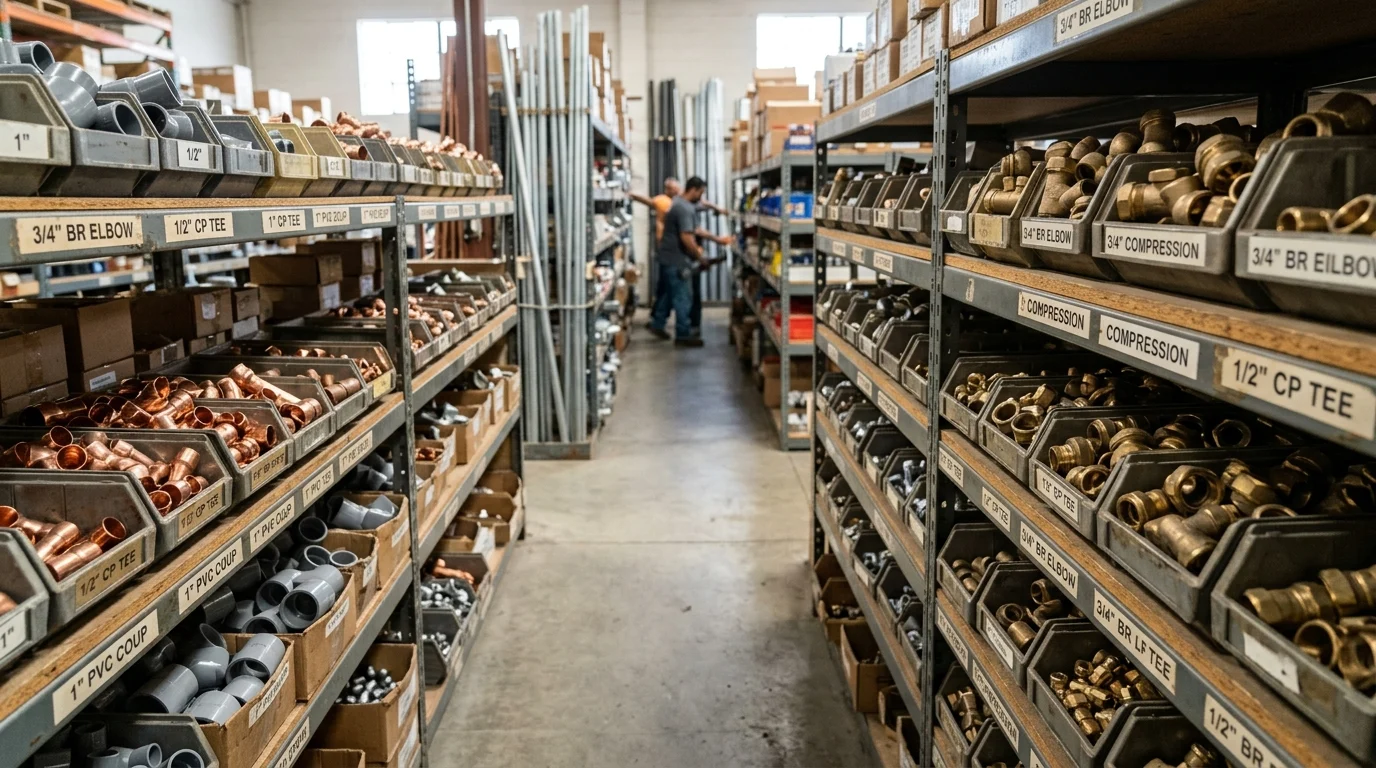
The landscape for wholesale plumbing fittings and brass valves is undergoing a significant transformation as the industry approaches 2026. Driven by tightening environmental regulations, fluctuating global commodities, and a push toward sustainable infrastructure, the market is shifting away from traditional manufacturing paradigms. Distributors and large-scale contractors are recalibrating their procurement strategies to account for these macroeconomic and regulatory variables. Maintaining robust margins now requires a deeper understanding of material science, supply chain resilience, and evolving municipal codes.
As the market expands, the definition of standard plumbing components is changing. Traditional alloys are being phased out in favor of advanced composites and highly regulated metals. For wholesale buyers, anticipating these shifts is critical to avoiding stranded inventory and ensuring that project specifications meet the stringent demands of modern commercial and residential construction.
Demand, Cost, and Code Pressures
The wholesale plumbing sector is currently navigating a complex matrix of demand fluctuations, volatile material costs, and aggressive code updates. Raw material pricing remains a primary stressor; for instance, copper prices frequently oscillate between $8,500 and $9,500 per metric ton, directly impacting the baseline cost of brass valves and fittings. When combined with rising energy costs for smelting and machining, manufacturers are passing these expenses downstream, compressing distributor margins.
Simultaneously, municipal and international plumbing codes are becoming more rigorous. Jurisdictions are increasingly adopting stringent water conservation and safety standards, forcing wholesalers to stock higher-grade, code-compliant products. This regulatory pressure dictates that inventory managers must forecast demand not just based on historical sales, but on impending legislative changes that could render older SKUs obsolete.
Defining Lead-Free Wholesale Plumbing Fittings
The transition to lead-free wholesale plumbing fittings is no longer a localized trend but a global mandate. By strict regulatory definitions, such as those enforced by the Safe Drinking Water Act in the United States, “lead-free” requires that pipes, fittings, and fixtures contain a weighted average lead content of less than 0.25% with respect to the wetted surfaces. This threshold fundamentally alters the metallurgy of brass fittings, requiring manufacturers to substitute lead with bismuth, silicon, or other proprietary elements to maintain machinability.
For wholesale distributors, defining and verifying these lead-free components is paramount. Stocking non-compliant fittings carries severe liability risks and the potential for massive product recalls. Consequently, procurement departments are implementing rigorous supplier audits, demanding metallurgical test reports for every batch to ensure the 0.25% threshold is strictly maintained across all imported and domestic inventories.
Lead-Free Compliance and Performance Materials
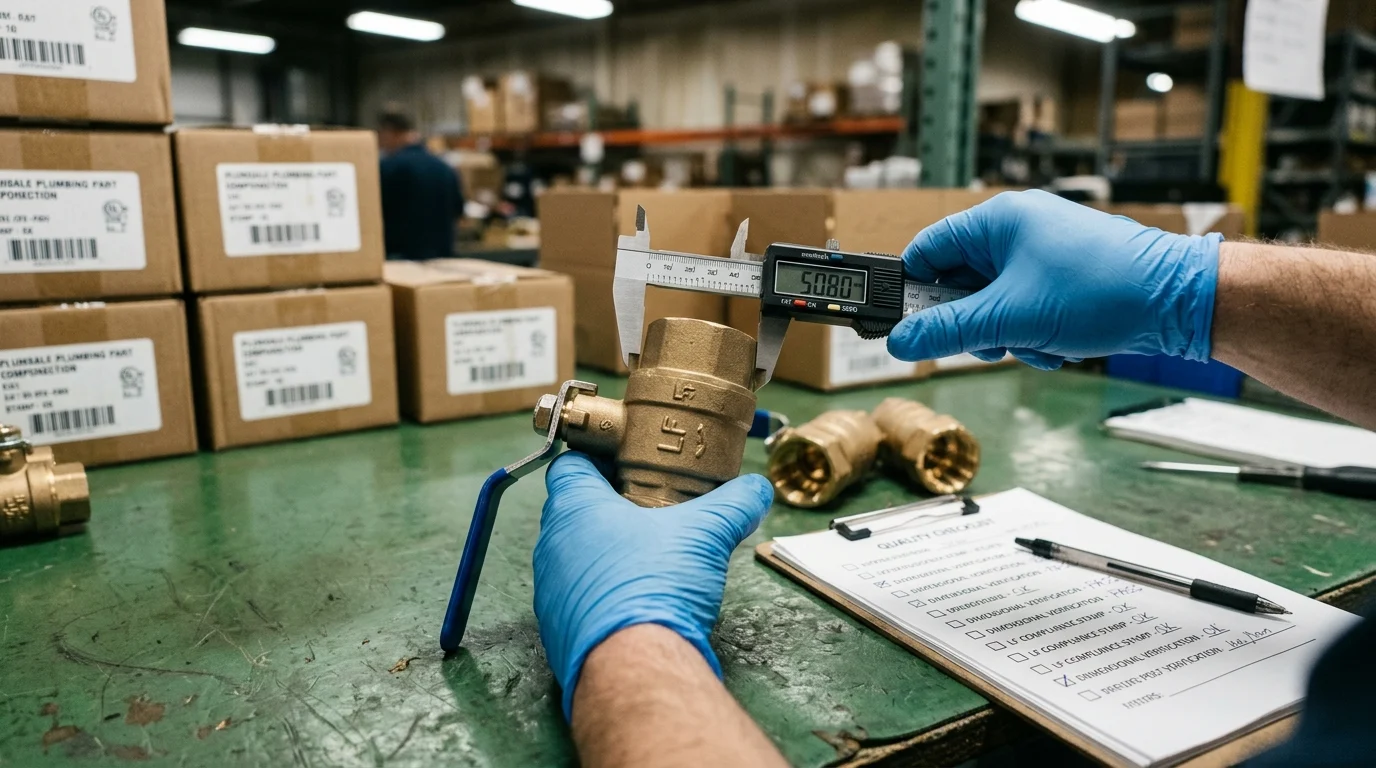
Achieving compliance in the modern plumbing industry extends beyond basic material substitution; it requires comprehensive certification tracking and a nuanced understanding of performance materials. As the industry standardizes lead-free requirements, the focus has shifted toward the mechanical longevity and corrosion resistance of these new alloys. Wholesale buyers must balance the upfront costs of advanced materials against their long-term reliability in diverse water conditions.
Certifications, Standards, and Documentation
Navigating the certification landscape is a critical competency for distributors of wholesale plumbing fittings. Products must carry verifiable documentation proving compliance with standards such as NSF/ANSI 61 (drinking water system components) and NSF/ANSI 372 (lead content verification). Procurement contracts now routinely stipulate that manufacturers provide third-party laboratory testing certificates prior to shipment.
The lack of proper documentation can halt imports at customs or result in rejected submittals on commercial job sites. Furthermore, top-tier wholesalers are establishing quality control benchmarks, aiming for a defect rate of less than 0.5% in incoming compliant batches. This rigorous documentation and testing protocol ensures that every valve and fitting entering the supply chain meets the exact legal and performance specifications required by modern building codes.
Low-Lead, DZR Brass, Stainless Steel, and Polymer Options
The shift away from traditional leaded brass has popularized several alternative materials, each with distinct advantages and cost profiles. Dezincification-resistant (DZR) brass has emerged as a premium choice for aggressive water environments, preventing the leaching of zinc that compromises structural integrity. Stainless steel (specifically 304 and 316 grades) offers unparalleled durability and corrosion resistance, albeit at a higher price point, while engineered polymers like PEX and PPSU are dominating the residential sector due to their cost-effectiveness and ease of installation.
| Material Type | Lead Content | Relative Cost Index | Primary Advantage | Best Application |
|---|---|---|---|---|
| DZR Brass | < 0.25% | Medium-High | Resists dezincification | Aggressive commercial water systems |
| 316 Stainless Steel | 0.00% | High | Extreme corrosion resistance | Industrial, high-purity applications |
| Standard Low-Lead Brass | < 0.25% | Medium | Machinability, standard compliance | General residential plumbing |
| Engineered Polymers (PPSU) | 0.00% | Low-Medium | Scale resistance, lightweight | PEX piping systems, residential |
Selecting the appropriate material requires wholesalers to analyze their regional water quality and customer base. A distributor in an area with highly acidic municipal water will prioritize DZR brass and stainless steel, whereas a supplier focused on high-volume residential tract housing may lean heavily into polymer and standard low-lead brass options to maintain competitive pricing.
Smart, Water-Efficient, and Application-Specific Valves
The integration of technology into fluid control systems is redefining the capabilities of plumbing valves. By 2026, the demand for smart, water-efficient, and application-specific valves is expected to capture a significantly larger share of the wholesale market. These advanced components offer real-time monitoring, automated shutoff capabilities, and precise flow control, addressing both conservation mandates and the growing need for building automation.
Commercial and Industrial Use Cases
In commercial and industrial environments, the financial impact of water damage and inefficiencies can be catastrophic. IoT-enabled shutoff valves and advanced pressure-reducing valves (PRVs) are becoming standard specifications in multi-family high-rises, hospitals, and data centers. These systems are capable of detecting micro-leaks as small as 0.1 gallons per minute (GPM), automatically isolating compromised pipe sections before major flooding occurs.
Wholesale plumbing fittings tailored for these sectors must interface seamlessly with Building Management Systems (BMS). Distributors are expanding their catalogs to include valves with integrated flow meters and telemetry modules. By supplying these application-specific solutions, wholesalers enable commercial contractors to meet strict LEED certification requirements, often reducing overall building water consumption by 15% to 20%.
Mechanical Reliability vs Digital Control
Despite the rapid adoption of smart technology, a critical debate remains regarding the balance between mechanical reliability and digital control. Traditional mechanical valves are prized for their fail-safe nature and longevity, often boasting operational lifespans exceeding 20 to 25 years with minimal maintenance. In contrast, digital valves and motorized actuators introduce electronic components that may require servicing or battery replacements every 5 to 7 years.
For wholesale buyers, this dichotomy necessitates a dual-inventory strategy. Critical infrastructure and emergency suppression systems still heavily rely on robust, mechanically actuated brass and steel valves. However, for domestic water supply and localized fixture control, the market is aggressively pivoting toward digital solutions. Wholesalers must educate their contractor networks on the total lifecycle costs and maintenance intervals associated with both mechanical and digital options.
Sourcing, Logistics, and Private Label Strategy
Supply chain volatility over the past decade has forced a fundamental redesign of sourcing and logistics strategies within the plumbing industry. Wholesale distributors are moving away from single-source dependencies, opting instead for diversified, agile supply networks. Establishing a robust private label strategy and mitigating geopolitical risks are now central to maintaining profitable operations and ensuring a continuous flow of critical wholesale plumbing fittings.
Supplier Qualification and Tariff Risk
Supplier qualification has evolved from a simple price-comparison exercise into a comprehensive risk assessment protocol. Wholesalers are auditing overseas factories for ethical labor practices, environmental compliance, and raw material provenance. Additionally, tariff risks continue to threaten margin stability. For example, Section 301 tariffs have historically imposed up to 25% additional duties on certain Chinese-manufactured brass fittings, forcing buyers to constantly recalculate landed costs.
To navigate this, distributors are negotiating flexible Minimum Order Quantities (MOQs). Instead of committing to massive 10,000-unit runs of a single SKU, buyers are utilizing mixed-container strategies, importing 2,000 to 5,000 units across multiple product lines. This approach minimizes capital tie-up and reduces the financial impact if a specific product category is suddenly subjected to retaliatory tariffs.
Domestic, Nearshore, and Offshore Sourcing Comparison
The geographical distribution of manufacturing is shifting as companies weigh the benefits of domestic, nearshore, and offshore production. Offshore sourcing in Asia remains highly competitive on per-unit costs but carries longer lead times and higher geopolitical risk. Nearshoring to countries like Mexico offers a strategic middle ground, providing favorable transit times and reduced tariff exposure, while domestic manufacturing ensures maximum supply chain security and appeals to government-funded projects requiring “Buy America” compliance.
| Sourcing Region | Typical Lead Time | Cost Relative to Offshore | Tariff/Geopolitical Risk | Best For |
|---|---|---|---|---|
| Offshore (e.g., SE Asia) | 90 – 120 Days | Baseline (Lowest) | High | High-volume, standard brass fittings |
| Nearshore (e.g., Mexico) | 30 – 60 Days | +15% to +25% | Low-Medium | Heavy valves, rapid replenishment SKUs |
| Domestic (USA) | 14 – 30 Days | +40% to +60% | Minimal | Specialized, highly regulated components |
A successful private label strategy often utilizes a hybrid sourcing model. A distributor might source its high-volume, standard PEX fittings from offshore partners to maximize margins, while relying on nearshore or domestic foundries for heavy commercial brass valves where freight costs and lead times are more critical factors.
Buyer Decision Framework for Distributors and Contractors
To thrive in the 2026 market, distributors and large-scale contractors must adopt a highly analytical buyer decision framework. Procurement can no longer operate on intuition or legacy relationships alone. By implementing data-driven purchasing matrices and rigorous inventory management protocols, wholesale operations can optimize their capital deployment and align their stock with the most profitable, fast-moving market segments.
Certification, Valve Type, Material, and Cost Matrix
Developing a robust purchasing matrix involves evaluating every SKU against four primary pillars: certification compliance, valve/fitting type, material integrity, and total cost of ownership. Buyers must weigh the initial unit cost against potential failure rates, warranty claims, and installation efficiencies. For instance, paying a 10% premium for a DZR brass fitting with a verifiable NSF/ANSI 61 certification often yields a lower total cost than importing a cheaper, uncertified alternative that risks job-site rejection.
Contractors are increasingly demanding transparency from their wholesale partners regarding these metrics. A well-structured matrix allows distributors to quickly present “good, better, best” options to their clients, easily comparing standard low-lead brass against premium stainless steel or polymer alternatives. This consultative approach not only accelerates the sales cycle but also positions the wholesaler as a technical authority rather than a mere commodity broker.
Inventory Audits and Slow-Moving SKU Reduction
Optimizing warehouse space and capital liquidity requires aggressive inventory audits and the systematic reduction of slow-moving SKUs. As the market transitions fully to lead-free and smart technologies, legacy components quickly become dead stock. Industry benchmarks suggest that high-performing wholesale plumbing distributors should aim for 4 to 6 inventory turns annually. Achieving this velocity necessitates purging outdated inventory.
Forward-thinking operations are actively reducing their holdings of non-DZR brass and obsolete mechanical valves by up to 40%. The capital freed from these liquidations is immediately reinvested into high-velocity items, such as engineered polymer fittings, smart shutoff valves, and universally compliant press-fit systems. By continuously pruning the product catalog and aligning inventory with 2026 code requirements, wholesalers ensure maximum profitability and operational agility in a rapidly evolving industry.
Key Takeaways
- The most important conclusions and rationale for Wholesale Plumbing Fittings
- Specs, compliance, and risk checks worth validating before you commit
- Practical next steps and caveats readers can apply immediately
Frequently Asked Questions
What should wholesale buyers prioritize in plumbing fittings for 2026?
Prioritize lead-free compliance, verified certifications, corrosion-resistant materials, stable supply, and products aligned with updated municipal plumbing codes.
Which certifications matter most for brass valves and plumbing fittings?
Look for NSF/ANSI 61 for drinking water safety and NSF/ANSI 372 for lead-content compliance, supported by valid third-party test reports.
Why are lead-free brass fittings becoming standard?
Regulations increasingly require wetted surfaces to contain less than 0.25% weighted average lead, reducing liability and recall risks.
When should distributors choose DZR brass fittings?
Choose DZR brass for aggressive or mineral-rich water conditions where dezincification could weaken standard brass fittings over time.
Where can buyers review product and certificate information from NBFH Metal?
Buyers can browse wholesale plumbing products at nbfh-metal.com/products/ and review certification information at nbfh-metal.com/certificate/.
References
- What are the Best Pipe Brass Fittings for 2026?
- Plumbing & Heating Supplies Wholesaling in the US Industry …
- Plumbing Industry Trends You Need To Know In 2026 | BDR
- Opportunity through disruption: 2026 Plumbing Industry Outlook
- 2026 Top Fittings Trends You Should Know About?
- Top 5 Trends in Wholesale for 2026 – JOOR
- US Plumbing Fixtures & Fittings Report – Market Size, Market Share
- Merit Brass Showcases Complete PVF & Press Solutions – AHR 2026
- Brass Faucets Market Outlook 2026- 2035 | Expanding to $22.68 Bn
- Ferguson: Plumbing Supplies, HVAC Parts, Pipe, Valves & Fittings
Post time: Jun-15-2026