
Introduction
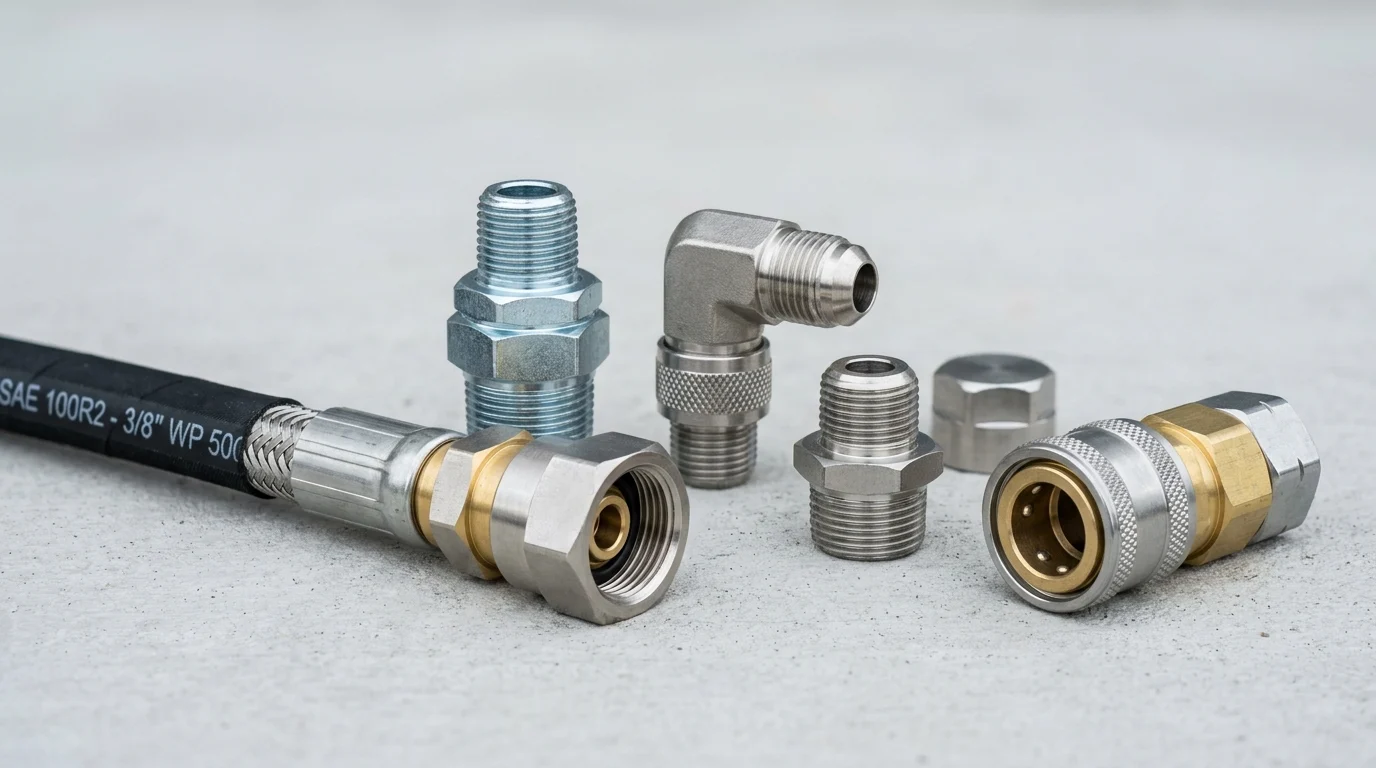
As hydraulic equipment packs more power into smaller spaces, the demands placed on high pressure hose fittings have changed sharply. These components no longer serve as simple connectors; they must maintain sealing integrity, resist vibration and pressure spikes, and fit within increasingly tight routing paths. That makes the fitting assembly a common failure point when system pressure, motion, and installation constraints are not considered together. This article explains why fittings are becoming the limiting factor in modern hydraulic design, what operating conditions expose their weaknesses, and which design and selection priorities help improve reliability, safety, and service life.
Why high pressure hose fittings become the weakest link
Modern hydraulic systems operate at the intersection of extreme power density and stringent spatial constraints. As engineers push the physical limits of heavy machinery, industrial automation, and hydrostatic transmissions, the fluid conveyance network is subjected to unprecedented stress. Within this network, high pressure hose fittings have emerged as the critical juncture—and frequently, the weakest link.
Unlike the rigid steel tubing or the flexible elastomeric hose itself, the fitting represents a complex transition zone. It must mechanically grip the hose reinforcement, seal the high-pressure fluid, and interface flawlessly with the system’s ports, all while enduring relentless dynamic loading.
Higher pressures, tighter packaging, and mixed system demands
Historically, standard industrial hydraulics operated reliably at 3,000 psi (210 bar). Today, high-demand applications such as mobile excavators, injection molding machines, and deep-hole drilling rigs routinely push continuous operating pressures to 5,000–6,000 psi (345–415 bar), with specialized hydrostatic drives exceeding 10,000 psi (690 bar). This escalation in pressure fundamentally alters the structural requirements of the hose assembly.
Simultaneously, equipment design has prioritized compact footprints. Tighter packaging forces engineers to route hoses through aggressive bend radii, often placing lateral stress directly on the fitting’s crimp shell. When mixed system demands—combining high flow rates, elevated temperatures, and aggressive routing—converge on a single connection point, the safety margins of standard fittings are rapidly consumed.
Why fitting performance now drives system reliability
The integrity of a hydraulic circuit is only as robust as its weakest connection. A single catastrophic fitting blowout on a high-capacity line can evacuate a 50-gallon hydraulic reservoir in less than sixty seconds, leading to immediate pump cavitation, environmental contamination, and total system shutdown.
Beyond catastrophic blowouts, micro-leaks caused by inadequate fitting performance quietly erode system efficiency. A continuously weeping fitting can cause volumetric efficiency to drop by 2% to 5%, forcing hydraulic pumps to work harder, generating excess heat, and accelerating fluid degradation. Consequently, fitting performance is no longer viewed as a peripheral plumbing issue; it is a primary driver of overall machine reliability and operational uptime.
What defines high pressure hose fitting performance
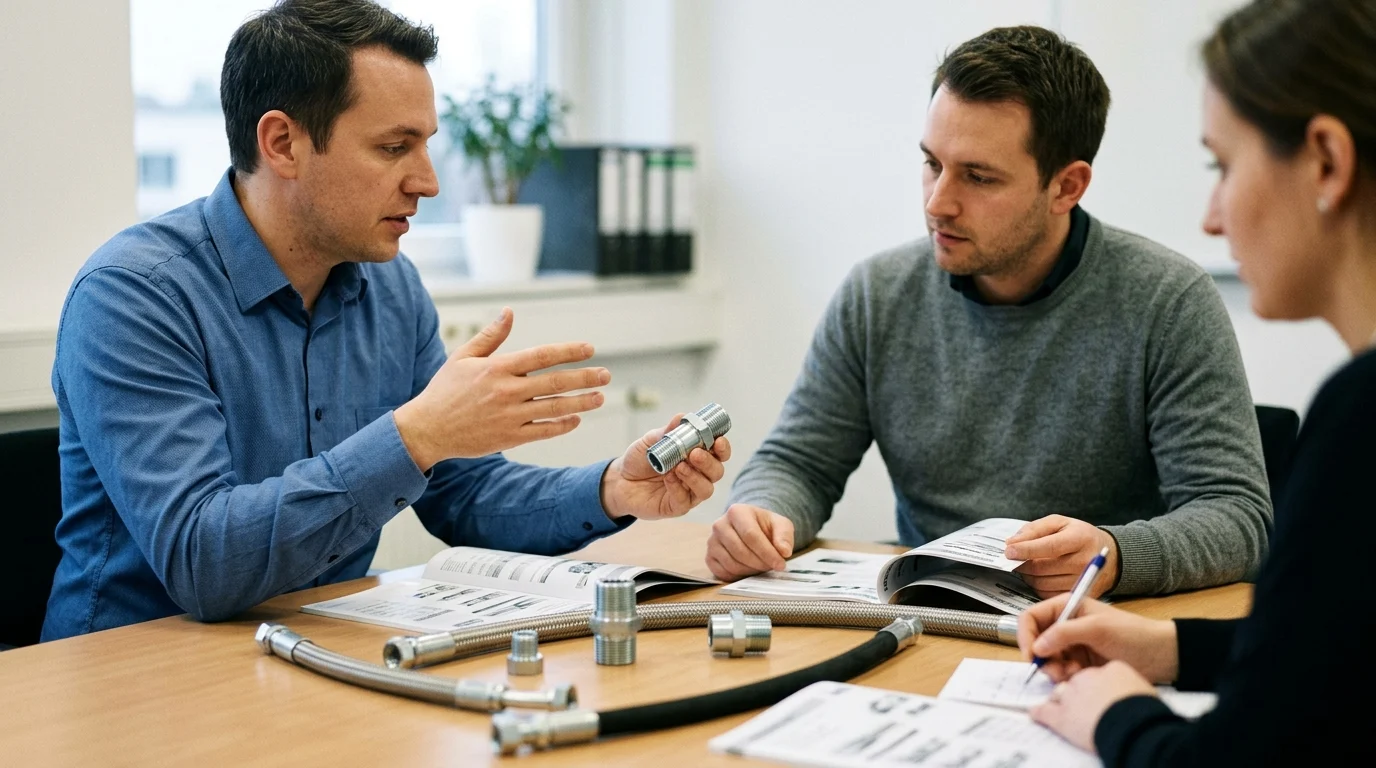
Evaluating high pressure hose fitting performance requires a granular understanding of material science, mechanical design, and application-specific tolerances. A premium fitting is engineered to maintain a flawless seal and mechanical hold long after the hose elastomer begins its natural degradation cycle.
Key specifications for pressure, compatibility, and durability
The fundamental specifications governing fitting selection include maximum working pressure, burst pressure, and operating temperature range. Industry standards strictly dictate a minimum 4:1 safety factor for hydraulic hose assemblies, meaning a fitting rated for 5,000 psi working pressure must withstand a laboratory burst test of at least 20,000 psi.
Material compatibility is equally critical. While standard carbon steel fittings are ubiquitous, their temperature and chemical limits are rigid. Standard nitrile (NBR) seals within fittings handle temperatures from -40°C to +120°C. However, modern systems utilizing synthetic, fire-resistant fluids or operating in extreme heat require 316 stainless steel bodies paired with PTFE or fluoroelastomer (FKM) O-rings capable of withstanding continuous exposure up to +200°C.
Crimped, reusable, one-piece, and application-specific fitting types
High pressure hose fittings are generally categorized by their assembly method and structural design. One-piece crimped fittings integrate the ferrule and the insert into a single pre-assembled unit, ensuring the ferrule collar is perfectly aligned during assembly. Two-piece crimped fittings separate the ferrule and the stem, allowing for customized combinations of hose and fitting styles, though they require meticulous matching by the assembler.
Reusable, or field-attachable, fittings utilize a threaded mechanical grip rather than a permanent deformation crimp. While highly valuable for emergency repairs in remote locations, they are generally restricted to lower-pressure applications and are rarely specified for modern high-surge circuits.
Trade-offs among fitting designs
Selecting the right design involves balancing installation complexity, pressure capacity, and inventory management.
| Fitting Design | Max Pressure Capacity | Installation Complexity | Primary Use Case |
|---|---|---|---|
| One-Piece Crimped | Up to 6,000 psi | Low (Pre-assembled shell) | High-volume OEM production |
| Two-Piece Crimped | Up to 10,000+ psi | Medium (Requires exact matching) | Extreme high-pressure, multi-hose fleets |
| Field Attachable | Limited (≤ 3,000 psi) | High (Manual assembly) | Emergency field repairs |
While one-piece designs minimize assembly errors and streamline OEM production lines, two-piece designs offer the versatility required in heavy-duty aftermarket facilities handling diverse hose constructions, such as four-wire and six-wire spiral hoses.
Why hydraulic hose and fitting assemblies still fail
Even when premium components are specified, hydraulic hose and fitting assemblies remain highly susceptible to premature failure in the field. Industry failure analysis indicates that manufacturing defects account for less than 20% of assembly breakdowns; the vast majority are linked to external damage, improper selection, or flawed assembly execution.
Selection errors, assembly mistakes, and bend radius violations
The majority of catastrophic assembly failures stem from dimensional errors during the crimping process. A deviation of just 0.1 mm in the final crimp diameter can have severe consequences: under-crimping allows the fitting to blow off under pressure, while over-crimping crushes the hose’s inner tube, creating a flow restriction and stress riser that leads to premature rupture.
Bend radius violations are another leading cause of failure at the fitting junction. Installers frequently bend the hose immediately adjacent to the crimp shell to navigate tight spaces. This violates the foundational 1.5x OD straight-line rule, which mandates that a hose must remain perfectly straight for a distance of at least 1.5 times its outside diameter before a bend begins, preventing the wire reinforcement from pulling out of the fitting’s grip.
Contamination, fluid chemistry, pulse loading, and vibration
Beyond mechanical assembly errors, environmental and operational stressors rapidly degrade fitting integrity. High-frequency pulse loading—where surge pressures spike to 1.5x or 2x the rated working pressure—induces severe metal fatigue at the thread roots and crimp interface. Over millions of cycles, this fatigue manifests as micro-cracking.
Fluid chemistry and external contamination also play pivotal roles. The introduction of aggressive biodegradable hydraulic fluids can degrade standard elastomeric seals within the fitting, leading to slow leaks. Meanwhile, high-amplitude vibration transmitted from the pump or implement can cause threaded connections to physically back out if not secured with proper torque or anti-vibration O-ring face seals (ORFS).
Field indicators and inspection checkpoints
Proactive maintenance relies on identifying early warning signs before a catastrophic blowout occurs. Maintenance personnel must conduct routine visual and tactile inspections.
Key inspection checkpoints include weeping at the shell-to-hose interface, which indicates an imminent loss of mechanical grip. Inspectors should also look for wire reinforcement extrusion pushing past the ferrule, cracking on the fitting nut, and any signs of jacket skive errors where the outer rubber was improperly removed during assembly, exposing the high-tensile steel wire to atmospheric corrosion.
How to evaluate suppliers, compliance, and quality control
Procuring high-pressure hose fittings for critical infrastructure requires moving beyond basic specification sheets and implementing rigorous supplier evaluation frameworks. As the global supply chain expands, distinguishing between premium engineered components and substandard commodities is vital for risk mitigation.
Standards, certifications, and test protocols
Top-tier fittings must comply with stringent international dimensional and performance standards, such as SAE J516, ISO 12151, and DIN 20066. However, dimensional compliance alone does not guarantee dynamic performance.
To validate design integrity, premium manufacturers subject their fittings to severe impulse testing protocols. For high-pressure applications, standards like ISO 6803 dictate that assemblies must survive between 500,000 and 1,000,000 impulse cycles at 133% of the maximum working pressure, conducted at elevated fluid temperatures of 100°C to 120°C. Suppliers must provide certified test reports verifying these endurance thresholds.
Traceability, crimp data control, and inventory strategy
Modern quality control demands absolute traceability from the raw steel billet to the final assembly. Advanced suppliers utilize laser-etched batch coding directly on the fitting nut or crimp shell, allowing rapid identification of manufacturing dates, material heats, and factory origin in the event of a recall.
At the assembly level, crimp data control has become digitized. IoT-connected crimping machines now record the exact crimp outside diameter (OD), date, and operator ID for every single hose assembly produced. This digital handshake between the fitting supplier’s specifications and the assembler’s equipment ensures flawless repeatability and eliminates the guesswork from inventory strategy.
Supplier qualification and selection process
A robust supplier qualification process involves auditing a vendor’s quality management system, typically requiring ISO 9001 certification and adherence to automotive-grade frameworks like the Production Part Approval Process (PPAP).
Procurement engineers should evaluate a supplier’s statistical process control (SPC) capabilities. Leading fitting manufacturers maintain strict dimensional tolerances, achieving defect rates below 50 Parts Per Million (PPM). Assessing a supplier’s metallurgical testing capabilities, specifically their salt-spray corrosion testing (aiming for 700+ hours of red rust resistance), is also a mandatory step in the qualification process.
How to choose the right high pressure hose fittings
Selecting the optimal high pressure hose fittings is a strategic exercise that directly impacts both capital expenditure and long-term operational profitability. The decision matrix must account for lifecycle costs, inventory complexity, and the specific operational environment of the machinery.
Balancing purchase cost against downtime risk
Procurement teams frequently face the dilemma of upfront component costs versus long-term reliability. A standard carbon steel fitting may cost between $5 and $15, whereas a 316 stainless steel equivalent or a fitting with advanced proprietary zinc-nickel plating can range from $30 to $60. However, the purchase price is negligible compared to the total cost of ownership (TCO).
When a single hour of heavy machinery downtime exceeds $1,500 in lost productivity—excluding the costs of environmental cleanup, replacement fluid, and emergency labor—the ROI of premium fittings becomes evident.
| Material / Coating Strategy | Initial Cost Band | Corrosion Resistance (Salt Spray) | Ideal Application Profile |
|---|---|---|---|
| Standard Carbon Steel | $5 – $15 | < 100 hours | Indoor, climate-controlled industrial automation |
| Zinc-Nickel Plated | $12 – $25 | 700 – 1,000 hours | Mobile construction equipment, coastal exposure |
| 316 Stainless Steel | $30 – $60+ | Exceptional / Indefinite | Marine, chemical processing, offshore drilling |
Selecting a fitting based solely on the initial cost band often leads to accelerated corrosion, thread galling, and premature failure in harsh environments.
When to standardize and when to customize
Organizations must strategically decide when to standardize across their fleet and when to engineer custom solutions. Standardizing on universally recognized, high-performance thread forms—such as O-Ring Face Seal (ORFS) or British Standard Pipe Parallel (BSPP)—can dramatically streamline maintenance operations. Fleet-wide standardization typically reduces inventory SKUs by 20% to 30%, lowering carrying costs and minimizing the risk of technicians forcing incompatible threads together.
Conversely, customization is warranted when dealing with extreme space constraints or proprietary OEM manifold blocks. In these scenarios, custom jump-size fittings or multi-angle block fittings can eliminate the need for multiple adapters, thereby reducing the number of potential leak points in the high-pressure circuit. The ultimate goal is to architect a fluid conveyance system where the fitting is no longer the weakest link, but a foundational pillar of system reliability.
Key Takeaways
- The most important conclusions and rationale for high pressure hose fittings
- Specs, compliance, and risk checks worth validating before you commit
- Practical next steps and caveats readers can apply immediately
Frequently Asked Questions
Why are high pressure hose fittings often the weakest link in hydraulic systems?
They handle sealing, hose retention, and port connection at once. High pressure, tight bends, heat, and vibration concentrate stress at the fitting, increasing leak and blowout risk.
What fitting type is best for modern high-pressure hydraulic lines?
For most OEM and demanding circuits, one-piece or correctly matched two-piece crimped fittings are preferred. Field-attachable fittings are mainly for lower-pressure emergency repairs.
How do I choose the right pressure rating for a hose fitting?
Match the fitting to the system’s maximum working pressure and keep the required 4:1 safety factor. Example: a 5,000 psi line needs an assembly proven to at least 20,000 psi burst.
When should I use stainless steel fittings and upgraded seals?
Use 316 stainless steel with PTFE or FKM seals for corrosive environments, fire-resistant fluids, or sustained high temperatures. Standard carbon steel with NBR seals suits many general hydraulic applications.
Can NBFH Metal help with custom high pressure hose fitting needs?
Yes. NBFH Metal supplies hydraulic fitting solutions and can support hose-fitting selection based on pressure, fluid, temperature, and connection style for your application.
Post time: Jun-08-2026