
Introduction
In industrial manufacturing, component choice directly affects assembly accuracy, equipment reliability, and long-term operating costs. OEM precision brass parts offer a practical solution when standard components cannot meet exact dimensional, mechanical, electrical, or fluid-control requirements. Because brass combines machinability, corrosion resistance, conductivity, and durability, it is widely used in valves, fittings, connectors, instrumentation, and other critical assemblies. This article explains why sourcing custom brass components from qualified OEM suppliers can improve product performance, streamline production, and support more resilient supply chains. It also sets the stage for evaluating how material properties, customization, quality control, and supplier capability influence purchasing decisions.
Strategic Value of OEM Precision Brass Parts
Original Equipment Manufacturer (OEM) precision brass parts represent a foundational element in modern industrial manufacturing. As supply chains become increasingly specialized, the demand for custom-engineered components that offer both reliability and cost-efficiency has surged. Sourcing OEM precision brass parts allows manufacturers to tailor components exactly to their proprietary assemblies, bypassing the limitations and compromises associated with off-the-shelf alternatives.
The strategic integration of these custom components into production lines enables companies to optimize system performance, reduce assembly bottlenecks, and enhance the lifecycle of the end product. Understanding the core value of these parts is the first step in building a resilient, highly optimized manufacturing operation.
Definition and Common Industrial Applications
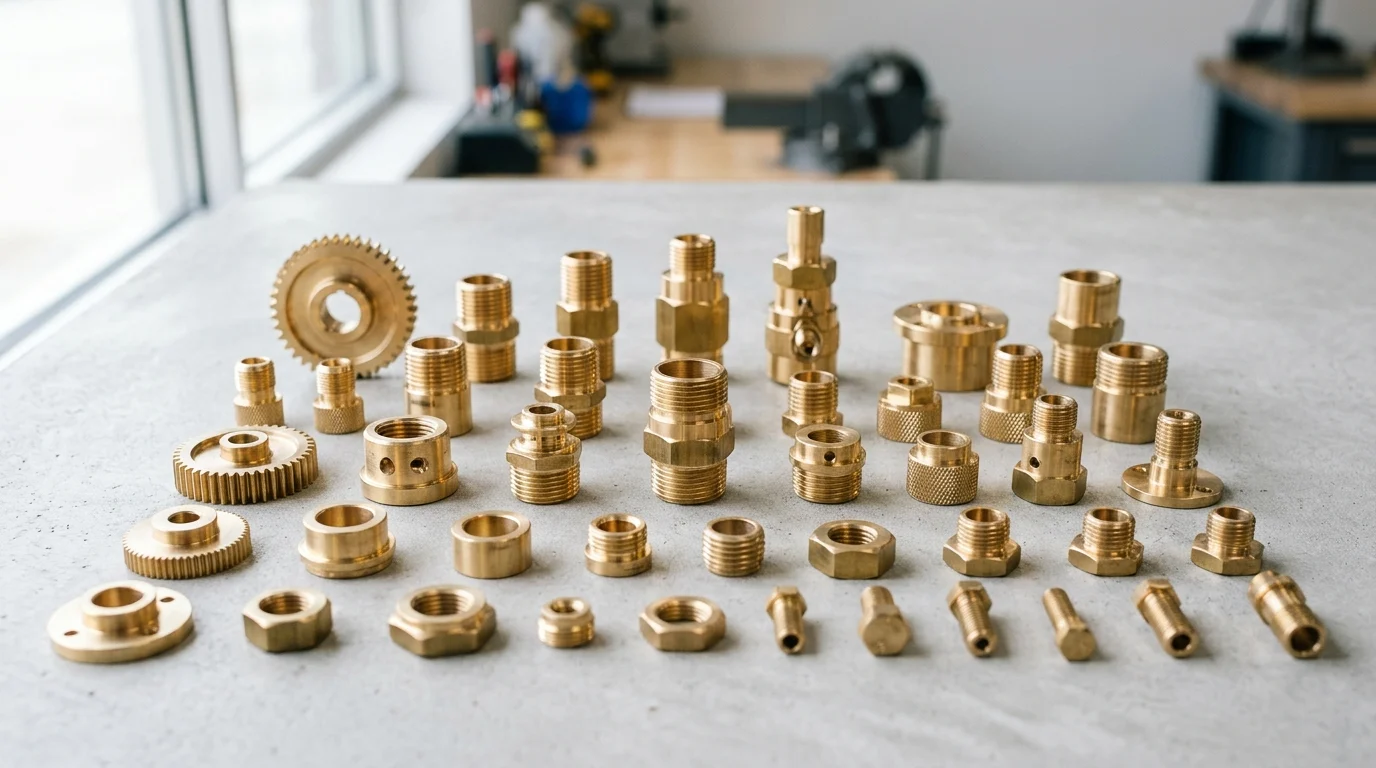
OEM precision brass parts are custom-machined, forged, or stamped components manufactured strictly according to a buyer’s proprietary engineering drawings and specifications. Unlike standardized hardware, these parts are engineered to fulfill highly specific mechanical, fluidic, or electrical functions within a larger assembly.
These components are ubiquitous across several high-stakes industrial sectors. In the fluid control and HVAC industries, brass valves, fittings, and manifolds account for up to 15% of the total material volume in commercial installations due to their pressure resistance and low friction. The automotive and aerospace sectors rely on brass for precision sensor housings, fluid connectors, and specialized fasteners. Similarly, the electrical and telecommunications industries utilize custom brass terminals, pins, and connectors to ensure stable signal transmission and power distribution.
Key Commercial Advantages of Custom Brass Components
The commercial advantages of sourcing custom brass components extend well beyond their functional attributes. One of the primary financial benefits stems from the exceptional machinability of brass. Manufacturing processes can operate at significantly higher speeds—often reducing cycle times by 30% to 50% compared to carbon steel or stainless steel machining. This accelerated production rate directly lowers machine-hour costs and labor overhead.
Furthermore, the use of brass extends the lifespan of cutting tools. Tool wear is reduced by up to 40% when machining standard free-cutting brass compared to harder alloys, which minimizes costly production downtimes for tool replacement. For high-volume OEM buyers, this translates to a lower Total Cost of Ownership (TCO). Additionally, custom brass parts eliminate the need for secondary modifications that are often required when adapting off-the-shelf components, ensuring a seamless fit and reducing overall assembly time.
Material, Tolerance, and Design Requirements

Specifying the correct material grade and geometric tolerances is critical to the performance of OEM precision brass parts. Engineering teams must balance mechanical strength, environmental resistance, and manufacturability to ensure the final component meets the rigorous demands of its intended industrial application.
Brass Alloys, Machinability, Conductivity, and Corrosion Resistance
The selection of a specific brass alloy dictates the component’s performance and production efficiency. C36000, commonly known as Free-Machining Brass, is the industry standard for CNC turning and milling, boasting a machinability rating of 100%. This alloy contains a small percentage of lead, which acts as an internal lubricant during cutting, allowing for high-speed machining and excellent chip breakage.
For applications requiring superior corrosion resistance or compliance with stringent environmental regulations, alternative alloys such as C46400 (Naval Brass) or C69300 (Eco Brass) are utilized. Naval brass incorporates tin to prevent dezincification in marine environments. Electrically, standard brass alloys offer a conductivity of approximately 28% IACS (International Annealed Copper Standard), making them highly suitable for electrical grounding components, terminal blocks, and custom busbars where pure copper is unnecessarily expensive or too soft.
Tolerance, Surface Finish, Threading, and Plating Specifications
Precision is the defining characteristic of OEM components. Advanced CNC Swiss-style lathes can hold dimensional tolerances as tight as +/- 0.005 mm, essential for parts like gas valves or hydraulic spools where micro-leaks are unacceptable. Surface finish requirements also play a critical role; a standard machined finish typically ranges from Ra 1.6 to 3.2 micrometers, but bearing surfaces or sealing faces may require burnishing or grinding to achieve an Ra of 0.4 micrometers.
Threading specifications must adhere strictly to international standards (such as NPT, BSPT, or Metric ISO) to ensure leak-free connections and mechanical retention. While brass possesses natural corrosion resistance, secondary plating is frequently applied to enhance surface properties. Nickel plating (typically 3 to 5 microns thick) prevents tarnishing and increases surface hardness, while tin plating is applied to electrical contacts to improve solderability and prevent oxidation.
When to Choose Brass Over Alternative Materials
Selecting brass over alternative metals involves a careful analysis of cost, manufacturability, and application environment. While stainless steel offers superior strength and corrosion resistance, it is notoriously difficult to machine, leading to higher production costs and longer lead times. Aluminum is lighter and cheaper but lacks the wear resistance, thread strength, and electrical conductivity of brass.
| Material | Machinability Rating | Typical Tensile Strength | Relative Cost (Machined Part) | Key Advantage |
|---|---|---|---|---|
| Free-Machining Brass (C36000) | 100% | 338 – 469 MPa | Moderate | Highest machining speed, excellent scrap value |
| Stainless Steel (304) | 45% | 505 – 700 MPa | High | Superior strength and chemical resistance |
| Aluminum (6061-T6) | 90% | 310 MPa | Low | High strength-to-weight ratio |
Brass becomes the optimal choice when the component requires intricate geometries, tight tolerances, frequent threading, and moderate-to-high volume production. The high scrap value of brass chips—often recovering 70% to 80% of the raw material cost—further offsets its initial material premium compared to aluminum or steel.
Quality, Compliance, and Supplier Evaluation
Quality assurance and regulatory compliance are non-negotiable parameters in the procurement of OEM precision brass parts. Buyers must implement stringent supplier evaluation frameworks to mitigate the risks of component failure, supply chain disruption, and legal penalties associated with non-compliance.
Inspection Methods, Certifications, and Traceability Controls
Robust inspection protocols are vital for validating the precision of custom brass parts. Suppliers should utilize Coordinate Measuring Machines (CMM) capable of verifying complex geometries with accuracies down to 0.001 mm. Optical comparators and automated vision systems are also employed for high-speed, non-contact measurement of critical dimensions and thread profiles during large production runs.
Certifications serve as a baseline indicator of a supplier’s quality management capabilities. ISO 9001:2015 is the standard requirement, but suppliers catering to the automotive sector must hold IATF 16949 certification. Traceability controls are equally critical; a qualified OEM supplier must provide material test reports (MTRs) and maintain lot-level traceability, ensuring that any defect can be traced back to the specific raw material batch and production shift.
RoHS, REACH, Lead-Content, and Industry Compliance Requirements
The regulatory landscape governing brass components primarily focuses on heavy metal content. The European Union’s RoHS 3 (Restriction of Hazardous Substances) directive limits lead content to 0.1% (1000 ppm) by weight. However, under exemption 6(c), copper alloys containing up to 4% lead by weight are currently permitted, which covers most standard free-machining brasses.
Similarly, the REACH (Registration, Evaluation, Authorisation and Restriction of Chemicals) regulation requires manufacturers to declare the presence of Substances of Very High Concern (SVHC), which includes lead. As global regulations tighten, buyers supplying potable water systems must also adhere to standards like the US Safe Drinking Water Act (SDWA) and NSF/ANSI 61, which mandate the use of ultra-low-lead or lead-free brass alloys (containing less than 0.25% weighted average lead content).
Supplier Capability Questions for CNC Machining, Forging, and Stamping
Evaluating a supplier’s technical capabilities requires targeted inquiries. For CNC machining, buyers should assess the supplier’s machinery age, the availability of multi-axis (4-axis or 5-axis) equipment, and spindle speeds. High-speed spindles (up to 10,000 RPM) are critical for maximizing the efficiency of brass turning. Minimum Order Quantities (MOQs) must also be discussed; a supplier optimized for high-volume automotive parts (MOQs of 50,000+ units) may not be cost-effective for a specialized aerospace buyer needing 2,000 units.
If the parts require forging or stamping, buyers must evaluate the supplier’s die design capabilities and tonnage capacities. Hot forging brass requires precise temperature control (typically between 700°C and 800°C) to prevent material cracking and ensure proper grain flow. Assessing the supplier’s in-house tooling maintenance and typical die lifespan is crucial for predicting long-term production stability.
Sourcing, Cost, and Logistics Planning
Effective sourcing of OEM precision brass parts requires a comprehensive approach to cost management and logistics. By understanding the underlying cost drivers and structuring a resilient supply chain, buyers can achieve competitive pricing without compromising on quality or delivery schedules.
RFQ, Drawing, Sample, and Approval Process
The sourcing lifecycle begins with a detailed Request for Quotation (RFQ). Buyers must provide comprehensive 2D drawings with explicit tolerances, 3D CAD models, and material specifications. Following the RFQ, the sampling phase is critical. Suppliers typically execute a First Article Inspection (FAI) process, which takes 15 to 30 days depending on tooling requirements.
For stringent industries, the Production Part Approval Process (PPAP) is mandated. Buyers should specify the required PPAP level (ranging from Level 1 to Level 5) upfront. Level 3, the most common, requires the supplier to submit product samples alongside complete supporting data, including process flow diagrams, control plans, and Failure Mode and Effects Analysis (FMEA), ensuring the manufacturing process is stable before mass production commences.
Key Cost Drivers and Landed-Cost Comparison
The cost of OEM brass parts is heavily influenced by macroeconomic factors and manufacturing efficiencies. The raw material index, specifically the London Metal Exchange (LME) copper and zinc prices, dictates the baseline cost. Because brass is a highly recyclable commodity, the scrap recovery rate is a major cost driver; efficient suppliers factor the resale of brass chips (retaining 70% to 80% of original value) into their pricing models.
| Cost Category | Typical Percentage of Total Part Cost | Key Influencing Factors |
|---|---|---|
| Raw Material | 45% – 55% | LME Copper/Zinc indexing, alloy grade, scrap recovery efficiency |
| Machining/Processing | 25% – 35% | Cycle times, machine type (e.g., Swiss CNC vs. standard lathe), tolerances |
| Tooling & Setup | 5% – 10% | Complexity of geometries, production batch size (amortization) |
| Logistics & Overhead | 10% – 15% | Freight method, packaging requirements, import tariffs |
When comparing domestic versus international suppliers, buyers must calculate the landed cost. This includes the ex-works price, freight, insurance, customs duties, and the hidden costs of managing longer supply chains, such as necessary buffer inventory and potential communication delays.
Packaging, Inventory Programs, Dual Sourcing, and Demand Forecasting
Protecting precision brass threads and surface finishes during transit requires specialized packaging. Suppliers should utilize custom thermoformed trays, VCI (Volatile Corrosion Inhibitor) bags to prevent oxidation, or cellular partitions rather than bulk-packing parts which leads to scratching and thread damage.
To mitigate the risks associated with long lead times—such as the 35 to 45 days typical for ocean freight from Asia to North America or Europe—buyers should negotiate Vendor Managed Inventory (VMI) or Kanban programs. Under these agreements, the supplier maintains a 30- to 60-day buffer stock either at their facility or a local 3PL warehouse. Furthermore, establishing a dual-sourcing strategy (e.g., one domestic supplier for rapid response and one offshore supplier for high-volume cost savings) provides a critical safety net against geopolitical disruptions or unexpected demand spikes.
Buyer Decision Checklist
Finalizing the sourcing strategy for OEM precision brass parts requires a balanced evaluation of technical capabilities, commercial terms, and supply chain resilience. A systematic checklist ensures that procurement teams align their supplier choices with the broader operational goals of the enterprise.
Key Trade-Offs Before Selecting an OEM Brass Parts Supplier
Procurement professionals must navigate several critical trade-offs. The most prominent is the balance between piece-part cost and lead time. Offshore suppliers may offer piece-price reductions of 15% to 30%, but this savings can be negated if air freight (which is significantly more expensive than sea freight) is required to meet tight production schedules.
Another trade-off involves tooling investments versus unit costs.
Key Takeaways
- The most important conclusions and rationale for OEM Precision Brass Parts
- Specs, compliance, and risk checks worth validating before you commit
- Practical next steps and caveats readers can apply immediately
Frequently Asked Questions
What are OEM precision brass parts used for?
They are custom-made components for industrial assemblies, including valves, fittings, manifolds, terminals, sensor housings, fluid connectors, and fasteners.
Why choose brass for precision machined OEM parts?
Brass offers excellent machinability, good corrosion resistance, reliable conductivity, and lower production costs due to faster machining and reduced tool wear.
Which brass alloy is best for CNC machining?
C36000 free-machining brass is commonly used because it machines quickly, produces clean chips, and supports tight tolerances for high-volume parts.
What tolerances can precision brass parts achieve?
With advanced CNC or Swiss machining, brass parts can achieve very tight tolerances, often around +/- 0.005 mm depending on geometry and specifications.
What should buyers provide when sourcing custom brass parts?
Provide drawings, material grade, tolerance requirements, surface finish, thread details, plating needs, expected quantity, and application conditions.
Post time: Jun-19-2026