
Introduction
Choosing between PPSU and brass fittings affects more than installation cost; it influences water quality, pressure performance, corrosion resistance, service life, and long-term maintenance. Brass has a long track record in plumbing thanks to its strength, heat tolerance, and familiarity among installers, while PPSU offers a lightweight, corrosion-free polymer alternative designed for modern piping systems. The better option depends on operating temperature, water chemistry, local codes, budget, and whether the project prioritizes durability, speed of installation, or lifecycle efficiency. This comparison explains the practical differences between PPSU and brass fittings so you can evaluate which material suits your plumbing system with fewer assumptions and clearer technical criteria.
PPSU vs Brass Fittings: Key Selection Factors
The integrity of any modern plumbing network relies heavily on the connections that bind it together. As piping technologies have evolved, the debate between utilizing advanced polymers and traditional metals has become a central focus for engineers, contractors, and developers. At the forefront of this discussion is the choice between PPSU (polyphenylsulfone) and brass fittings, two distinctly different materials that each offer unique advantages and limitations.
Selecting the correct fitting material is not merely a matter of preference; it is a critical engineering decision that dictates the longevity, cost-efficiency, and safety of the entire water distribution system. Making an uninformed choice can lead to premature system failure, costly remediation, and potential health hazards.
Why fitting material affects system performance
The material composition of a plumbing fitting directly dictates the hydraulic efficiency, mechanical stability, and lifecycle of the system. Fittings are the most vulnerable points in any pressurized network, bearing the brunt of mechanical stress, thermal expansion, and fluid turbulence. The internal geometry and surface friction of these materials can significantly alter flow dynamics.
Systems using incorrect or incompatible materials can experience up to a 30% reduction in flow efficiency over a 10-year span due to internal scaling and surface degradation. Furthermore, the elasticity of the fitting material determines how well the system absorbs water hammer (hydraulic shock) and structural vibrations, directly impacting the probability of joint leaks over time.
Project conditions that influence material choice
Local project parameters heavily influence whether a polymer or metallic fitting is the optimal specification. Water chemistry is the most critical variable; aggressive or highly acidic water with a pH below 6.5 can rapidly degrade standard metallic alloys, pushing designers toward chemically inert polymer alternatives.
Beyond water quality, environmental and structural conditions such as soil composition for direct-burial applications, ambient operating temperatures, and exposure to ultraviolet (UV) light must be evaluated. High-chloride environments or installations near coastal areas can accelerate the oxidation of metals, whereas certain indoor environments with high thermal loads may test the structural limits of thermoplastics.
What PPSU and Brass Fittings Are
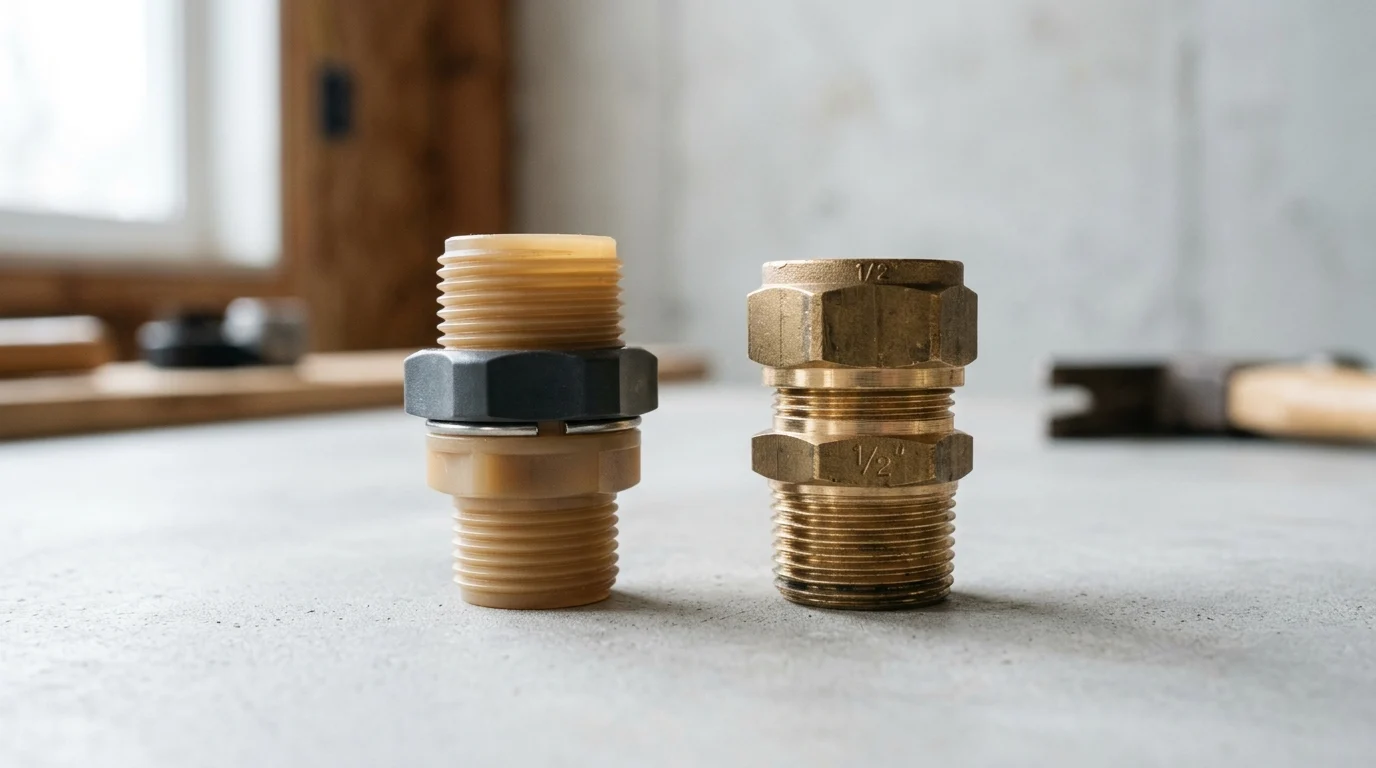
Understanding the fundamental properties of PPSU and brass is essential for evaluating their respective roles in commercial and residential plumbing applications. Both materials have been engineered to meet stringent industry standards, but they achieve these benchmarks through entirely different chemical and physical mechanisms.
PPSU fittings as engineered polymer components
PPSU, or polyphenylsulfone, is a high-performance, moldable thermoplastic known for its exceptional toughness and resistance to high temperatures. Unlike standard PVC or polyethylene, PPSU is engineered at the molecular level to withstand extreme mechanical stress and thermal cycling without losing its structural integrity.
In technical terms, PPSU exhibits a high heat deflection temperature of up to 207°C (405°F) and boasts remarkable impact strength. It is highly resistant to hydrolysis, meaning it will not degrade when continuously exposed to hot water and steam, making it an ideal candidate for pressurized hot water distribution.
Brass fittings as traditional metal components
Brass is a traditional metal alloy composed primarily of copper and zinc, valued in plumbing for its machinability, structural rigidity, and historical reliability. To combat specific vulnerabilities like dezincification—where zinc leaches from the alloy, leaving a porous copper shell—manufacturers developed Dezincification Resistant (DZR) brass.
Modern plumbing brass typically contains 60% to 63% copper. Due to strict modern health and safety regulations, the composition of plumbing brass has been heavily modified to remove lead, which was traditionally used to improve machinability. Today’s compliant brass fittings are highly engineered alloys that utilize elements like silicon or bismuth to maintain workability while capping lead content at a maximum of 0.25% by weight.
Common plumbing systems that use each material
Both materials are predominantly utilized in conjunction with flexible piping systems, most notably Cross-linked Polyethylene (PEX). PPSU fittings are typically manufactured as insert fittings for PEX crimp, clamp, or cold-expansion systems. Brass fittings are equally common in PEX networks but are also heavily used in transition fittings, threaded adapters, and valves where rigid mechanical connections to legacy copper or galvanized steel lines are required.
| Feature | PPSU Fittings | Brass Fittings |
|---|---|---|
| Material Class | Engineered Thermoplastic | Metallic Alloy (Copper/Zinc) |
| Weight | Lightweight (~80% lighter than brass) | Heavy/Dense |
| Corrosion Mechanism | Immune to galvanic/oxidative corrosion | Susceptible to dezincification/oxidation |
| Common Connections | Crimp, Clamp, Cold Expansion | Crimp, Clamp, Expansion, Threaded, Push-to-connect |
Performance and Durability Comparison
The true test of a plumbing fitting lies in its long-term performance under the continuous stress of pressurized water, fluctuating temperatures, and chemical exposure. While both PPSU and brass pass rigorous baseline testing, their failure modes and durability profiles differ significantly under extreme conditions.
Pressure, temperature, and corrosion resistance
When evaluating mechanical strength, brass maintains a clear advantage in absolute pressure tolerance. Standard brass fittings often boast burst pressures exceeding 1,000 PSI, providing an immense safety factor for standard 40-80 PSI residential water lines. However, brass is susceptible to galvanic corrosion if connected improperly to dissimilar metals.
PPSU fittings, while having lower absolute burst limits, are entirely sufficient for plumbing codes, typically rated for 160 PSI at 23°C (73°F) and 100 PSI at 82°C (180°F). Because PPSU is a non-conductive polymer, it is completely immune to galvanic corrosion, eliminating the need for dielectric unions when transitioning between different piping materials.
Scaling, chemical exposure, and water quality
Water quality plays a decisive role in the longevity of metallic fittings. In regions with hard water, minerals like calcium and magnesium readily bond to the internal surfaces of brass fittings, causing scaling that restricts flow and increases localized pressure. Furthermore, brass can be sensitive to high chlorine or chloramine concentrations, which can accelerate internal pitting.
Conversely, the extremely smooth internal surface of PPSU naturally resists mineral buildup, maintaining consistent flow rates over the system’s lifespan. PPSU is also highly resistant to the chemical disinfectants commonly used in municipal water supplies, ensuring that the fitting walls do not thin or degrade over decades of chemical exposure.
Jobsite handling, freeze-thaw, and long-term reliability
Jobsite conditions often subject fittings to unintended abuse. Brass is highly rigid and can withstand significant blunt force and cross-threading during installation. However, this rigidity becomes a liability in freezing conditions; rigid brass is highly prone to cracking under the 50-PSI internal pressure generated by expanding ice.
PPSU possesses inherent material elasticity. In standardized freeze-thaw testing, PPSU can expand to accommodate ice volume increases of up to 9% without fracturing, returning to its original shape once thawed. This makes PPSU vastly superior for installations in unconditioned spaces or regions prone to extreme winter temperatures.
Cost, Compliance, and Installation Factors
Beyond raw mechanical performance, project economics, labor availability, and regulatory compliance heavily dictate the specification of plumbing materials. The shift toward polymer fittings in recent years has been driven largely by efforts to stabilize costs and simplify supply chains.
Material cost, labor time, tooling, and inventory
The raw material cost of brass is inherently volatile, tied directly to global copper and zinc commodity markets. As a result, brass fittings are generally 20% to 40% more expensive per unit than their polymer counterparts. Contractors often report a 15% to 25% reduction in overall material costs when switching a 2,000-square-foot residential build from brass to PPSU.
| Economic/Logistical Factor | PPSU Fittings | Brass Fittings |
|---|---|---|
| Material Cost | Low to Moderate (Stable) | High (Subject to commodity volatility) |
| Labor / Installation Speed | Fast (Especially with cold expansion) | Moderate to Fast |
| Tooling Wear | Minimal wear on expansion/crimp tools | Higher wear on cutting and crimping tools |
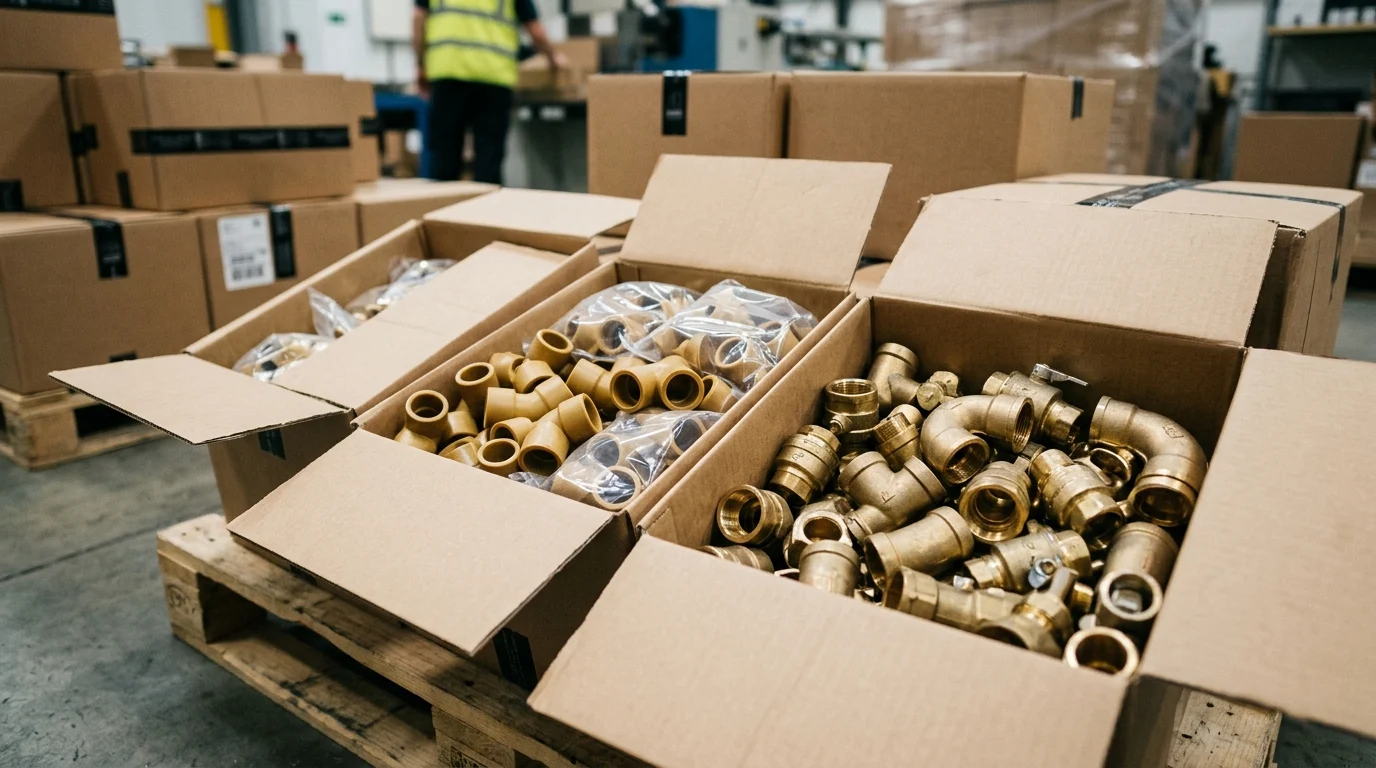
| Inventory Weight | Low (Reduces shipping costs) | High (Increases freight and handling costs) |
Codes, certifications, and lead-free requirements
Regulatory compliance is a non-negotiable aspect of plumbing specification. Following the 2014 amendment to the Safe Drinking Water Act (SDWA), all pipe, pipe fittings, and plumbing fittings used for potable water must be “lead-free,” defined as containing no more than a 0.25% weighted average lead content.
Achieving this standard requires brass manufacturers to use alternative, often more expensive, alloys (such as silicon brass) and undergo strict NSF/ANSI 372 certification. PPSU, being a polymer, inherently contains zero lead and easily meets NSF/ANSI 14 and 61 standards for health effects, removing any compliance ambiguity for inspectors and contractors.
Availability, supplier consistency, and warranty support
Supply chain consistency generally favors polymers, as the raw resins for PPSU are less susceptible to the mining and smelting disruptions that can affect metal alloys. Consequently, PPSU inventory is often more stable in local distributor networks.
From a warranty perspective, leading manufacturers often provide robust guarantees for both materials when installed as part of a complete proprietary system. However, many manufacturers explicitly limit or void warranties on brass fittings if installed in known aggressive water conditions, whereas PPSU warranties typically cover a standard 25-year period regardless of local water hardness or pH levels.
When to Choose PPSU or Brass Fittings
Finalizing the material specification requires synthesizing the performance data, environmental conditions, and budget constraints of the specific project. Neither material is universally superior; rather, each excels in distinct environments where its physical properties align with the system’s demands.
Best-fit applications for PPSU fittings
PPSU fittings are the optimal choice for the vast majority of modern residential potable water distributions, particularly when utilizing PEX piping. They are highly recommended for regions where the municipal or well water is known to be aggressive, hard, or where the pH frequently drops below 7.0.
Additionally, PPSU is the preferred material for concealed installations behind drywall or in unconditioned crawlspaces where freeze-thaw resilience is necessary, and for radiant floor heating manifolds where continuous circulation of hot water could cause scaling in metallic components.
Best-fit applications for brass fittings
Brass fittings remain indispensable in commercial and high-stress mechanical environments. They are the superior choice for exposed piping areas where fittings might be subject to blunt impact, vandalism, or direct sunlight, as UV radiation can degrade exposed PPSU over time.
Brass is also required in boiler rooms or industrial applications where ambient or fluid temperatures regularly exceed 85°C (185°F), or where rigid, threaded transitions to large-diameter metallic mains, valves, and heavy plumbing fixtures are necessary to maintain structural rigidity.
Decision checklist for selecting the right material
To ensure the correct specification, project managers should follow a systematic decision checklist. First, verify the local water chemistry; if pH is low or scaling potential is high, default to PPSU. Second, assess the installation environment; if the fittings will be exposed to UV light or direct physical stress, brass is mandatory.
Third, evaluate the budget and scale of the project; large-scale residential developments will benefit significantly from the 20-40% cost savings and stable pricing of PPSU. Finally, confirm local building codes and inspector preferences, ensuring that the chosen fittings possess the necessary NSF, ASTM, or CSA certifications for the intended application.
Key Takeaways
- The most important conclusions and rationale for PPSU vs Brass Fittings
- Specs, compliance, and risk checks worth validating before you commit
- Practical next steps and caveats readers can apply immediately
Frequently Asked Questions
Are PPSU fittings better than brass fittings for hot water systems?
PPSU performs very well in hot water because it resists hydrolysis and thermal cycling. Brass is also reliable, but water chemistry and dezincification risk should be checked first.
When should I choose brass fittings instead of PPSU fittings?
Choose brass for threaded adapters, valves, transitions to copper or steel, and applications needing high rigidity or metal-to-metal connections.
Do PPSU fittings corrode like brass fittings?
No. PPSU is a polymer and does not corrode or dezincify. It is often preferred where acidic, aggressive, or high-chloride water may damage standard brass.
Are modern brass plumbing fittings safe for drinking water?
Yes, if they are lead-free and compliant with current plumbing standards. Modern brass fittings typically limit lead content to 0.25% or less by weight.
Which fittings are suitable for PEX plumbing systems?
Both PPSU and brass fittings are widely used with PEX systems. PPSU is common for crimp, clamp, and expansion fittings, while brass is common for adapters, valves, and transitions.
References
- Experience with plastic pex fittings vs brass? : r/Plumbing – Reddit
- Brass vs. Plastic PEX-A Fittings: Which is Better for Your Plumbing?
- The Advantages of PPSU PEX Fittings: A Comprehensive Guide
- Plastic vs. Brass Fittings for PEX Pipe: Which is Best? – Fresh Water Systems
- Brass PEX Fittings: Which Ones Leak and Which Ones Last? – YouTube
- Should l use brass or plastic PEX fittings – Knowledge – Fengfan Piping
- Pex B Installation: Brass vs. Plastic Fittings Q&A Guide – JustAnswer
- Plastic vs Brass PEX Elbows & Fittings : r/Plumbing – Reddit
- Plastic vs Brass vs Stainless Fittings: How to Choose – Specialty Sales LLC
Post time: Jun-21-2026