
Introduction
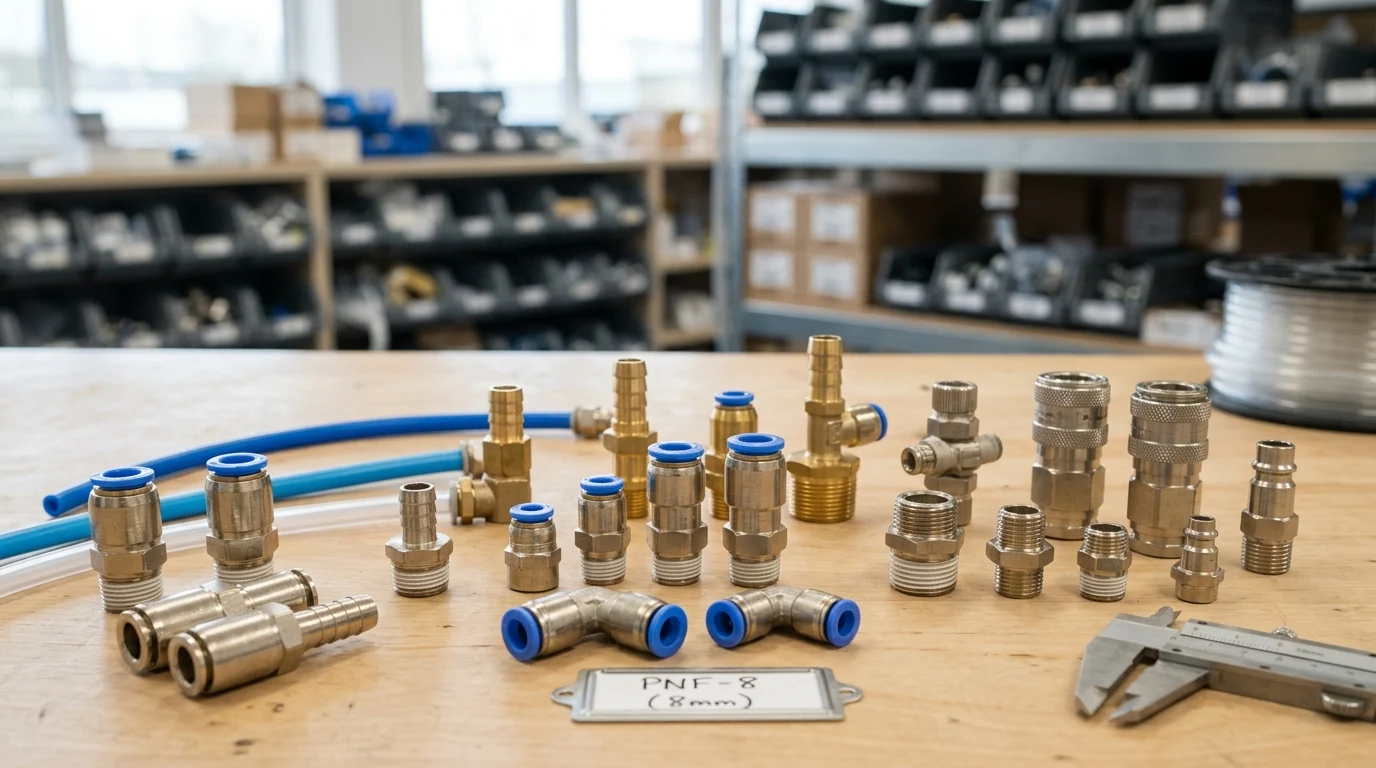
Choosing a pneumatic fitting supplier affects far more than unit price. The right partner helps prevent air leaks, unplanned downtime, inconsistent performance, and avoidable maintenance costs across an entire pneumatic system. Buyers need to look beyond catalogs and basic availability to assess product quality, material consistency, manufacturing standards, delivery reliability, and technical support. This article outlines the key factors that separate dependable suppliers from risky ones, so you can make better sourcing decisions, reduce long-term operating costs, and build a more stable supply chain for industrial automation and fluid power applications.
Why the Right Pneumatic Fitting Supplier Matters
In industrial automation and fluid power systems, pneumatic fittings are often viewed as low-value commodity components. However, treating them as an afterthought during procurement is a critical error. The integrity of an entire pneumatic network relies on the precision, durability, and reliability of these connectors. Selecting the right pneumatic fitting supplier is not merely a purchasing exercise; it is a strategic decision that directly impacts operational efficiency and facility safety.
A reliable manufacturing partner ensures that components meet rigorous dimensional tolerances and material specifications. When buyers prioritize comprehensive supplier evaluation over simple unit cost, they protect their production lines from the cascading failures that stem from substandard pneumatics.
Impact on leakage, downtime, and maintenance
The most immediate consequence of using inferior pneumatic fittings is compressed air leakage. In an industrial setting, a single unsealed connection with a leak diameter of just 1/16 inch operating at 100 psi can waste approximately $800 to $1,000 annually in compressor energy costs. When multiplied across hundreds of connection points in a standard manufacturing plant, the financial drain becomes substantial.
Furthermore, catastrophic fitting failures lead to unplanned machine downtime. In high-volume automotive or electronics manufacturing, downtime can easily exceed $10,000 per hour. Fittings that cannot withstand continuous vibration, pressure spikes, or lateral stress will eventually disconnect or fracture, requiring emergency maintenance and halting production lines.
Why supplier selection affects total cost
Procurement teams often face pressure to secure the lowest piece price, but supplier selection fundamentally alters the Total Cost of Ownership (TCO). A supplier offering a push-to-connect fitting for $0.45 instead of the market average of $0.60 may be compromising on internal O-ring quality or using recycled plastics with lower tensile strength.
The true cost of a fitting includes the initial purchase price, the labor required for installation, the frequency of replacement, and the administrative burden of managing defective batches. Partnering with a premium supplier reduces hidden expenses such as expedited freight for replacement parts, excessive safety stock requirements, and the labor hours dedicated to troubleshooting pneumatic pressure drops.
Product Requirements to Verify
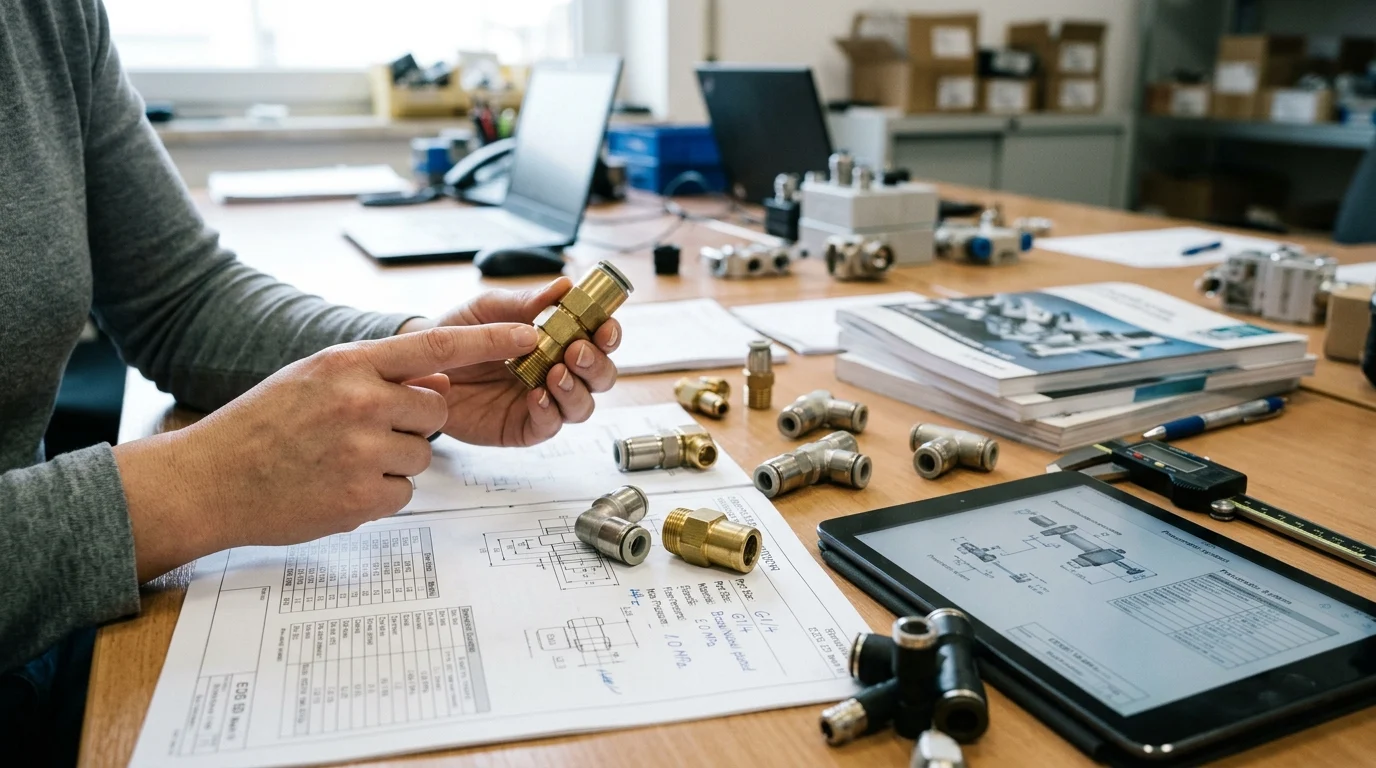
Before assessing a supplier’s business operations, procurement and engineering teams must verify that the manufacturer’s product portfolio aligns with the specific technical requirements of the application. A supplier may excel in producing standard brass fittings but lack the capability to manufacture chemical-resistant polymer alternatives. Defining exact product requirements is the first step in the qualification process.
Specifications, materials, and thread standards
Pneumatic applications vary widely in their operational demands. Buyers must confirm that a supplier can consistently meet required pressure and temperature ratings. For instance, standard polyurethane push-to-connect fittings typically operate safely up to 1.0 MPa (150 psi) at temperatures between 0°C and 60°C. Conversely, applications involving heavy machinery may require 316 stainless steel fittings with FKM (Viton) seals capable of withstanding 3.0+ MPa and temperatures up to 150°C.
Thread standards are another critical verification point, as regional equipment designs dictate specific geometries. A global supplier must demonstrate proficiency in manufacturing to exact thread specifications without localized galling or stripping.
| Thread Standard | Primary Region | Sealing Mechanism | Typical Application |
|---|---|---|---|
| NPT (National Pipe Thread) | North America | Thread deformation (requires tape/sealant) | General industrial machinery |
| BSPT (British Standard Pipe Taper) | Asia, Europe | Thread deformation (requires tape/sealant) | Pneumatic cylinders, valves |
| BSPP (British Standard Pipe Parallel) | Europe, Global | O-ring or bonded seal washer | High-pressure, vibration-prone systems |
| Metric (M5, M7, etc.) | Global | O-ring | Miniature pneumatics, robotics |
Standard products vs custom capabilities
Most OEM buyers require a mix of off-the-shelf standard products and customized solutions. Standard products, such as basic straight unions and elbow connectors, should be available in comprehensive sizing matrices (e.g., tube outer diameters from 3mm to 16mm or 1/8″ to 1/2″).
However, true supplier capability is proven through custom engineering. If an application requires a specialized manifold block or a non-standard thread-to-tube ratio, the supplier must possess in-house design capabilities. Buyers should inquire about the supplier’s ability to modify standard tooling or develop bespoke injection molds, a process that typically requires advanced CAD/CAM software and dedicated tooling engineers.
Technical documentation and support
A reliable pneumatic fitting supplier functions as an extension of the buyer’s engineering team. This requires the seamless provision of technical documentation. Suppliers must be able to provide accurate 3D CAD models (in formats like STEP or IGES) for integration into the buyer’s digital twin or assembly drawings.
Additionally, comprehensive data sheets must be available, detailing flow rate coefficients (Cv factors), burst pressure limits, and chemical compatibility charts. Lack of robust technical documentation is often a leading indicator of a supplier that operates merely as a trading company rather than a primary manufacturer.
Quality, Compliance, and Manufacturing Capability
Consistent product quality is the foundation of any reliable pneumatic supply chain. While many manufacturers can produce an acceptable prototype, maintaining tight tolerances across millions of units requires sophisticated manufacturing infrastructure and rigorous quality management systems. Buyers must look beyond marketing brochures and evaluate the objective realities of the factory floor.
Quality control, testing, and traceability
Effective quality control (QC) extends from raw material inspection to final functional testing. Buyers should verify whether the supplier conducts automated leak testing on 100% of their production lots or relies on statistical sampling. For high-reliability applications, suppliers should perform lifecycle testing, proving that their internal retention claws and O-rings can survive upwards of 1 million insertion and pressurization cycles.
Traceability is equally critical. Premium suppliers use laser etching or micro-stamping to apply batch codes to fittings, ensuring that if a defect occurs, the root cause can be traced back to a specific shift, machine, or raw material lot. A world-class supplier should target and maintain a defect rate of less than 50 Parts Per Million (PPM).
Certifications and regulatory compliance
Regulatory compliance and international certifications provide a baseline of trust. At a minimum, a qualified supplier must hold an active ISO 9001:2015 certification from a reputable auditing body. This ensures standardized processes for document control, corrective actions, and continuous improvement.
Depending on the end-use industry, specific material compliance is often mandatory. Suppliers exporting to the European Union must provide declarations of conformity for RoHS (Restriction of Hazardous Substances) and REACH. If the fittings are destined for the food and beverage sector, the supplier must use FDA-approved materials and NSF-certified lubricants, maintaining strict segregation to prevent cross-contamination during assembly.
How to compare manufacturing capacity
Manufacturing capacity dictates a supplier’s ability to scale with your business. Buyers should request an equipment list to assess technological maturity. For metal fittings, the presence of multi-axis CNC Swiss lathes capable of holding tolerances of ±0.01 mm indicates high precision capability. For plastic push-to-connect fittings, modern injection molding machines ranging from 50 to 200 tons equipped with robotic sprue pickers suggest efficient, high-volume production.
The degree of automation on the assembly line is a significant differentiator. Manual assembly of internal components (collet, chuck, O-ring, and release sleeve) introduces human error and variability. Suppliers using fully automated, rotary indexing assembly machines with integrated machine vision inspection are far more likely to deliver zero-defect batches.
Commercial, Logistics, and Service Factors
Even if a supplier manufactures flawless components, poor commercial alignment and logistical friction can render the partnership unviable. Procurement teams must evaluate the business terms, supply chain agility, and customer service frameworks to ensure the supplier can meet dynamic production schedules without imposing excessive financial burdens.
Pricing, MOQs, and tooling costs
Pricing structures must be transparent and competitive, but they should also reflect the quality of materials used. Buyers must evaluate Minimum Order Quantities (MOQs), as these directly impact inventory holding costs. Standard commodity fittings often carry MOQs of 1,000 to 5,000 pieces, whereas customized designs may require commitments of 10,000 units or more to justify setup times.
Tooling costs for custom solutions also vary significantly. Developing a new multi-cavity mold for a custom plastic fitting can range from $3,000 to $10,000, depending on complexity and mold lifespan guarantees. Buyers should negotiate whether tooling costs are amortized over the piece price or paid upfront, and ensure contract terms explicitly state who owns the intellectual property and the physical mold.
| Supplier Tier | Typical MOQ (Standard) | Standard Lead Time | Custom Tooling Cost Band | Price Premium vs Market |
|---|---|---|---|---|
| Tier 1 (Global Brand) | Low (100 – 500 pcs) | 1 – 2 weeks (Stocked) | $8,000 – $15,000+ | +30% to +50% |
| Tier 2 (Direct Mfr) | Medium (2,000 pcs) | 3 – 5 weeks | $3,000 – $8,000 | Baseline (0%) |
| Tier 3 (Trading Co.) | High (5,000+ pcs) | 6 – 10 weeks | Variable / Outsourced | -10% to -20% |
Inventory, lead times, and export support
Logistical reliability is critical for maintaining lean manufacturing operations. Buyers should assess the supplier’s inventory strategy: do they maintain buffer stock of raw materials (like brass rod or polymer resin) to absorb commodity market shocks? Standard lead times for manufactured-to-order pneumatic fittings generally range from 3 to 5 weeks, while custom configurations may push lead times to 8 to 12 weeks.
For international sourcing, export support and Incoterms expertise are vital. A proficient supplier should have dedicated logistics personnel who can seamlessly manage EXW (Ex Works), FOB (Free on Board), or DDP (Delivered Duty Paid) shipments, ensuring all commercial invoices and harmonized tariff schedule (HTS) codes are accurate to prevent customs delays.
Account service and engineering responsiveness
The responsiveness of account management and engineering support dictates how quickly issues are resolved. A reliable supplier should provide a dedicated account manager capable of responding to RFQs or technical inquiries within 24 to 48 hours.
Furthermore, the supplier’s Return Merchandise Authorization (RMA) process must be clear and equitable. If a batch of fittings fails incoming quality inspection, the supplier must demonstrate a willingness to provide an 8D (Eight Disciplines) corrective action report and expedite replacement inventory without bureaucratic delays.
How to Shortlist and Approve Suppliers
Transitioning to a new pneumatic fitting supplier carries inherent risks. To protect production continuity, procurement teams must implement a structured, multi-phase qualification process. This systematic approach strips away marketing claims and validates the supplier’s true capabilities through empirical evidence and contractual safeguards.
Step-by-step supplier qualification process
The qualification process should begin with a detailed Request for Information (RFI) focusing on machine capabilities, certifications, and financial stability. Following the RFI, buyers should execute a Request for Quote (RFQ) on a representative basket of high-volume SKUs to benchmark commercial competitiveness.
If the pricing and lead times are acceptable, the next step is sample evaluation. Engineering teams should subject these samples to destructive testing, verifying burst pressures and thread integrity. Upon technical approval, a formal factory audit should be conducted. Using a standard like VDA 6.3 or a customized ISO-based checklist, auditors evaluate the supplier’s incoming material inspection, tool maintenance, and final pack-out processes. Finally, a pilot run of 500 to 1,000 units should be ordered to verify that mass production matches the quality of the initial engineering samples.
How to balance price, quality, and risk
Approving a supplier requires a delicate balance of price, quality, and supply chain risk. A procurement team might identify a supplier offering a 10% to 15% unit cost reduction; however, if that supplier experiences defect rates exceeding 1% or lead times routinely stretch past 60 days, the initial savings will be entirely negated by rework and line-down costs.
To mitigate risk, buyers should use a supplier scorecard matrix, assigning weighted values to commercial terms, technical capability, quality history, and communication speed.
Key Takeaways
- The most important conclusions and rationale for pneumatic fitting supplier
- Specs, compliance, and risk checks worth validating before you commit
- Practical next steps and caveats readers can apply immediately
Frequently Asked Questions
Why does choosing a reliable pneumatic fitting supplier matter?
It reduces air leaks, unplanned downtime, and repeat replacements. A dependable supplier helps maintain stable pressure, safer operation, and lower total ownership cost.
What product specifications should I confirm before ordering pneumatic fittings?
Check material, pressure range, temperature range, tube size, thread standard, and seal type. Match these to your equipment and operating environment before approving samples.
Which thread standards should a pneumatic fitting supplier support?
Most industrial buyers need NPT, BSPT, BSPP, and metric options. Confirm the supplier can produce the exact thread and sealing style your machines require.
Can nbfh-metal.com supply both standard and custom pneumatic fittings?
Yes, buyers should confirm availability of common push-to-connect fittings plus custom development for special materials, sizes, or application-specific designs.
How can I evaluate a pneumatic fitting supplier beyond unit price?
Review dimensional consistency, leak performance, material traceability, customization ability, delivery reliability, and response speed for technical support or replacement issues.
Post time: Jun-03-2026