
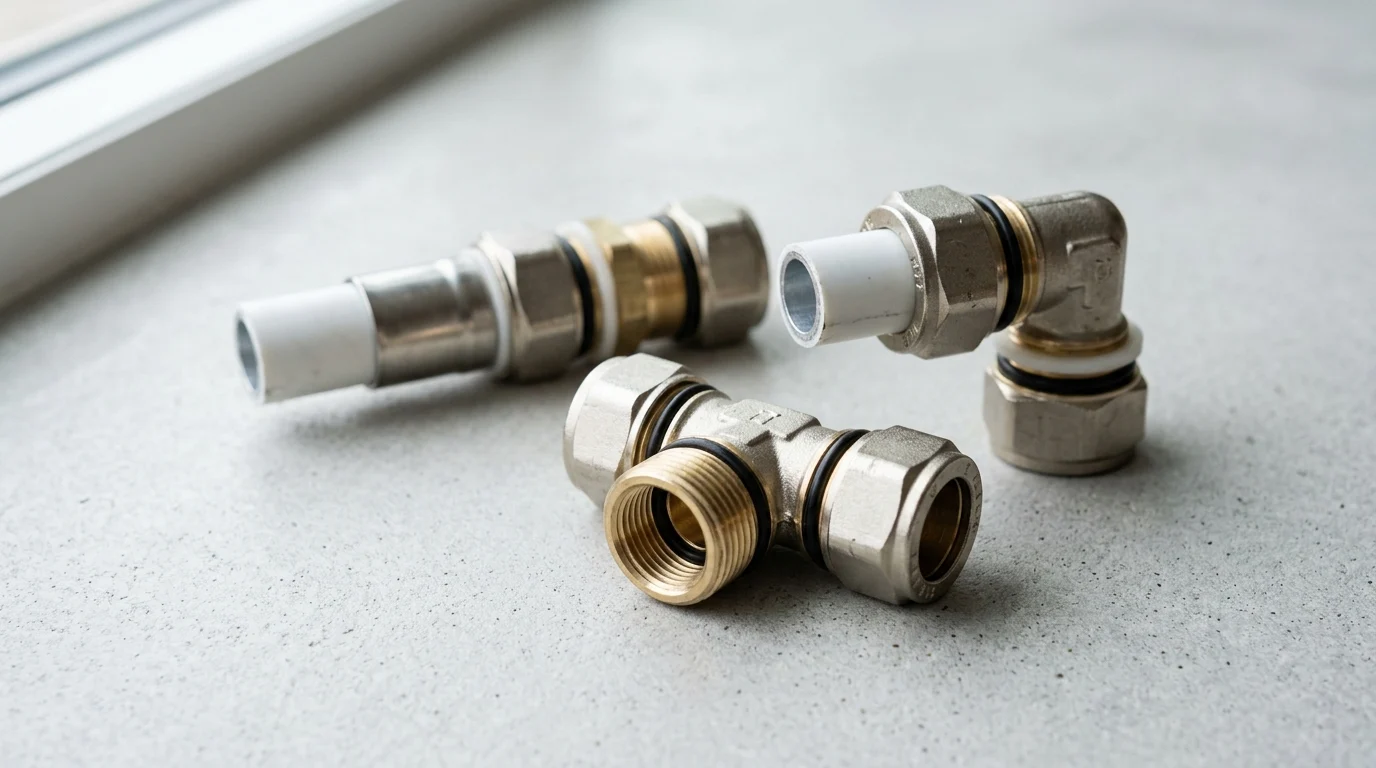
Oxygen may be invisible in a closed-loop heating system, but its impact is measurable: corrosion, magnetite sludge, reduced flow, and lower heat transfer efficiency. In systems that include cast-iron boilers, steel radiators, circulators, or heat exchangers, controlling oxygen diffusion is not optional—it is central to reliability. Multi-layer composite piping systems address this risk by combining flexible PEX with an aluminum gas barrier, but the connection points must be just as secure as the pipe wall itself. This article explains how PEX-AL-PEX fittings create an oxygen-tight interface, what materials and sealing features matter, and why correct specification helps protect system performance over the long term.
Why PEX-AL-PEX Fittings Matter for Oxygen Control
In modern hydronic heating systems, maintaining closed-loop integrity is critical to preserving the longevity and efficiency of the entire network. While fluid leaks are the most visible failure mode, the invisible ingress of oxygen through piping and connections poses a far more insidious threat. Unmitigated oxygen diffusion leads to rapid systemic degradation, making the selection of piping materials and their corresponding connections a primary engineering concern.
Multi-layer PEX-AL-PEX fittings have emerged as a definitive solution to this challenge. By combining the flexibility and chemical resistance of cross-linked polyethylene (PEX) with the absolute gas barrier properties of an integrated aluminum core, these engineered components protect sensitive ferrous metals within the system. Understanding how these fittings function is essential for specifying systems that must maintain dissolved oxygen levels strictly below the industry threshold of 0.1 g/m³.
Oxygen ingress risks in hydronic systems
The introduction of oxygen into a closed-loop hydronic system initiates a destructive chemical reaction with ferrous components, such as cast-iron boilers, steel panel radiators, and circulator pump volutes. This process forms iron oxide (magnetite), a heavy black sludge that settles in low-velocity areas like valves, heat exchangers, and the bottom of radiators.
Magnetite accumulation severely restricts flow rates and insulates heat transfer surfaces. Even a relatively thin 1 mm layer of magnetite scale can cause a 10% to 15% drop in heat transfer efficiency, forcing boilers to short-cycle and run at higher, less efficient temperatures. Over time, localized pitting corrosion can lead to premature component failure, resulting in catastrophic leaks and system downtime.
What PEX-AL-PEX fittings are
Multi-layer PEX-AL-PEX fittings are specialized connection systems designed specifically for composite pipes that feature a five-layer construction: an inner PEX layer, an adhesive layer, an overlapped or butt-welded aluminum core, a second adhesive layer, and an outer PEX jacket. The fittings themselves are typically constructed from dezincification-resistant (DZR) brass or high-performance polymers like Polyphenylsulfone (PPSU).
Unlike standard expansion or crimp fittings, PEX-AL-PEX connections utilize a sophisticated geometry. They feature a ribbed insert that slides into the inner pipe diameter, coupled with dual EPDM (Ethylene Propylene Diene Monomer) O-rings. A stainless steel press sleeve is then mechanically compressed over the outer pipe wall, creating a permanent, cold-welded seal that traps the pipe’s aluminum core within a highly compressed, oxygen-tight zone.
Key oxygen barrier benefits
The primary benefit of utilizing multi-layer PEX-AL-PEX fittings is the creation of an unbroken oxygen barrier across the entire piping network. While standard polymer pipes allow oxygen molecules to permeate through their molecular structure, the continuous aluminum layer blocks 100% of gas diffusion.
By ensuring that the fitting interface itself does not become a weak point for permeation, these systems drastically reduce the need for chemical oxygen scavengers and frequent system flushing. This complete barrier protection extends the operational lifespan of high-value mechanical components and maintains the fluid dynamics originally specified by the mechanical engineer.
How PEX-AL-PEX Fittings Prevent Oxygen Ingress
The mechanics of oxygen exclusion in hydronic networks rely on achieving permeation rates well below strict international thresholds. For example, the DIN 4726 standard mandates that oxygen permeation in warm water underfloor heating systems must not exceed 0.32 mg/(m²·d) at a continuous operating temperature of 40°C. Multi-layer PEX-AL-PEX fittings achieve numbers far below this limit by leveraging precise material science and mechanical engineering at the joint interface.
Aluminum layer and fitting geometry
The aluminum core within the pipe acts as an absolute physical barrier to gas molecules. However, the integrity of this barrier is only as strong as its connections. The geometry of a multi-layer PEX-AL-PEX fitting is engineered to capture the aluminum layer securely. When the stainless steel sleeve is pressed, it deforms the composite pipe precisely into the grooves of the fitting core.
The dual EPDM O-rings are specifically positioned to isolate the fluid from the pipe’s cut edge, preventing water from reaching the aluminum layer and causing delamination or galvanic corrosion. This high-compression radial seal ensures that no microscopic gaps exist where oxygen molecules could bypass the aluminum shield.
Common oxygen entry pathways
In conventional polymer systems, oxygen typically enters through three distinct pathways: micro-porosity in the pipe wall itself, threaded mechanical connections lacking proper thread sealants, and micro-gaps at the fitting interfaces. Expansion rings and standard copper crimp rings, while effective for watertight seals, can experience microscopic thermal expansion and contraction cycles.
These thermal cycles can create temporary voids just large enough for gas molecules to diffuse into the low-pressure fluid stream, even if liquid water cannot escape. PEX-AL-PEX fittings counter this by matching the low thermal expansion coefficient of the composite pipe, virtually eliminating thermal creep at the joint.
PEX-AL-PEX vs standard PEX fittings
Standard PEX fittings rely entirely on the compression of the polymer to maintain a seal, which can be vulnerable to permeation if the pipe lacks an EVOH (Ethylene Vinyl Alcohol) barrier or if the EVOH layer is damaged during installation. Multi-layer PEX-AL-PEX fittings offer superior structural rigidity and barrier continuity.
| Feature | Standard PEX Fittings | Multi-Layer PEX-AL-PEX Fittings |
|---|---|---|
| Oxygen Permeation Rate | Up to 3.6 mg/(m²·d) | < 0.01 mg/(m²·d) (Virtually Zero) |
| Structural Rigidity | Flexible, relies on pipe | High, maintains formed shape |
| Thermal Expansion | ~1.4 mm/m at 10°C ΔT | ~0.25 mm/m at 10°C ΔT |
| High-Temp Stability | Susceptible to creep >90°C | Highly stable up to 95°C |
Specifications and Compliance Criteria
Specifying multi-layer PEX-AL-PEX fittings requires rigorous adherence to technical data and international manufacturing standards. Because these systems are frequently buried in concrete slabs or hidden behind finished walls, they are expected to deliver a continuous service life of 50 years. Engineers and contractors must verify that the chosen fittings meet exact dimensional and material tolerances to guarantee zero oxygen ingress.
Performance data to review
When evaluating multi-layer PEX-AL-PEX fittings, the continuous operating temperature and maximum operating pressure are the most critical metrics. Premium fittings are rated for continuous operation at 80°C to 95°C with a maximum operating pressure of 10 bar (145 psi).
Furthermore, the peel strength of the adhesive layers within the corresponding pipe must exceed 50 N/cm to ensure the aluminum core does not separate from the PEX layers when subjected to the extreme radial forces of a press tool. The O-rings must also feature high-temperature EPDM formulations rated for continuous thermal cycling without losing their elastomeric memory.
Standards and system approvals
Compliance with globally recognized standards ensures the fittings will perform as an effective oxygen barrier. Key certifications include ASTM F1281 for crosslinked polyethylene/aluminum/crosslinked polyethylene pressure pipe, and ISO 21003, which governs multi-layer piping systems for hot and cold water installations inside buildings.
For the specific purpose of oxygen exclusion in hydronic systems, the DIN 4726 standard is the benchmark. Any specified multi-layer system must carry third-party laboratory validation confirming that the assembled pipe and fitting combination strictly adheres to this permeation limit.
Specification checklist
To prevent specification errors, mechanical engineers should utilize a strict checklist when approving multi-layer PEX-AL-PEX fittings for submittals. First, verify the fitting body material: it must be either DZR brass (CW602N or equivalent) to prevent dezincification in aggressive water conditions, or an engineered polymer like PPSU.
Second, confirm the presence of annealed 304 or 316 stainless steel press sleeves, which provide superior corrosion resistance and consistent deformation during pressing. Finally, ensure the fittings include inspection holes at the base of the stainless steel sleeve, allowing visual confirmation that the pipe has been fully inserted past the O-rings before the press is executed.
Installation and Verification Best Practices
Even the most advanced multi-layer PEX-AL-PEX fittings will fail to prevent oxygen ingress if installation protocols are compromised. Industry data indicates that over 80% of permeation leaks and micro-failures occur at the fitting interface due to improperly calibrated press tools, skipped preparation steps, or careless handling. Executing a flawless installation requires strict adherence to the manufacturer’s mechanical procedures.
Proper fitting installation steps
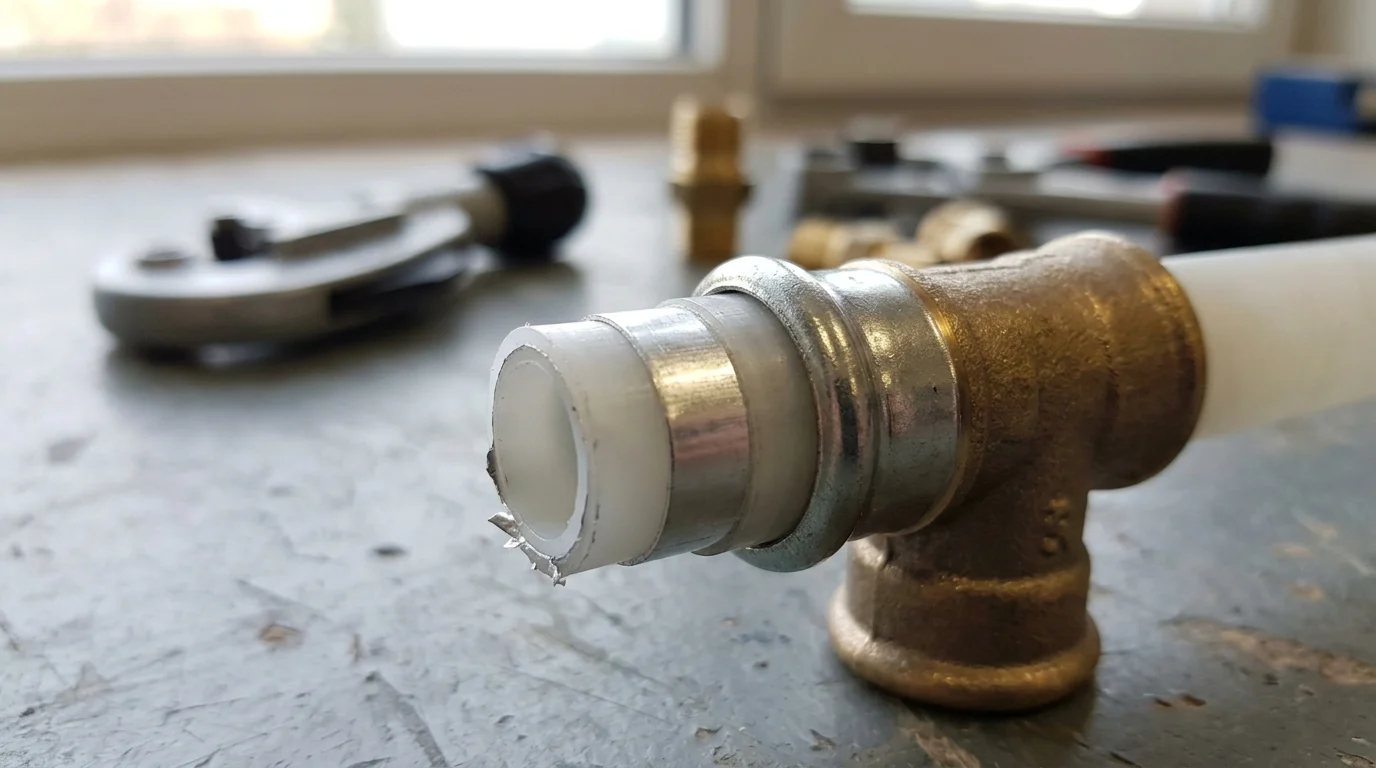
The installation process begins with a perfectly square cut using specialized pipe shears; angled cuts prevent the pipe from seating evenly against the fitting shoulder. The most critical step follows: reaming and beveling the pipe. A calibration tool must be inserted to restore the pipe’s perfectly round shape and create a slight inner chamfer.
This chamfer is vital because inserting a non-beveled, sharp-edged composite pipe into the fitting will catch and slice the EPDM O-rings, instantly destroying the fitting’s pressure seal and oxygen barrier. Once beveled, the pipe is pushed into the fitting until the white pipe edge is clearly visible through the inspection holes in the stainless steel sleeve, followed by compression using a calibrated press tool.
Pressure testing and inspection
Verification of the joint’s integrity must be conducted prior to concealing the pipe network. A hydrostatic pressure test is the standard protocol, typically requiring the system to be pressurized to 1.5 times its maximum operating pressure (e.g., 15 bar for a 10 bar rated system) for a minimum of 24 hours.
During this period, the pressure gauge must hold steady, accounting for minor initial drops due to the natural expansion of the PEX material. Inspectors must also visually check every fitting to ensure the press jaw imprint is centered on the stainless steel sleeve and that the pipe remains fully visible in the inspection windows.
Common field mistakes
Field failures are almost exclusively tied to human error. The most common mistake is skipping the reaming and calibration step to save time, leading to sheared O-rings. Another frequent error is utilizing the incorrect press jaw profile. Multi-layer PEX-AL-PEX fittings require specific jaw profiles—such as U, TH, or H profiles—depending on the manufacturer’s design.
Using a mismatched jaw profile will result in over-compression, which can crush the brass core and fracture the aluminum layer, or under-compression, which leaves microscopic pathways for oxygen diffusion and eventual water leakage.
When to Choose PEX-AL-PEX Fittings
Determining when to utilize multi-layer PEX-AL-PEX fittings over standard polymer alternatives requires an analysis of the specific project parameters, lifecycle expectations, and system components. While these fittings carry an initial cost premium, their deployment is a strategic investment in the longevity of the entire hydronic heating infrastructure. By factoring in the reduction of maintenance and component replacement, the economic justification becomes clear.
Best-fit project conditions
Multi-layer PEX-AL-PEX fittings are the optimal choice for high-temperature closed-loop systems, such as those utilizing cast iron boilers, steel panel radiators, or baseboard convectors. Because these systems operate at elevated temperatures and contain significant amounts of ferrous metals, they are highly susceptible to rapid oxygen-induced corrosion.
They are also highly recommended for snow-melt systems and large-scale commercial radiant cooling/heating slabs, where the piping is permanently encased in concrete. In these applications, the structural rigidity of the PEX-AL-PEX pipe and the absolute security of the press fittings prevent the system from being compromised by ground movement or concrete curing stresses.
Lifecycle cost and corrosion control
While a multi-layer PEX-AL-PEX fitting and pipe system may carry a 20% to 30% upfront material cost premium compared to standard PEX-b or PEX-a networks, the lifecycle savings are profound. Eliminating oxygen ingress can extend the life of a commercial boiler by decades and dramatically reduce the need for expensive chemical inhibitors and magnetic dirt separators.
| Cost / Risk Variable | Standard Polymer System | PEX-AL-PEX System |
|---|---|---|
| Initial Material Cost | Baseline (1.0x) | Premium (1.2x – 1.3x) |
| Chemical Inhibitor Needs | High (Annual Dosing) | Low (Initial Fill Only) |
| Boiler Corrosion Risk | High (10-15 Years) | Negligible (>30 Years) |
| 20-Year Lifecycle Cost | 1.8x – 2.5x | 1.3x – 1.4x |
Final selection guidance
Final selection should always be guided by a systems-based approach. Engineers must ensure that the multi-layer PEX-AL-PEX fittings are inherently matched to the composite pipe being specified.
Key Takeaways
- Specify PEX-AL-PEX fittings with compatible multilayer composite pipe to maintain an unbroken oxygen barrier across the full hydronic loop.
- Use fittings with ribbed inserts, dual EPDM O-rings, and stainless press sleeves to create a secure, mechanically compressed seal at each connection.
- Keep dissolved oxygen below the 0.1 g/m³ industry threshold to reduce corrosion risk in cast-iron boilers, steel radiators, and pump components.
- Prevent magnetite buildup early, because even a 1 mm sludge or scale layer can cut heat transfer efficiency by approximately 10% to 15%.
- Choose DZR brass or PPSU fittings based on system temperature, pressure, chemistry, and long-term corrosion-resistance requirements.
- Install and press fittings according to manufacturer specifications, since the oxygen barrier is only effective when the pipe-to-fitting interface is properly sealed.
Frequently Asked Questions
Why is oxygen ingress a problem in hydronic heating systems?
Oxygen reacts with ferrous components such as cast-iron boilers, steel radiators, and pump bodies, forming magnetite sludge. This restricts flow, reduces heat transfer, and can accelerate corrosion-related failures.
How do PEX-AL-PEX fittings block oxygen diffusion?
They connect to multilayer pipe with an aluminum core that acts as a continuous gas barrier. Properly pressed fittings compress the pipe and seals tightly, preventing the connection point from becoming an oxygen pathway.
What does the aluminum layer do in PEX-AL-PEX pipe?
The aluminum layer provides a 100% gas diffusion barrier, improves pipe shape retention, and helps maintain closed-loop hydronic system integrity compared with standard polymer-only piping.
Are PEX-AL-PEX fittings different from standard PEX fittings?
Yes. PEX-AL-PEX fittings are designed for composite pipe geometry and typically use ribbed inserts, EPDM O-rings, and stainless press sleeves to create a permanent, oxygen-tight mechanical seal.
What materials are commonly used for PEX-AL-PEX fittings?
Common choices include DZR brass for corrosion resistance and PPSU for high-performance polymer applications. The best option depends on system temperature, pressure, water chemistry, and installation requirements.
Post time: Jun-22-2026