
Introduction
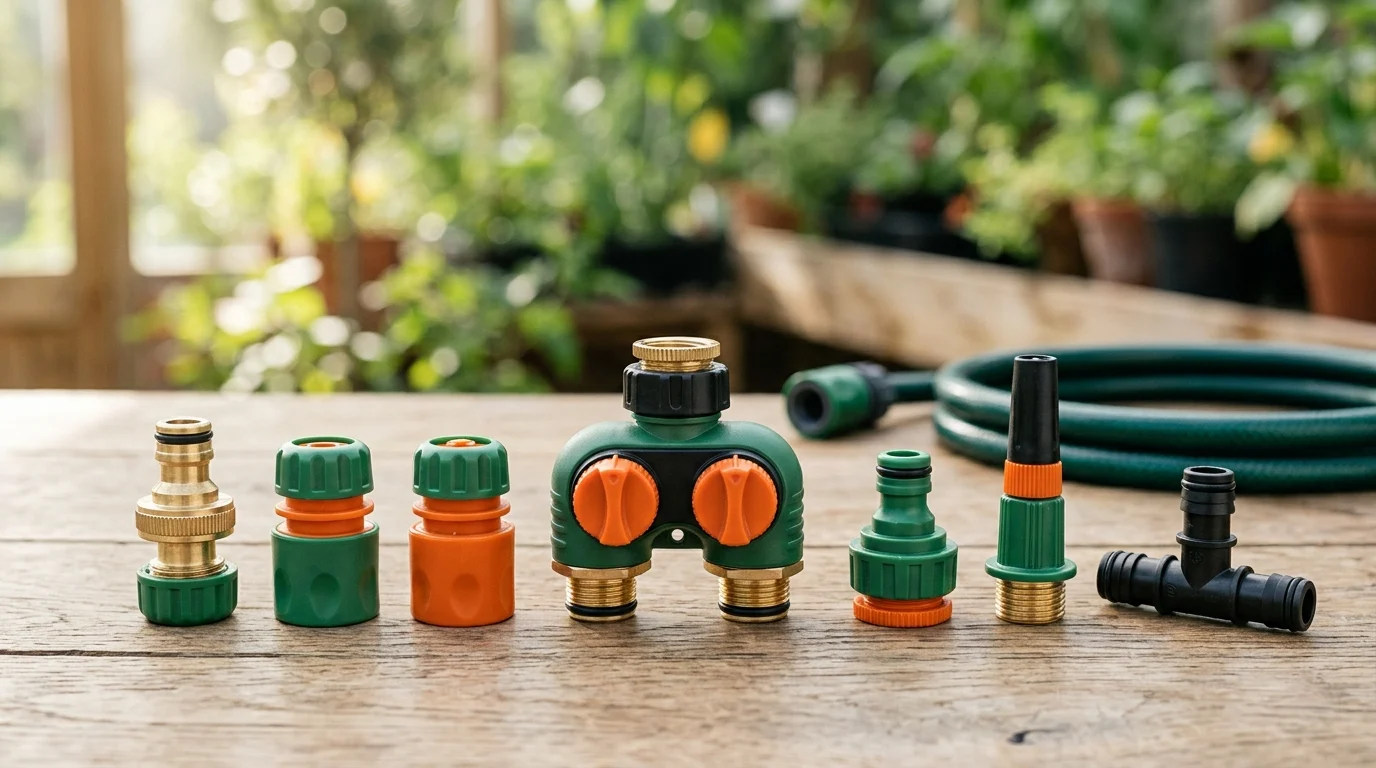
Choosing the right irrigation connectors affects far more than assembly speed: it shapes water pressure, flow consistency, leak prevention, and long-term system reliability. This guide explains how common connector types work, where each fitting performs best, and what material, size, and pressure factors to check before installation. You’ll also learn how poor connections contribute to pressure loss, uneven watering, and avoidable maintenance costs in both small gardens and larger irrigation layouts. With that foundation, the rest of the article breaks down the practical details needed to select connectors that keep water moving efficiently from source to plant.
Why Garden Irrigation Connectors Matter
Garden irrigation connectors serve as the critical junctions in any water distribution network, directly determining the overall reliability and efficiency of the system. While often viewed as minor components compared to pumps and controllers, these fittings dictate the hydraulic integrity of the entire setup. A compromised connection can lead to localized flooding, uneven water distribution, and significant pressure loss, which can decrease overall system efficiency by up to 15 percent. Understanding the functional dynamics of these components is essential for agricultural engineers, landscape architects, and commercial growers aiming to optimize water usage.
Impact on flow efficiency
The primary function of an irrigation connector is to facilitate water transfer while minimizing hydraulic friction. Every time water passes through a fitting—whether a tee, elbow, or coupling—it encounters resistance that alters its flow dynamics. In professionally designed systems, these friction losses must be calculated to ensure end-line emitters receive adequate pressure. A standard 90-degree elbow fitting can introduce a pressure drop of 0.5 to 1.5 PSI depending on the flow rate and internal diameter. When multiplied across hundreds of junctions in a commercial greenhouse or expansive landscape, inefficient connectors can necessitate the installation of larger, more energy-intensive pumps to maintain the required baseline pressure of 25 to 30 PSI at the furthest drip emitters.
Risks of poor connector selection
Selecting substandard or incompatible connectors introduces severe operational risks. The most immediate threat is a complete blowout under pressure surges, which can instantly disrupt irrigation schedules and damage sensitive crops. More insidious are micro-leaks caused by poor dimensional tolerances or material degradation. A continuous leak as small as 1/16 of an inch in a system operating at 40 PSI can waste approximately 74,000 gallons of water annually. Furthermore, continuous moisture accumulation around leaking joints promotes soil erosion, encourages fungal diseases in plant root zones, and can undermine the structural stability of nearby hardscapes or retaining walls.
Types and Technical Specifications
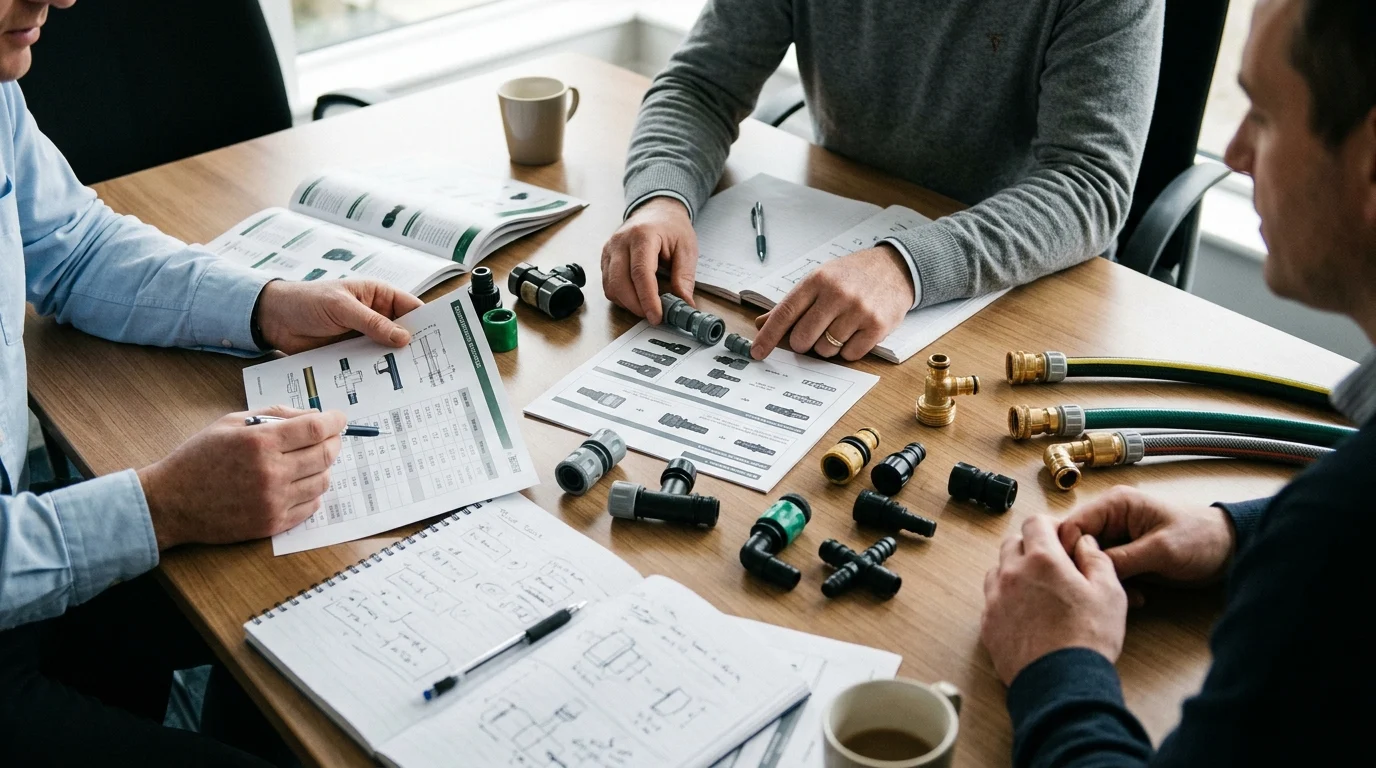
The market offers a diverse array of garden irrigation connectors, each engineered to address specific pressure thresholds, tubing dimensions, and environmental conditions. Standardizing on the correct specifications is vital for ensuring interoperability across the irrigation network. Tubing and connectors are typically categorized by their outer diameter (OD) and inner diameter (ID), with standard agricultural sizes ranging from 1/4-inch micro-fittings to 3/4-inch mainline connectors.
Common connector types for irrigation systems
Irrigation networks rely on several fundamental connector geometries to route water effectively. Couplings are used to join two straight segments of tubing, often necessary when repairing a break or extending a run. Tees split a single water source into two divergent paths, enabling the creation of complex grid layouts. Elbows are critical for navigating corners without kinking the tubing, which would otherwise choke the flow. End closures or ‘figure-eight’ fittings terminate the line, allowing for easy flushing of accumulated sediment during routine maintenance.
How to compare materials and pressure ratings
Material selection dictates both the physical resilience and the pressure tolerance of the connector. Common plastics include Polypropylene (PP), Acetal (POM), and Acrylonitrile Butadiene Styrene (ABS), while heavy-duty applications may require Brass.
| Material | Max Pressure Rating | UV Resistance | Estimated Lifespan |
|---|---|---|---|
| Polypropylene (PP) | Up to 60 PSI | Moderate | 3-5 Years |
| Acetal (POM) | Up to 120 PSI | High | 7-10 Years |
| Brass | Up to 200+ PSI | Excellent | 15+ Years |
Polypropylene is highly cost-effective and suitable for low-pressure drip systems operating under 30 PSI. Acetal (POM) offers superior tensile strength and dimensional stability, making it ideal for systems experiencing frequent pressure fluctuations up to 120 PSI. Brass, while representing a higher capital expenditure, provides unmatched durability and is impervious to UV degradation, making it the standard for exposed, high-pressure manifold connections.
Barb vs compression vs quick-connect
The mechanical design of the connection interface is just as critical as the material. Barbed connectors are the industry standard for low-pressure polyethylene tubing; they require an insertion force of 15 to 25 pounds and rely on the tubing’s elasticity to maintain a watertight seal. Compression fittings utilize a threaded nut to compress a ring against the tubing, securing the connection without internal flow restriction, and are highly effective for pressures up to 60 PSI without requiring external hose clamps. Quick-connect systems, utilizing internal O-rings and retaining collets, offer the fastest installation and modularity, though they require strict adherence to tubing OD tolerances to prevent leaks.
Matching Connectors to System Design
Achieving a leak-free, highly efficient irrigation network requires matching the technical specifications of the connectors to the broader system design. This alignment encompasses hydraulic requirements, environmental stressors, and installation practicalities. Failing to synchronize the connector choice with the operational parameters of the water source and tubing infrastructure invariably leads to premature system failure and inflated maintenance budgets.
Steps to choose the right connector
The selection process must begin with a rigorous analysis of the system’s dimensional and hydraulic specifications. First, verify the exact Outer Diameter (OD) and Inner Diameter (ID) of the existing or planned tubing. For example, a system utilizing 0.710-inch OD tubing requires perfectly matched fittings; forcing a 0.700-inch fitting will stretch the material and cause micro-fractures, while a 0.720-inch fitting will lack the necessary grip, resulting in blowouts at pressures as low as 15 PSI. Second, evaluate the system’s static and dynamic pressure. Drip irrigation typically requires connectors rated for 25 to 30 PSI, whereas micro-sprinkler systems may demand fittings capable of withstanding continuous operation at 45 to 50 PSI.
Effects of climate, soil, and fertilizer use
Environmental variables significantly influence connector longevity. In regions with high solar irradiance, prolonged UV exposure rapidly degrades standard plastics, leading to embrittlement and catastrophic cracking. In such climates, carbon-black-infused polymers or UV-stabilized acetal are mandatory. Furthermore, modern commercial agriculture frequently employs fertigation—the injection of fertilizers and soil amendments directly into the irrigation water. These chemical solutions often lower the water’s pH to highly acidic levels between 5.5 and 6.5. Connectors must possess high chemical resistance to withstand continuous exposure to phosphoric acid, nitrogen compounds, and chlorine-based line cleaners without corroding or scaling.
Common installation mistakes
Even the highest-grade connectors will fail if installed improperly. A frequent error is the application of excessive force or over-tightening of threaded compression fittings, which can strip the threads or warp the internal O-ring, compromising the seal. Another common mistake is failing to achieve a square, clean cut on the tubing before insertion into a quick-connect fitting; an angled cut prevents the tubing from seating fully against the internal stop, leading to immediate leaks. Additionally, installing barbed fittings without allowing the tubing to warm up in the sun or using a heat gun can result in incomplete insertion, reducing the pull-off resistance by more than 50 percent.
Sourcing, Quality Control, and Compliance
For commercial buyers, distributors, and large-scale agricultural operators, the procurement of garden irrigation connectors extends beyond technical specifications to encompass supply chain reliability, quality assurance, and regulatory compliance. Navigating the global manufacturing landscape requires a structured approach to supplier evaluation to ensure consistent product performance across high-volume orders.
How to assess suppliers
Assessing a supplier requires scrutinizing their manufacturing capabilities and quality management systems. Buyers should prioritize manufacturers holding ISO 9001 certification, which demonstrates a commitment to standardized production processes. A crucial metric during the vetting phase is the supplier’s historical defect rate, which should ideally fall below 0.5 percent for injection-molded plastic components. Additionally, evaluating the supplier’s production capacity and standard lead times—typically ranging from 30 to 60 days for international freight—is essential for aligning procurement schedules with seasonal agricultural demands. Minimum Order Quantities (MOQs) also play a role, often starting at 10,000 units for custom-colored or specialized fittings.
Key cost drivers
Understanding the economic variables that dictate unit pricing empowers buyers during contract negotiations. The cost structure of an irrigation connector is a composite of raw materials, manufacturing complexity, and logistical overhead.
| Cost Component | Typical Share of Unit Cost | Primary Variables |
|---|---|---|
| Raw Materials | 40% – 60% | Polymer grade, global resin market index |
| Tooling & Molds | 10% – 20% | Cavity count, steel quality (e.g., P20 vs H13) |
| Labor & Overhead | 15% – 25% | Automation level, injection cycle times |
| Logistics & QA | 10% – 15% | Testing rigorousness, shipping volume |
For buyers requiring proprietary designs, upfront tooling costs for precision steel molds can range from $3,000 to $10,000 depending on the number of cavities. However, high-cavity molds significantly reduce the per-unit cost on production runs exceeding 100,000 pieces.
Relevant standards and testing
Compliance with recognized industry standards ensures that the connectors will perform safely and reliably under field conditions. Relevant frameworks include ASABE S398.1, which outlines testing procedures for agricultural irrigation equipment, and various ASTM standards concerning the pressure ratings of thermoplastic piping components. Quality control protocols should mandate rigorous batch testing. A standard benchmark is the burst pressure test, where random samples must withstand 1.5 times their maximum rated working pressure for a continuous period of 1 hour without exhibiting deformation or leakage. Suppliers should be able to provide these testing certificates upon request.
How to Make the Final Buying Decision
Transitioning from technical evaluation to final procurement requires a strategic purchasing framework. Decision-makers must synthesize upfront capital expenditures with long-term operational costs to determine the true value of their irrigation connector investments. A methodical approach mitigates the risk of costly retrofits and ensures the irrigation infrastructure delivers maximum return on investment.
Decision framework for comparing options
The most effective method for comparing options is a Total Cost of Ownership (TCO) analysis. While commodity polypropylene fittings may offer the lowest initial purchase price, their shorter lifecycle of 3 to 5 years under harsh environmental conditions can lead to frequent replacement labor and crop losses due to unexpected failures. Conversely, investing in premium UV-stabilized Acetal (POM) or Brass fittings increases the upfront expenditure by 20 to 40 percent but extends the replacement cycle to 10 or even 15+ years. The TCO framework must also account for the labor costs associated with installation; for instance, slightly more expensive quick-connect fittings can reduce installation labor hours by up to 30 percent compared to traditional barbed and clamped systems, offsetting the higher unit price on large commercial projects.
Practical purchase guidance
Before committing to a high-volume purchase, it is highly recommended to execute a pilot testing phase. Procuring a sample size of 100 to 500 units allows installation crews to evaluate the ergonomics of the fittings and monitor their performance under actual site conditions, including local water pressure fluctuations and temperature extremes. Furthermore, buyers should closely examine the warranty terms offered by the manufacturer. While a 1-year warranty is standard for basic agricultural plastics, premium manufacturers often provide 3-year to 5-year guarantees against environmental stress cracking and manufacturing defects. Securing favorable warranty terms, combined with successful pilot testing, provides the necessary confidence to scale up to orders of 10,000 units or more.
Key Takeaways
- The most important conclusions and rationale for Garden Irrigation Connectors
- Specs, compliance, and risk checks worth validating before you commit
- Practical next steps and caveats readers can apply immediately
Frequently Asked Questions
Which garden irrigation connector type should I use for drip tubing repairs?
Use a straight coupling for same-size tubing repairs. Match the tubing’s OD and material, and choose a pressure-rated fitting that fits your system, typically under 30 PSI for basic drip lines.
How do I choose between barb, compression, and quick-connect fittings?
Barb fittings are best for low-cost drip systems, compression fittings seal well on polyethylene tubing, and quick-connect fittings speed up maintenance. Pick based on tubing type, working pressure, and how often you need to disconnect lines.
What connector material is best for outdoor irrigation systems?
For exposed outdoor use, Acetal (POM) offers strong UV resistance and durability, while brass is best for high-pressure manifolds. PP works for budget low-pressure drip setups but usually has a shorter lifespan.
Why are pressure ratings important for garden irrigation connectors?
A connector with the wrong pressure rating can leak, split, or blow out during surges. Check your system PSI and choose fittings rated above normal operating pressure for safer, more reliable watering.
Can nbfh-metal.com help with durable irrigation connector solutions?
Yes. If you need more durable metal fitting options for demanding or higher-pressure applications, review the connector and fitting capabilities available at nbfh-metal.com and confirm pressure, size, and material compatibility before ordering.
Post time: May-27-2026