
Introduction
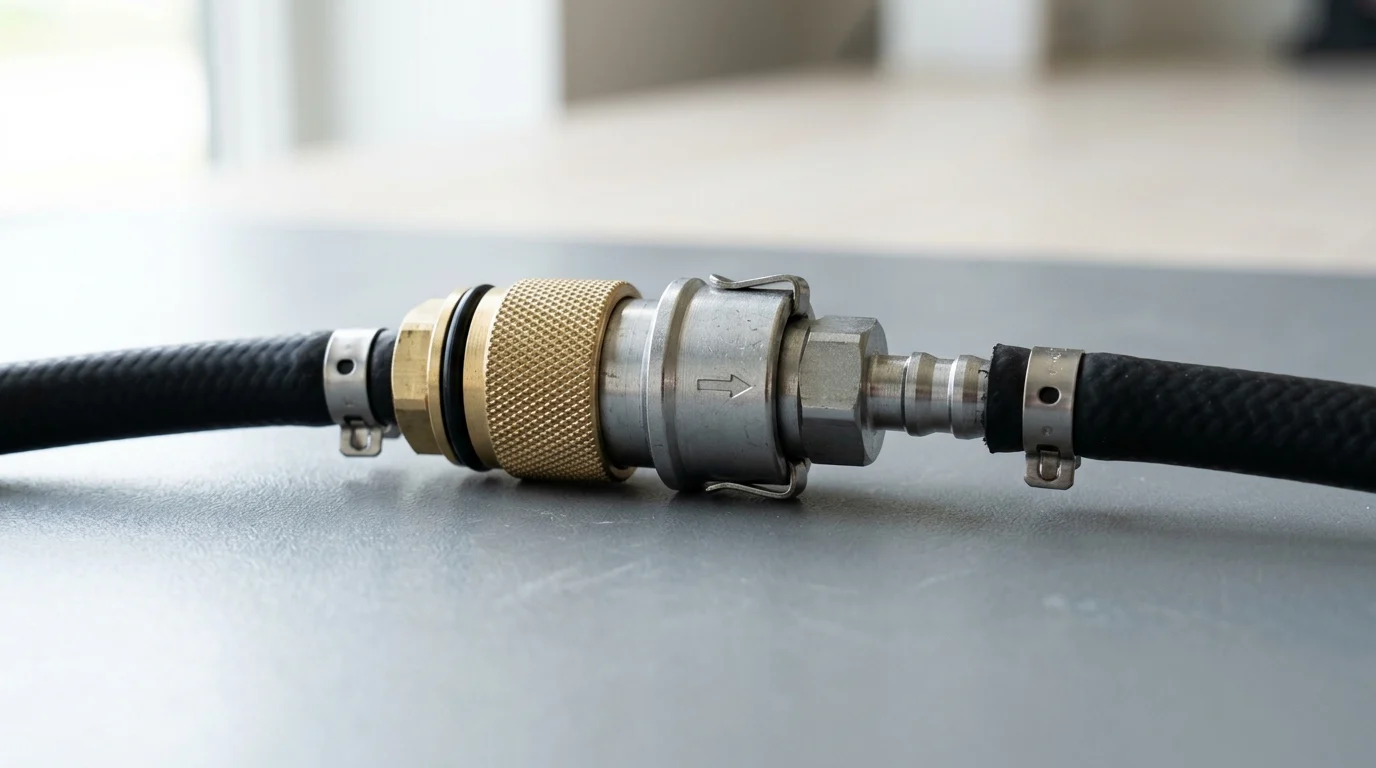
In high-vibration fuel systems, the quick connector is a small part with outsized responsibility: it must seal reliably under pressure, temperature swings, and constant mechanical motion without loosening, cracking, or leaking. This article explains how next-generation fuel line quick connector designs achieve near-zero failure performance through material selection, sealing geometry, locking mechanisms, and validation testing tailored to harsh dynamic loads. Readers will gain a clear view of the engineering tradeoffs behind durability, why legacy connector designs fall short, and which design and manufacturing features matter most when specifying connectors for demanding automotive and industrial applications.
Why Modern Fuel Line Quick Connectors Matter
The transition toward zero-failure engineering in fluid transfer systems has fundamentally elevated the requirements for every component, particularly the fuel line quick connector. Functioning as the critical junction between rigid lines, flexible hoses, and fuel delivery modules, these connectors must maintain absolute hermeticity while enduring severe dynamic loads. A single failure compromises vehicle safety, environmental compliance, and powertrain functionality, driving manufacturers to adopt aerospace-grade reliability paradigms for automotive and industrial fuel systems.
OEM and supplier reliability expectations
Original Equipment Manufacturers (OEMs) and Tier 1 suppliers now operate under zero-tolerance policies for fuel system leaks. Historically, acceptable defect rates hovered around 50 to 100 Parts Per Million (PPM). Today, the benchmark for a modern fuel line quick connector is strictly sub-1 PPM. This stringent expectation is driven by escalating warranty costs, rigorous environmental regulations from agencies like the EPA and CARB, and the catastrophic safety risks associated with pressurized fuel leaks. Compliance with foundational standards, such as SAE J2044, is no longer the ceiling but merely the baseline for supplier qualification.
Operating loads in high-vibration environments
High-vibration environments impose severe multiaxial stresses on fluid connectors. In a typical internal combustion or hybrid-electric architecture, a fuel line quick connector is subjected to continuous engine harmonics, chassis articulation, and hydraulic pulsation. Operating parameters frequently dictate sustained performance across a thermal gradient of -40°C to 115°C (and up to 150°C in localized under-hood zones), while managing continuous internal operating pressures of 5 to 10 bar. The dynamic interplay of high-frequency vibration—often exceeding 30g acceleration in harsh applications—and thermal expansion requires the connector to accommodate micro-movements without compromising the primary elastomeric seal.
Engineering Features for Durability
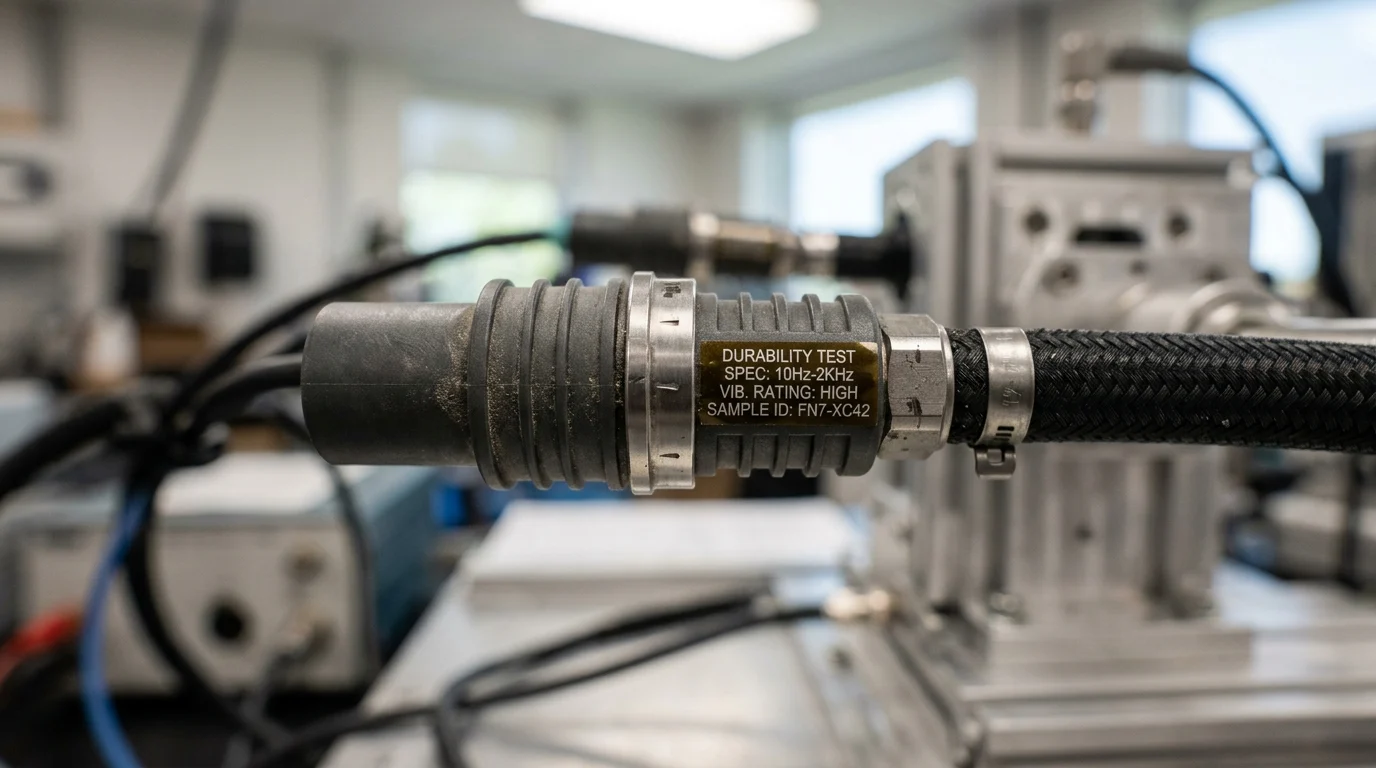
Achieving zero-failure performance requires a meticulous synthesis of material science and mechanical design. The structural integrity of a fuel line quick connector relies on its ability to isolate the sealing mechanism from mechanical stresses while providing positive, verifiable engagement.
Material, seal, and latch design
The selection of polymers for connector housings is critical. Next-generation designs predominantly utilize glass-fiber reinforced Polyamide 12 (PA12) or Polyphthalamide (PPA) to ensure dimensional stability under high thermal and chemical loads. The sealing architecture typically employs a dual O-ring configuration utilizing advanced fluoroelastomers (FKM) or fluorosilicone (FVMQ), which resist degradation from aggressive bio-fuels, ethanol blends (up to E100), and synthetic additives. Furthermore, the latching mechanism has evolved from simple plastic tabs to robust, dual-button or sliding-lock designs that provide both tactile and acoustic feedback upon successful engagement, mitigating the risk of partial assembly.
Tolerance, retention, and anti-fretting control
Dimensional tolerance control is the linchpin of retention and anti-fretting performance. Engineers must maintain diametrical clearances within +/- 0.05 mm to prevent excessive radial play. To combat fretting—the microscopic wear caused by high-frequency vibration—modern connectors integrate specialized anti-fretting rings or secondary locking clips that stabilize the male endform. These enhancements ensure that the axial retention force consistently exceeds the SAE J2044 requirement of 500 N for nominal tube diameters, preventing catastrophic blow-offs under pressure spikes.
Legacy vs next-generation connector comparison
The evolution of fluid connection technology is best understood by contrasting legacy designs with modern engineering standards. The shift reflects a broader industry mandate for enhanced safety and longevity.
| Feature/Metric | Legacy Quick Connectors | Next-Generation Quick Connectors |
|---|---|---|
| Primary Material | Unreinforced PA11 / PA12 | Glass-filled PPA / Advanced PA12 |
| Temperature Range | -40°C to 90°C | -40°C to 150°C |
| Seal Architecture | Single NBR or standard FKM | Dual FKM/FVMQ with anti-fretting ring |
| Axial Retention | ~300 N to 400 N | > 500 N (often > 700 N in heavy-duty) |
| Engagement Feedback | Visual only | Tactile, acoustic, and visual (secondary lock) |
Validation for Zero-Failure Performance
Validation testing forms the empirical backbone of zero-failure engineering. Before a fuel line quick connector is approved for production, it must survive a battery of accelerated life tests designed to simulate the absolute extremes of its intended operating environment.
Test protocols, failure modes, and leak criteria
Test protocols are heavily governed by standards such as SAE J2044 and J2045, which define the geometric and performance specifications for liquid fuel and vapor connections. Failure modes typically investigated include seal extrusion, latch fatigue, and polymer embrittlement. The leak criteria are exceptionally tight; a connector must demonstrate a helium leak rate of less than 1 cc/min at 10 bar pressure, both before and after environmental conditioning. Any deviation from this threshold constitutes a critical failure, necessitating a root-cause redesign.
Vibration, burst pressure, and media exposure
The physical abuse simulated during validation includes severe vibration, burst pressure, and prolonged media exposure. Connectors are mounted to electrodynamic shakers and subjected to random vibration profiles ranging from 20g to 30g, simultaneously coupled with thermal cycling. Burst pressure tests push the assemblies to failure, with acceptable thresholds typically demanding survival beyond 25 bar—more than double the standard operating pressure. Finally, media exposure testing requires submerging the connectors and internal seals in aggressive fuel mixtures (such as E85, B20 biodiesel, and sour gas) for durations exceeding 1,000 hours at elevated temperatures to verify chemical resistance and ensure volumetric swell remains within the strict 5% to 10% allowance.
Manufacturing and Assembly Controls
Even the most robust engineering design is compromised if manufacturing execution is flawed. The production of a fuel line quick connector demands stringent process controls to ensure that every unit rolling off the line perfectly mirrors the validated design intent.
Molding quality, dimensional capability, and cleanliness
Injection molding parameters must be tightly controlled to prevent micro-voids, warp, or flash, which can directly interfere with O-ring seating. Advanced manufacturers utilize cavity pressure sensors to monitor the melt flow in real-time, ensuring dimensional capability metrics (Cpk) consistently exceed 1.67 for critical features. Cleanliness is equally paramount; particulate contamination can compromise the elastomeric seal. Production environments frequently adhere to ISO 16232 standards, mandating that the maximum allowable particle size within the connector assembly remains strictly below 200 µm.
Assembly poka-yoke and inspection steps
Assembly processes rely heavily on poka-yoke (mistake-proofing) methodologies to eliminate human error. Automated assembly lines utilize high-resolution vision systems to verify the presence, correct orientation, and color-coding of internal O-rings and spacers before the housing is sealed. The final step in the assembly process is a 100% inline leak test, typically utilizing pressure decay or helium mass spectrometry. If a connector fails to hold the specified vacuum or pressure threshold for the required cycle time, it is automatically segregated and scrapped, preventing defective units from reaching the OEM.
Process control vs design intent comparison
Aligning manufacturing capabilities with the original engineering specifications requires continuous monitoring. The table below illustrates how specific design intents are safeguarded by corresponding process controls.
| Design Intent | Critical Specification | Manufacturing Process Control |
|---|---|---|
| Hermetic Sealing | O-ring compression at 15-25% | 100% inline automated pressure decay testing |
| Structural Integrity | Zero weld-line weakness | Real-time injection molding cavity pressure monitoring |
| Contamination Prevention | < 200 µm max particle size | ISO Class 8 cleanroom assembly & ultrasonic washing |
| Secure Engagement | Latch insertion force < 80 N | Force-displacement monitoring during automated assembly |
Selection Framework for Engineers and Procurement
Selecting the optimal fuel line quick connector requires navigating a complex matrix of technical requirements, regulatory constraints, and commercial realities. Engineers and procurement teams must collaborate to establish a framework that guarantees zero-failure performance without introducing unnecessary cost overruns.
Cost, compliance, serviceability, and validation trade-offs
The trade-offs between cost, compliance, and validation are stark. While the piece price of a standard connector may range from $0.50 to $2.50 depending on complexity and material, the cost of a comprehensive validation suite can easily span $10,000 to $50,000 per design iteration. Upgrading to advanced FVMQ seals or PPA housings increases the unit cost but is often necessary to meet strict EPA and CARB permeation limits, which mandate hydrocarbon emissions remain below 1.5 g/m²/day. Furthermore, serviceability must be factored in; connectors must allow for tool-free disconnection during vehicle maintenance without compromising the integrity of the latch after multiple service cycles.
Cross-functional decision framework
A cross-functional decision framework is essential for successful integration. Procurement teams must focus on the Total Cost of Ownership (TCO) rather than mere piece price, factoring in the statistical probability of warranty claims, recall liabilities, and production line downtime. Engineering dictates the technical baseline, ensuring the selected connector meets the dynamic load and media resistance profiles. Quality assurance bridges the gap by auditing the supplier’s manufacturing controls and traceability systems. By aligning these disciplines, organizations can confidently specify a fuel line quick connector that delivers absolute reliability throughout the lifecycle of the vehicle or industrial machine.
Key Takeaways
- The most important conclusions and rationale for fuel line quick connector
- Specs, compliance, and risk checks worth validating before you commit
- Practical next steps and caveats readers can apply immediately
Frequently Asked Questions
What makes a fuel line quick connector reliable in high-vibration systems?
A reliable design combines glass-filled PA12 or PPA housing, dual FKM/FVMQ O-rings, tight tolerances, and a secondary lock to resist leaks, fretting, and blow-off.
Which standards should a fuel line quick connector meet?
SAE J2044 is the key baseline for geometry, sealing, and retention. For OEM projects, ask suppliers like NBFH Metal about validation data beyond baseline compliance.
How do I choose the right seal material for modern fuels?
Use FKM or FVMQ seals for ethanol blends, bio-fuels, and higher temperatures. They offer better chemical resistance than basic elastomers in demanding fuel systems.
Why is dual-lock engagement important for fuel line quick connectors?
Dual-lock designs provide tactile, acoustic, and visual confirmation during assembly. This helps prevent partial connection, which is a common cause of leaks in production and service.
What retention force is typically required for a fuel line quick connector?
For many automotive applications, retention should exceed 500 N per SAE J2044. High-vibration or heavy-duty systems often target over 700 N for added safety margin.
Post time: Jun-10-2026