
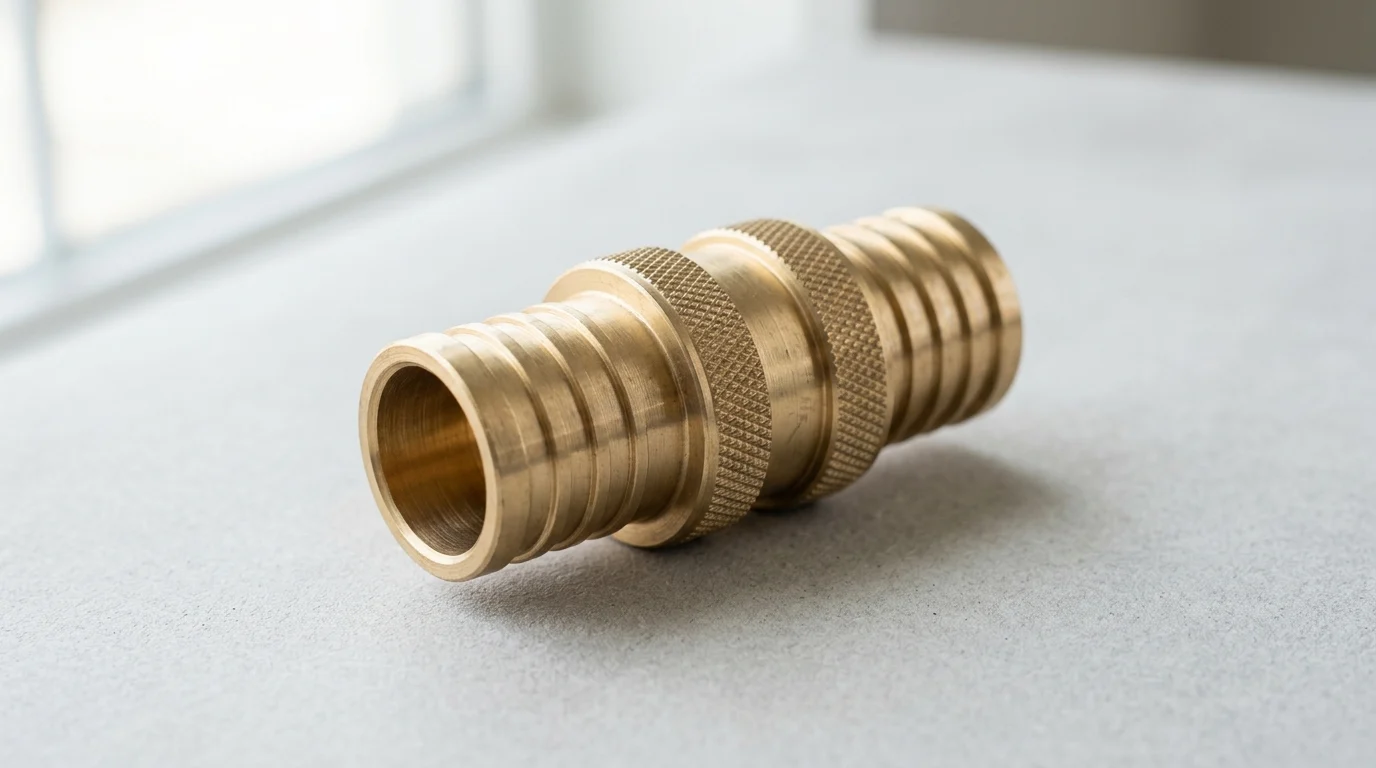
Market Demand for Factory Wholesale PEX Expansion Fittings
The commercial plumbing and radiant heating sectors are experiencing a sustained transition toward cold-expansion connections, driving substantial procurement volumes for PEX-a systems. Procurement teams and wholesale distributors are increasingly prioritizing direct factory sourcing to stabilize supply chains and protect profit margins. Sourcing a Factory wholesale PEX Expansion Fitting directly from specialized manufacturers allows importers to access both standard inventory and custom-engineered solutions required for complex commercial installations.
Expansion fittings, governed primarily by ASTM F1960 standards, rely on the shape-memory characteristics of PEX-a tubing. Unlike crimp or clamp systems that reduce the internal diameter of the pipe, expansion fittings maintain full-flow capacity, reducing pressure drops by up to 30%. This hydraulic efficiency, combined with significant labor savings, forms the baseline for the escalating wholesale demand across international markets.
Demand drivers for distributors
For wholesale distributors, the primary catalyst for stocking expansion fittings is the contractor's need for labor efficiency. Cold-expansion technology eliminates the need for torches, solders, and calibration gauges, accelerating installation times by approximately 25% to 40% compared to traditional rigid copper routing. Furthermore, the inherent design of expansion connections virtually eliminates blow-offs and leaks during hydrostatic pressure testing, minimizing costly contractor callbacks. Distributors capturing this demand typically realize gross margins ranging from 20% to 35%, provided they negotiate favorable unit costs through volume factory-direct orders.
Product scope and sizing
A comprehensive distributor portfolio must encompass a broad spectrum of sizes and configurations to service both residential and commercial contractors effectively. Standard product scopes include couplings, elbows, tees, and adapters ranging from 3/8-inch to 2-inch diameters. However, high-density commercial applications frequently demand custom sizing or specialized transition fittings. Factory partners capable of producing custom dimensions with tight dimensional tolerances—often strictly controlled within ±0.05 mm—provide a distinct competitive advantage. High-volume orders for customized PPSU (polyphenylsulfone) or lead-free brass fittings enable distributors to secure exclusive project bids that require non-standard flow characteristics or unique manifold configurations.
Key Sourcing Specifications and Evaluation Criteria
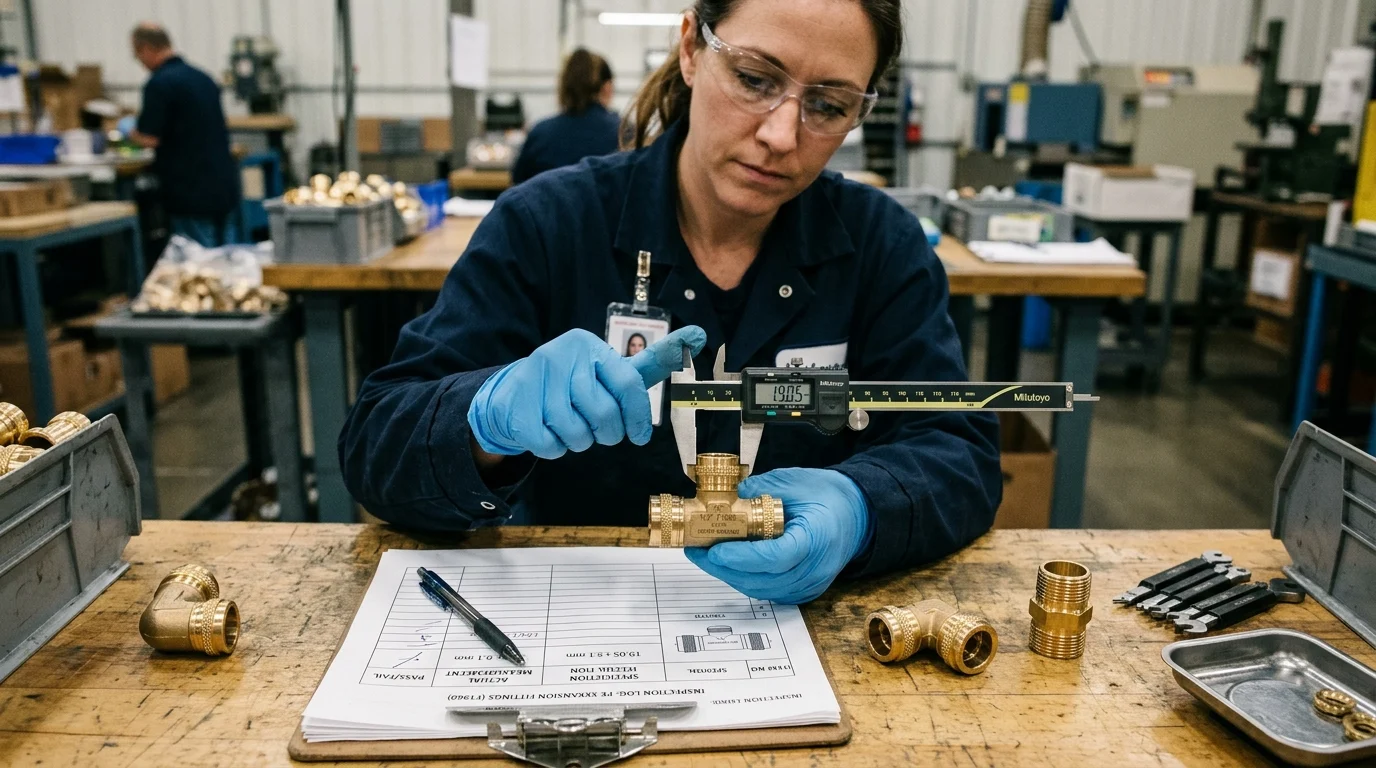
Establishing robust evaluation criteria is critical when qualifying international manufacturers of PEX expansion fittings. Importers must balance aggressive pricing structures with non-negotiable performance benchmarks dictated by international plumbing codes. The core evaluation revolves around material integrity, dimensional precision, and the supplier's ability to maintain consistent commercial terms.
Expansion fittings are predominantly manufactured from two materials: forged lead-free brass (compliant with NSF/ANSI 372) and engineered plastics like PPSU. Each material profile dictates specific applications, pressure ratings, and lifecycle costs, making technical specification comparisons the vital first step in supplier validation.
Technical specifications to compare
Technical evaluation requires rigorous scrutiny of the raw materials and the resulting mechanical properties. Brass fittings must utilize dezincification-resistant (DZR) alloys to prevent premature failure in aggressive water conditions. Conversely, PPSU fittings offer superior corrosion resistance and are entirely immune to scale buildup. Buyers must ensure all products meet ASTM F1960 and CSA B137.5 standards, guaranteeing performance under continuous operating parameters of 160 psi at 73°F and 80 psi at 200°F.
| Material Type | Primary Standard | Max Temp/Pressure Rating | Corrosion Resistance | Typical Application |
|---|---|---|---|---|
| Lead-Free DZR Brass | ASTM F1960, NSF 372 | 200°F @ 80 psi | Moderate to High | Hydronic heating, manifolds |
| PPSU (Plastic) | ASTM F1960, NSF 14 | 200°F @ 80 psi | Excellent (Scale immune) | Potable water distribution |
Commercial terms and supplier policies
Beyond technical compliance, procurement teams must negotiate commercial terms that align with their inventory turnover rates and cash flow requirements. Standard Minimum Order Quantities (MOQs) for factory-direct expansion fittings typically range from 5,000 to 10,000 pieces per SKU, depending on the material and production method. Custom-sized fittings may require higher initial MOQs to offset dedicated tooling costs. Standard lead times average 30 to 45 days for production, plus ocean transit. Financially, distributors should expect standard terms of a 30% advance deposit via T/T, with the 70% balance due against the bill of lading, though established relationships may eventually yield net-30 or net-60 terms.
Supplier Qualification for Importers and Distributors

The final phase of procurement involves rigorous supplier qualification to mitigate operational risks and ensure continuous product compliance. Importers bear the ultimate liability for plumbing failures in their target markets, making stringent factory audits and quality control frameworks indispensable to the sourcing lifecycle.
A baseline requirement for any prospective manufacturing partner is an active ISO 9001:2015 certification, coupled with verifiable third-party product listings such as cUPC, IAPMO, or ICC-ES. These credentials validate that the factory maintains standardized, traceable processes from raw material intake through to final packaging and export.
Audit and risk-control steps
Effective risk control necessitates comprehensive factory audits, either conducted internally by procurement engineers or via specialized third-party inspection agencies. Auditors must verify raw material provenance, ensuring that PPSU resin is 100% virgin and not blended with degraded regrind material, which severely compromises burst strength. Production line audits should confirm the presence of automated Coordinate Measuring Machines (CMM) to verify precise F1960 expansion ring tolerances. Sourcing contracts should explicitly define acceptable quality limits (AQL), establishing a maximum allowable defect rate of less than 500 parts per million (PPM) for critical internal dimensions.
Final supplier selection
Finalizing a supplier partnership requires evaluating long-term scalability alongside immediate production capabilities. A viable factory should demonstrate a monthly production capacity exceeding 1 to 2 million units to accommodate seasonal distributor demand spikes without extending lead times. Furthermore, the supplier's engineering responsiveness is crucial for custom sizing requests. Tooling development for custom PPSU injection molds or brass forging dies typically costs between $2,000 and $6,000; factories that offer tooling cost amortization over high-volume contracts—such as rebating tooling costs after 100,000 units are shipped—demonstrate a strong commitment to strategic, long-term B2B partnerships.
Key Takeaways
- Wholesale sourcing and supply-chain implications for Factory wholesale PEX Expansion Fitting
- Specifications, compliance, and commercial terms buyers should validate
- Actionable recommendations for distributors and procurement teams
Frequently Asked Questions
What sizes are available for wholesale PEX expansion fittings?
Standard sizes usually run from 3/8 inch to 2 inch, including couplings, elbows, tees, and adapters. Custom sizes can also be produced for commercial projects.
Can factory wholesale PEX expansion fittings be custom made?
Yes. Factories can make custom dimensions and transition designs, often with tight tolerances around ±0.05 mm for specialized plumbing or manifold applications.
Which materials are best for PEX expansion fittings?
Lead-free DZR brass suits hydronic and manifold use, while PPSU is ideal for potable water because it resists corrosion and scale buildup.
What standards should wholesale PEX expansion fittings meet?
Look for ASTM F1960 and CSA B137.5 compliance. Brass options should also meet NSF/ANSI 372 for lead-free requirements.
What are typical MOQ and lead times for factory orders?
Common MOQs are about 5,000 to 10,000 pieces per SKU. Production usually takes 30 to 45 days, plus shipping time.
Post time: Apr-17-2026