
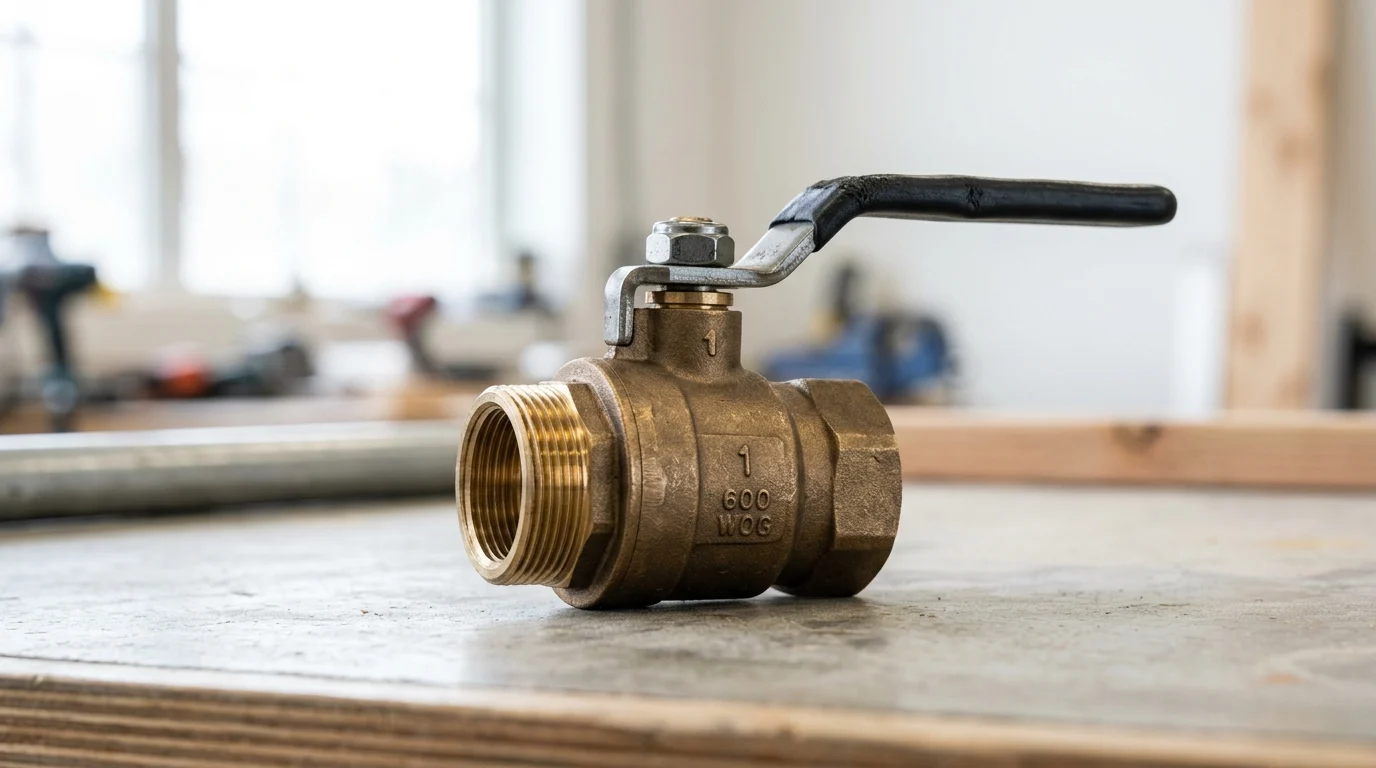
A brass valve may look simple, but a weak OEM supplier can turn it into a costly failure point in plumbing, HVAC, or industrial systems. During an audit, buyers need to look beyond polished samples and price lists to verify metallurgy, machining accuracy, pressure testing, and regulatory discipline. Even small gaps—such as uncontrolled scrap brass, poor lead-free alloy segregation, or unstable threading tolerances—can trigger leaks, rejected imports, field replacements, and brand damage. This guide highlights the most expensive warning signs to check before committing to a brass valve and fitting manufacturer, helping sourcing teams make decisions based on evidence rather than assumptions.
Why Brass Valve OEM Factory Audits Matter
Auditing an original equipment manufacturer (OEM) for fluid control components requires a rigorous approach, as the structural integrity of the final product dictates system safety. For buyers sourcing a brass valve, the auditing process is the primary defense against substandard manufacturing practices that could lead to catastrophic failures in plumbing, HVAC, or industrial applications.
The global supply chain for brass fittings and valves is highly fragmented, with factories exhibiting vast disparities in quality control, metallurgical expertise, and automation. Conducting a thorough factory audit ensures that a chosen supplier possesses the necessary infrastructure to meet stringent international standards, rather than merely relying on curated showroom samples.
Sourcing risks in brass valve production
Sourcing fluid control components introduces significant metallurgical and operational risks. The most critical vulnerability in brass valve production is the use of non-compliant raw materials. If a factory utilizes uncontrolled scrap brass instead of virgin ingots or certified extrusions, the resulting alloy may suffer from porosity, severe dezincification, or stress corrosion cracking.
Regulatory compliance adds another layer of risk. For potable water applications, the Safe Drinking Water Act mandates a weighted average lead content of less than 0.25%. A factory lacking strict segregation between standard CW617N brass and lead-free alternatives (such as CW511L or bismuth-infused alloys) poses a severe compliance risk, potentially leading to immediate import rejections or legal liabilities.
Commercial costs of weak supplier controls
The commercial repercussions of weak supplier controls extend far beyond the initial purchase order. When a brass valve OEM factory fails to maintain strict dimensional tolerances or proper forging temperatures, the downstream costs compound rapidly. A batch of valves with defective threading or micro-cracks can necessitate complete system shutdowns, expensive field replacements, and brand damage.
Financially, factories with poor process controls typically experience internal scrap rates exceeding 5% to 8%. While this may seem like an internal manufacturer issue, high scrap rates inevitably translate to delayed lead times, sudden price hikes, and a higher probability of defective units slipping into the final shipment. Robust audits identify these inefficiencies before commercial contracts are signed.
What Defines a Qualified Brass Valve OEM Factory

A qualified brass valve OEM factory is defined by its ability to consistently replicate high-quality components within tight engineering tolerances, rather than just its maximum production capacity. Evaluating a supplier requires a deep dive into their technical capabilities, quality management systems, and overall operational transparency.
Product scope and technical requirements
The product scope of a premier manufacturer must align with the buyer’s specific engineering requirements. This includes the ability to process various brass grades (such as DZR brass for aggressive water environments) and execute precise machining operations. High-quality OEMs utilize multi-axis CNC machinery capable of maintaining threading and dimensional tolerances to within +/- 0.05 mm.
Furthermore, technical requirements dictate that the factory must possess the proper tooling and forging presses suited for the valve’s wall thickness and pressure ratings. A qualified supplier will have documented standard operating procedures (SOPs) for forging temperatures, typically maintaining brass billets between 700°C and 800°C to ensure optimal grain structure and prevent hot tearing.
Required certifications and test evidence
Verifiable certifications are the baseline for entering the global market. An OEM must hold a valid ISO 9001:2015 certification, but industry-specific approvals are what truly separate qualified factories from generic metal workshops. Evidence of compliance must be backed by current, independent laboratory test reports rather than expired or self-declared documents.
| Certification / Standard | Region | Application Focus | Key Requirement |
|---|---|---|---|
| NSF/ANSI 61 & 372 | North America | Potable Water | Lead content < 0.25%, material safety |
| WRAS | United Kingdom | Water Supply | Prevention of water contamination, non-metallic part safety |
| EN 12165 / EN 12164 | Europe | Material Specs | Chemical composition of forging/machining brass |
| AS 3688 | Australia | Water Supply | Dezincification resistance (DZR) testing |
Acceptable versus high-risk supplier signals
Distinguishing between acceptable and high-risk suppliers often comes down to operational signals observed during the audit. An acceptable supplier maintains an organized shop floor with clear material segregation, in-house optical emission spectrometry (OES) for alloy verification, and a realistic Minimum Order Quantity (MOQ) typically ranging from 3,000 to 5,000 pieces per SKU, which demonstrates dedicated production runs.
Conversely, high-risk signals include heavily outsourced critical processes. If an OEM subcontracts its brass forging or CNC machining to unverified tier-2 workshops without deploying their own quality control personnel, the risk of batch inconsistency skyrockets. Additionally, an inability to produce calibration records for their testing equipment is a definitive warning sign.
Five Red Flags in Brass Valve Factory Audits
During an on-site evaluation, auditors must actively look for systemic failures that compromise product integrity. While minor aesthetic defects can be corrected, foundational manufacturing flaws—often categorized into five distinct red flags—indicate a factory environment incapable of sustaining long-term quality. These red flags span material handling, testing protocols, traceability, tooling maintenance, and sub-tier supplier oversight.
Inconsistent brass material quality
The first two major red flags revolve around metallurgy: unauthorized material substitution and poor scrap recycling practices. Brass valve performance is entirely dependent on its chemical composition. If a factory allows the copper content in standard CW617N brass to drop below 57% by aggressively mixing undocumented scrap metal with virgin ingots, the resulting valves will be brittle and highly susceptible to cracking under torque.
Auditors should inspect the raw material storage area. A clear red flag is the absence of color-coded or physically separated bins for different brass grades. If lead-free brass and standard leaded brass are processed on the same machines without rigorous cleaning protocols, cross-contamination is inevitable, leading to immediate compliance failures in potable water markets.
Weak pressure and leak testing controls
The third and fourth red flags involve the validation of the finished product: skipping mandatory pressure tests and using uncalibrated equipment. A reliable brass valve must withstand specific pressure thresholds without leaking. The industry standard requires 100% of assembled valves to undergo pneumatic air testing, typically at 0.6 MPa (87 psi) to 0.8 MPa for 5 to 10 seconds submerged in water or via automated decay sensors.
A critical red flag is a factory that only performs random batch sampling for leak detection or utilizes pressure gauges that lack valid, third-party calibration stickers. If the testing equipment is bypassed to speed up production lines, or if the gauges are reading inaccurately, the buyer will inevitably inherit a high rate of field failures and water damage liabilities.
Incomplete batch traceability
The fifth red flag is the absence of a comprehensive batch traceability system. In the event of a product failure, a buyer must be able to trace the defective valve back to its specific production date, raw material heat number, and machine operator. Factories that rely on paper-based, fragmented records—or worse, no records at all—cannot isolate defective batches.
If a defect rate spikes above an acceptable 1.0% to 1.5% threshold, incomplete traceability means the buyer may be forced to recall tens of thousands of units instead of a few hundred. Auditors must verify that date codes and batch numbers are permanently stamped or laser-engraved onto the valve bodies and securely logged into a digital Enterprise Resource Planning (ERP) system.
How to Verify Compliance and Process Control
Identifying red flags is only one aspect of the audit; the other is proactively verifying that the factory’s stated compliance and process controls are actively enforced. This requires a systematic approach to reviewing documentation, observing shop floor practices, and cross-examining quality assurance methodologies from raw material intake to final packaging.
Incoming material inspection
The foundation of brass valve quality begins at the receiving dock. Auditors must verify how the factory handles incoming brass rods and billets. The standard procedure requires the factory to demand an EN 10204 Type 3.1 inspection certificate from their raw material supplier, which details the exact chemical composition and mechanical properties of the heat batch.
Beyond reviewing paperwork, the auditor must confirm that the factory conducts its own verification. This involves checking the factory’s incoming quality control (IQC) logs to ensure they use an in-house spectrometer to test samples from every incoming delivery. If the factory accepts raw materials strictly on the supplier’s word without independent verification, the risk of metallurgical defects increases exponentially.
Certification and document checks
Documentation review must extend to the factory’s regulatory and operational certifications. Auditors should request the original ISO 9001 certificate and verify its validity directly with the issuing body, paying close attention to the approved scope of operations. A certificate scoped only for ‘assembly’ rather than ‘manufacturing and machining’ is a significant discrepancy.
For product-specific certifications like CE, WRAS, or NSF, the auditor must cross-reference the exact model numbers listed on the certificates with the buyer’s intended purchase order. Factories occasionally use a valid certificate for one premium brass valve model to falsely imply that their entire catalog, including cost-reduced variants, is fully certified.
Audit checkpoints by risk area
To standardize the evaluation, auditors should deploy a structured checklist that isolates critical risk areas and measures them against objective targets. This ensures that the audit remains focused on data-driven process controls rather than subjective impressions of the facility.
| Audit Checkpoint | Manufacturing Stage | Risk Area | Target Metric / Standard |
|---|---|---|---|
| Spectrometer Calibration | Incoming Material | Alloy Composition | Daily calibration; Cu > 57%, Pb < 0.25% (if LF) |
| Forging Temperature | Hot Forging | Structural Integrity | Pyrometer controlled at 700°C – 800°C |
| Dimensional Cpk | CNC Machining | Thread/Seal Fitment | Process Capability Index (Cpk) > 1.33 |
| Pneumatic Leak Test | Final Assembly | Fluid Containment | 100% testing at 0.6 MPa for > 5 seconds |
How to Decide Supplier Approval Status
Following the completion of the on-site audit, the accumulated data must be synthesized into a decisive action plan. The ultimate goal is to determine whether the factory possesses the capability, reliability, and willingness to serve as a long-term brass valve OEM partner. This decision should be based on a rigid scoring matrix rather than intuition.
Approve, conditionally approve, or reject
Supplier approval should be categorized into three distinct tiers based on the audit score. An ‘Approved’ status is typically awarded to factories scoring 85% or higher, demonstrating robust process controls, full traceability, and flawless material management. These suppliers are cleared for immediate mass production and long-term contract negotiations.
A ‘Conditionally Approved’ status applies to factories scoring between 70% and 84%. These facilities generally have good infrastructure but exhibit isolated gaps, such as outdated calibration logs or suboptimal scrap segregation. A ‘Reject’ status is strictly assigned to factories scoring below 70%, or those exhibiting critical failures such as falsified certifications, lead contamination risks, or bypassing 100% leak testing.
Corrective action plans and pilot runs
For conditionally approved suppliers, the buyer must issue a Corrective and Preventive Action (CAPA) report. The factory should be given a strict 30-day window to address the identified non-conformities, accompanied by photographic and documentary evidence of the implemented changes.
Once the CAPA is closed, the buyer should initiate a pilot run before committing to high-volume orders. A standard pilot run for a brass valve OEM involves producing 1,000 to 2,000 units. This small batch allows the buyer to verify that the factory’s corrective actions have successfully translated into consistent production quality, accurate lead times, and proper packaging.
Final buyer decision checklist
The final decision to onboard the supplier requires a holistic review of both the technical audit and the commercial realities. Buyers must verify that the factory’s verified production capacity aligns with the required lead times, which typically range from 45 to 60 days for custom brass valves.
The ultimate checklist should confirm that all metallurgical risks are mitigated, intellectual property agreements (such as NNN agreements)
Key Takeaways
- Verify raw material certificates and batch traceability before approving any brass valve OEM supplier.
- Reject factories that cannot clearly segregate standard brass from lead-free alloys for potable water applications.
- Audit CNC machining capability and confirm that critical threads and dimensions can be held within tight tolerances such as +/- 0.05 mm.
- Treat internal scrap rates above 5% to 8% as a warning sign of unstable process control and potential delivery risk.
- Review pressure testing, calibration logs, and inspection records to confirm that quality control is applied consistently, not only to showroom samples.
Frequently Asked Questions
What is the biggest red flag in a brass valve OEM factory audit?
Uncontrolled raw material sourcing is the most serious warning sign. If the factory cannot prove alloy grade, batch traceability, and supplier certificates, the valves may be vulnerable to porosity, dezincification, cracking, or regulatory failure.
Why does lead content matter when sourcing brass valves?
For potable water applications, lead content must meet strict limits, such as the 0.25% weighted average requirement under the Safe Drinking Water Act. Poor segregation between standard and lead-free brass alloys can create compliance and import risks.
What machining capability should a qualified brass valve factory have?
A reliable OEM should use precise CNC machining and maintain tight tolerances, often around +/- 0.05 mm for critical dimensions and threads. Inconsistent machining can cause leakage, assembly failure, and field replacement costs.
How can buyers verify a brass valve factory’s quality control?
Buyers should review inspection records, pressure test procedures, calibration logs, material certificates, and nonconformance reports. A factory tour, such as those shown on nbfh-metal.com, can also reveal whether quality systems operate beyond the showroom.
What scrap rate suggests poor process control?
Internal scrap rates above 5% to 8% may indicate unstable forging, machining, or inspection processes. High scrap can lead to delivery delays, price increases, and a greater chance of defective valves reaching shipment.
Post time: Jun-24-2026