
Introduction
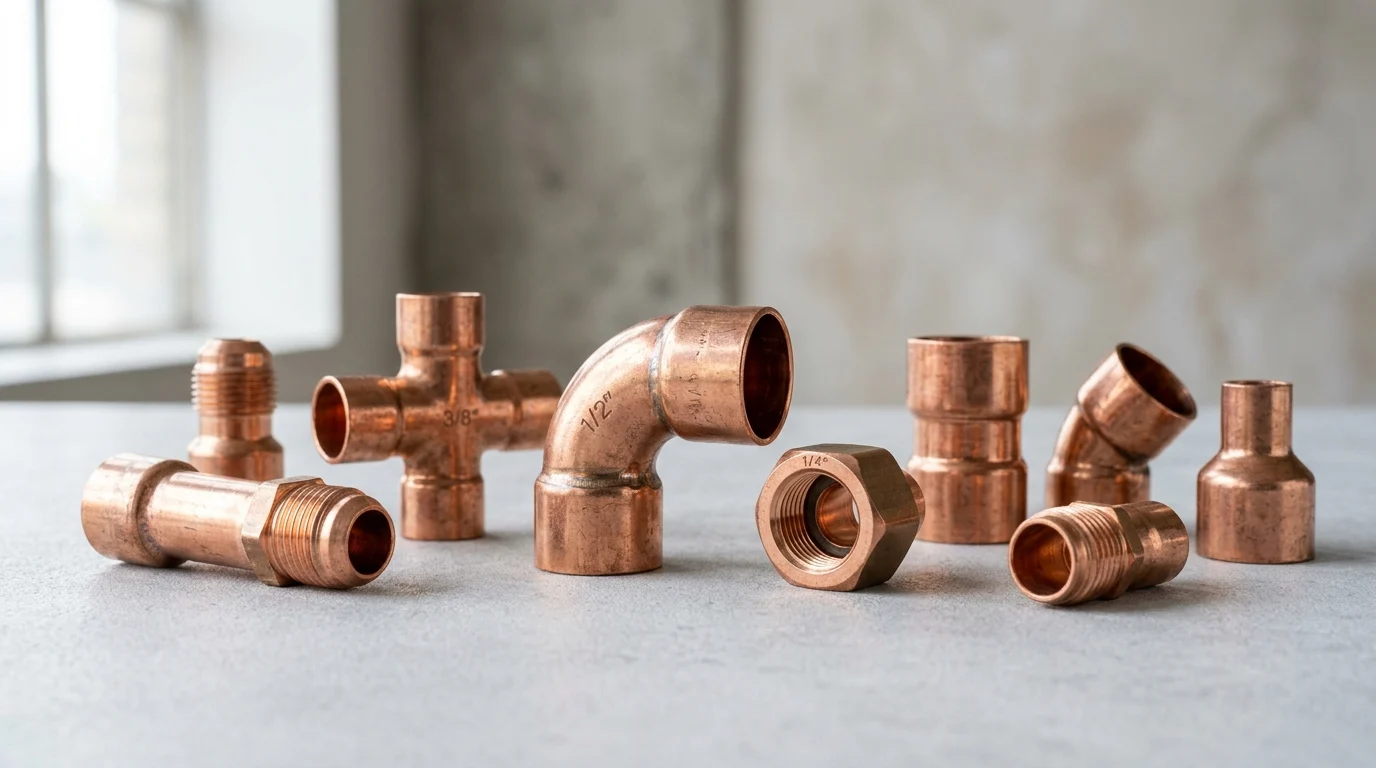
Selecting the right copper pipe fittings has a direct impact on HVAC performance, from refrigerant flow and pressure stability to leak prevention and long-term reliability. In air conditioning systems, each elbow, coupling, reducer, and tee must match the application, refrigerant pressure, and installation method to maintain a secure, efficient circuit. This article outlines 10 essential air conditioning copper pipe fittings used in HVAC installation, explains where each one fits in the system, and highlights the practical considerations that help technicians reduce failures, improve sealing quality, and support efficient operation over time.
Why air conditioning copper pipe fittings matter in HVAC installation
Air conditioning copper pipe fittings serve as the critical vascular system of any HVAC installation. While they represent a relatively small percentage of total material costs, their structural integrity dictates the overall efficiency, safety, and lifespan of the climate control system. Modern high-efficiency HVAC units operating on R-410A or R-32 refrigerants routinely generate internal pressures between 400 and 600 psi. In these high-stress environments, a compromised fitting or substandard brazed joint can contribute to a 10 to 15 percent annual refrigerant loss. Such leakage severely degrades cooling capacity, increases electrical consumption, and accelerates compressor wear.
How fittings affect refrigerant flow and system sealing
The primary function of any fitting is to facilitate directional changes and branch connections without introducing excessive turbulence or pressure drops. Every 90-degree elbow or T-joint introduces friction; poorly manufactured fittings with internal burrs or inconsistent inner diameters can increase pressure drops by 2 to 5 psi per joint. Over a complex commercial variable refrigerant flow (VRF) system containing hundreds of connections, this cumulative resistance forces the compressor to consume significantly more power to maintain flow. Furthermore, the sealing integrity of these joints is non-negotiable. Capillary attraction during the brazing process relies on precise tolerances between the pipe outer diameter and the fitting inner diameter—typically requiring a clearance of just 0.002 to 0.006 inches—to ensure a hermetic seal that prevents micro-leaks under continuous thermal expansion and contraction.
Which installation environments require different fitting choice
s
Environmental factors heavily dictate specific material and coating requirements for copper fittings. In standard indoor or climate-controlled commercial environments, bare copper fittings exhibit a highly reliable functional lifespan exceeding 20 years. However, installations in coastal regions expose copper to highly corrosive salt-laden air, which can accelerate galvanic corrosion and pitting. In such environments, the lifespan of unprotected standard fittings can plummet to just 5 to 7 years. Installers operating in these zones must specify fittings with thicker walls or apply specialized epoxy or phenolic coatings to mitigate environmental degradation. Similarly, industrial manufacturing facilities with high ambient concentrations of sulfur, ammonia, or volatile organic compounds require heavily insulated or chemically treated fittings to prevent rapid material breakdown and catastrophic system depressurization.
Essential types of air conditioning copper pipe fittings
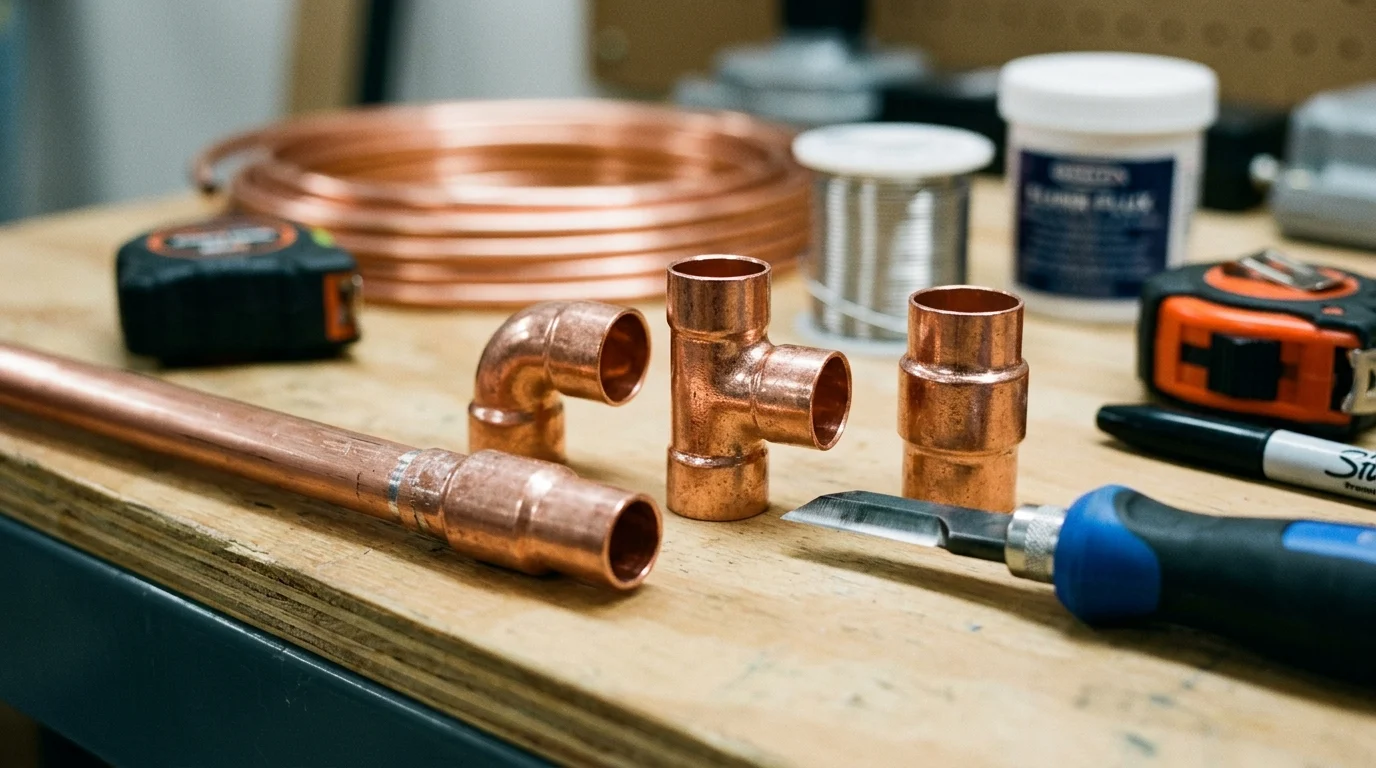
Navigating the procurement of air conditioning copper pipe fittings requires an understanding of the essential components that make up a complete refrigerant circuit. The industry standardizes around ten core categories, accommodating pipe outer diameters (OD) ranging from 1/4 inch for residential mini-splits up to 4-1/8 inches for large commercial chillers. Selecting the correct type ensures optimal flow geometry, system balance, and structural safety.
The most common fitting types and their uses
The most frequently utilized fittings include 45-degree and 90-degree elbows, tees, couplings, reducers, U-bends, P-traps, Y-joints (branch pipes), flare nuts, and access valves. Elbows and U-bends handle necessary directional routing within tight ceiling plenums or chassis enclosures. P-traps are particularly critical in vertical suction risers exceeding 15 feet in height; they accumulate compressor oil during off-cycles and promote proper oil return to the compressor upon startup. Y-joints are heavily utilized in VRF systems to split refrigerant flow proportionally to multiple indoor air handling units, requiring precise internal baffling to maintain a balanced pressure distribution across the network.
How to compare fittings by size, connection, and application
Fittings must be meticulously matched by outer diameter size, wall thickness, and connection methodology. Traditional installations rely on brazed connections, which offer the highest tensile strength and lowest leak probability when executed correctly. Flare fittings are common for reversible connections at the equipment terminals, though they require precise torque specifications (e.g., 10 to 14 ft-lbs for a 1/4-inch line) to avoid crushing the copper flare and causing slow leaks. Recently, mechanical press fittings have gained significant market share. While press fittings can cost 3 to 4 times more per unit than standard brazed copper elbows, they eliminate the need for hot work permits and nitrogen purging, frequently reducing on-site installation labor time by up to 50 percent.
A simple comparison table for buyers and installers
To streamline the selection process, procurement teams and installers can reference standardized performance metrics across different connection types. The table below outlines the operational differences among the three primary fitting connection methodologies used in modern HVAC installations.
| Connection Method | Primary Application | Installation Speed | Typical Pressure Rating (psi) | Labor Cost Factor |
|---|---|---|---|---|
| Brazed | Commercial/Residential Main Lines | Slow | 600 – 700+ | High |
| Flared | Equipment Terminals / Mini-splits | Medium | 400 – 600 | Medium |
| Press | Retrofits / Fire-restricted Zones | Fast | Up to 700 | Low |
How to specify air conditioning copper pipe fittings
Accurate specification of air conditioning copper pipe fittings bridges the gap between engineering design and field execution. Engineers must define rigid standards to ensure the fittings can withstand thermal cycling, continuous vibration, and elevated pressures without fatigue. Conforming to recognized codes, such as ASME B16.22 for wrought copper pressure fittings, establishes a baseline for dimensional accuracy, structural integrity, and long-term reliability.
Material, size, and wall-thickness requirements
HVAC applications strictly require ACR (Air Conditioning and Refrigeration) grade copper, designated as UNS C12200. This material is 99.9 percent pure copper, phosphorus-deoxidized to prevent hydrogen embrittlement during high-temperature brazing. Wall thickness is a critical specification variable, categorized generally into Type K (thickest), Type L (medium), and Type M (thinnest). For commercial HVAC refrigerant lines, Type L is the undisputed industry standard, mandating wall thicknesses ranging from 0.030 inches for a 3/8-inch OD pipe up to 0.050 inches for a 1-1/8-inch OD pipe. Type K is typically reserved for underground installations or exceptionally high-pressure commercial refrigeration systems.
How refrigerant type, pressure, and cleanliness standards affect
selection
The global transition to environmentally friendly but higher-pressure refrigerants profoundly impacts fitting selection. R-410A and the mildly flammable R-32 operate at peak discharge pressures reaching 600 psi, demanding fittings with burst pressure ratings exceeding 1800 psi to maintain a mandatory 3:1 safety margin. Cleanliness is equally vital in these specifications. ACR fittings are factory-cleaned, nitrogen-purged, and capped to ensure internal particulate matter remains below 1.0 milligram per square foot. Any residual drawing oils, dirt, or moisture can react with modern POE (polyolester) synthetic compressor oils, forming corrosive acids that systematically destroy compressor windings.
Installation practices that reduce leaks and rework
Superior specifications are easily compromised by substandard installation practices. Installers must prioritize thorough deburring of cut pipes; failure to remove internal burrs increases localized turbulence, which can erode the copper wall over time and create flow restrictions. During brazing, flowing dry nitrogen at 2 to 3 cubic feet per hour (CFH) through the lines is mandatory to prevent the formation of cupric oxide scale inside the fitting. Utilizing a 15 percent silver brazing alloy and allowing a 2 to 3-inch clearance for uniform torch heat distribution ensures deep capillary action, reliably dropping joint failure rates well below the industry benchmark of 0.1 percent.
Sourcing and quality control for copper pipe fittings
Establishing a resilient supply chain for copper pipe fittings requires rigorous vetting of manufacturers and an acute awareness of global commodity fluctuations. Because a single batch of defective fittings can halt a multi-million-dollar construction project or cause massive property damage via refrigerant leaks, procurement professionals must prioritize verifiable quality control over marginal unit cost savings. A defect rate exceeding 0.05 percent in a bulk order is generally considered unacceptable in commercial HVAC procurement.
How to evaluate suppliers and product certification
Evaluating a supplier begins with a deep dive into their manufacturing certifications and destructive testing protocols. Reputable manufacturers maintain ISO 9001 certification and provide UL or CSA listings for their pressure fittings. Buyers should demand batch-specific Material Test Reports (MTRs) verifying the C12200 copper composition and appropriate phosphorus content. Furthermore, suppliers must demonstrate their burst testing thresholds to guarantee safety margins.
| Inspection Parameter | Testing Methodology | Acceptable Industry Threshold |
|---|---|---|
| Dimensional Tolerance | Caliper / Micrometer | +/- 0.002 to 0.004 inches |
| Material Purity | Spectrometer Analysis | Minimum 99.9% Cu, 0.015-0.040% P |
| Pressure Integrity | Hydrostatic Burst Test | > 2100 psi (for R-410A/R-32 systems) |
| Internal Cleanliness | Solvent Wash / Weighing | < 1.0 mg/sq ft of residue |
Key cost drivers in procurement and supply chain planning
The cost of copper fittings is highly volatile, tethered directly to the London Metal Exchange (LME) raw copper indices. Beyond the raw commodity price, the manufacturing method—whether the fitting is hydroformed, extruded, or forged—impacts the premium added to the base metal cost. Minimum Order Quantities (MOQs) play a significant role in procurement strategy; factories typically require MOQs of 1,000 to 5,000 pieces for standard fittings, and significantly higher thresholds for custom geometries. Additionally, global freight and logistics can add 8 to 12 percent to the landed cost. Buyers must employ strategic forecasting, locking in forward contracts during copper price dips to stabilize project budgets against unpredictable 15 to 20 percent year-over-year price swings.
How to choose the right air conditioning copper pipe fittings
Selecting the optimal air conditioning copper pipe fittings is fundamentally an exercise in total cost of ownership (TCO) analysis. While procurement teams may be tempted to focus solely on the initial capital expenditure, project managers and lead engineers must account for installation velocity, system longevity, and the immense financial liability associated with post-installation refrigerant leaks.
How to balance standardization, installation efficiency, and cos
t
Achieving cost efficiency often relies on intelligent standardization. By standardizing engineering designs around a limited subset of pipe sizes—such as exclusively utilizing 3/8-inch, 5/8-inch, and 7/8-inch outer diameters where feasible—contractors can reduce on-site inventory carrying costs by 15 to 20 percent and minimize the risk of sizing mismatches. When balancing installation efficiency against material costs, regional labor rates become the deciding factor. In metropolitan markets where skilled pipefitter labor exceeds $80 per hour, the premium paid for mechanical press fittings is rapidly offset by saving $20 to $30 per hour in labor and eliminating the administrative overhead of fire watches and hot work permits.
A specification and procurement checklist
To ensure consistent project success, procurement and engineering teams should implement a rigid specification checklist prior to issuing purchase orders. First, verify the exact outer diameter (OD) and ensure the wall thickness aligns with the required Type L or Type K standards for the expected system pressure. Second, confirm compatibility with the specific refrigerant, ensuring the burst pressure rating provides a minimum 3:1 safety factor above the maximum operating pressure (e.g., capable of withstanding 1800+ psi for R-410A). Third, validate the connection type against the site’s environmental constraints, particularly regarding open flames. Finally, secure a comprehensive supplier warranty, which should offer 1 to 5 years of coverage against manufacturing defects, protecting the installation firm from the catastrophic costs of remediation and system downtime.
Key Takeaways
- The most important conclusions and rationale for Air conditioning copper pipe fittings
- Specs, compliance, and risk checks worth validating before you commit
- Practical next steps and caveats readers can apply immediately
Frequently Asked Questions
Which copper fittings are most essential for AC installation?
The core set includes 45°/90° elbows, tees, couplings, reducers, U-bends, P-traps, Y-joints, flare nuts, and access valves. Choose by pipe OD, connection type, and system layout.
How do I choose the right fitting size for an HVAC refrigerant line?
Match the fitting to the tube outer diameter and wall thickness exactly. Even small tolerance errors can hurt brazing quality, increase pressure drop, and cause leaks.
When should I use brazed fittings instead of press fittings?
Use brazed fittings for maximum joint strength and low leak risk. Use press fittings when you need faster installation, less hot work, or easier compliance on occupied job sites.
Do coastal or chemical environments need special copper fittings?
Yes. In salty or corrosive air, use thicker-wall fittings or add epoxy/phenolic coating. This helps reduce pitting, galvanic corrosion, and premature refrigerant line failure.
Where can buyers source air conditioning copper pipe fittings in bulk?
Industrial buyers can source copper fittings directly from NBFH Metal at nbfh-metal.com, including standard copper fittings and press fittings for HVAC and refrigeration projects.
Post time: Jun-05-2026