
Pex-Al-Pex Fittings: Installation Mistakes B2B Buyers Must Avoid

Why Installation Mistakes Matter for B2B Buyers

Procurement teams often view installation issues as post-sale problems belonging strictly to contractors and plumbers. However, in the wholesale distribution of multi-layer pipe systems, installation failures quickly escalate into supply chain crises. When contractors experience frequent leaks or blow-offs with Pex-Al-Pex Compression Fittings, the immediate reaction is to blame product quality, leading to bulk returns, stalled projects, and severed distributor relationships.
The financial implications of these failures extend far beyond the unit cost of the fittings. Water damage claims, labor costs for rework, and project delays create massive liability for distributors and importers. Consequently, B2B buyers must adopt a proactive sourcing approach, procuring components that are engineered to minimize installer error and clearly defining compatibility parameters before placing volume orders.
Impact on warranty claims, returns, and reputation
High failure rates lead to excessive warranty claims that severely erode wholesale profit margins. A distributor’s reputation hinges on product reliability; consistent on-site failures will drive high-volume contractors to competing brands, resulting in permanent market share loss that is exceptionally difficult to recover.
Highest-risk failure points in wholesale channels
O-ring displacement, improper pipe calibration, and mismatched fitting profiles represent the highest risk factors in the supply chain. Procurement must ensure that the sourced fittings align seamlessly with the dominant tooling and pipe dimensions utilized in their specific regional target markets.
Why installer defects become a sourcing issue
Even if a system failure is strictly due to poor contractor technique, the distributor bears the administrative and financial burden of processing the claim and conducting forensic analysis. Sourcing teams must therefore prioritize suppliers who provide clear technical documentation, foolproof designs (like inspection holes), and robust training materials to mitigate these risks.
Specifications Commonly Misread Before Installation
A significant portion of installation failures stems from misaligned specifications at the procurement stage. B2B buyers frequently overlook minute dimensional tolerances when sourcing Pex-Al-Pex Compression Fittings from international manufacturers. Multi-layer pipes (PEX-AL-PEX) have specific inner and outer diameters that must match the fitting’s insert and compression ring precisely to ensure a watertight seal.
Furthermore, regional variations in pipe standards mean that a fitting designed for the European market may not perfectly seal a pipe manufactured to North American specifications, even if the nominal sizes appear identical. Procurement teams must rigorously verify these technical parameters with their OEM partners before approving mass production.
| Nominal Size | Common Outer Diameter (OD) | Common Wall Thickness | Compatible Profile Types |
|---|---|---|---|
| 16mm | 16.0mm | 2.0mm | U, TH, H |
| 20mm | 20.0mm | 2.0mm / 2.25mm | U, TH, H |
| 25mm | 25.0mm | 2.5mm | U, TH |
| 32mm | 32.0mm | 3.0mm | U, TH |
Profile, size tolerance, and wall thickness mismatches
Buyers must verify the exact pipe wall thickness (e.g., 2.0mm versus 2.25mm for a 20mm pipe). Mismatches here cause either excessive compression, leading to micro-cracks in the brass, or insufficient grip, resulting in catastrophic blow-offs when the system is pressurized.
Material and plating details to verify before ordering
Sourcing brass fittings requires close attention to the alloy grade (e.g., CW617N or DZR brass). Inferior alloys are highly prone to dezincification in aggressive water conditions, while improper nickel or chrome plating can flake off during the crimping process, compromising the mechanical seal.
Product marking, batch coding, and document checks
Clear, indelible markings on the fitting body are essential for on-site identification and post-installation traceability. Buyers should insist on laser-etched batch codes from their suppliers to easily isolate potential manufacturing defects from widespread installation errors during a claims investigation.
Installation Errors That Trigger Claims and Rework
Even with perfectly manufactured components, poor execution on the job site remains a primary driver of system failure. Distributors must understand these common errors to effectively adjudicate warranty claims and educate their contractor networks. When sourcing Pex-Al-Pex Compression Fittings, it is crucial to recognize how the specific design either facilitates or hinders proper installation.
The most severe claims usually involve hidden leaks behind finished walls, which are often the direct result of skipped preparation steps or the use of incompatible tooling. By recognizing these patterns, B2B buyers can work with manufacturers to source fittings with visual indicators or improved chamfers that reduce the likelihood of these specific contractor mistakes.
Incorrect crimping, pressing, and calibration
Failure to properly calibrate and bevel the multi-layer pipe before inserting the fitting often damages or dislodges the O-rings. Additionally, using a TH-profile press jaw on a U-profile fitting will create an uneven seal, virtually guaranteeing a leak under thermal expansion and contraction.
Mixed components and incompatible tools
Contractors often attempt to mix pipes, fittings, and press tools from different manufacturers to cut costs. Distributors should explicitly communicate the approved tooling matrices for their sourced fittings to limit liability when contractors deviate from these manufacturer guidelines.
Pipe preparation, insertion depth, and torque control
Inadequate pipe cutting (non-perpendicular cuts) and failing to push the pipe fully into the fitting up to the inspection window are rampant issues. For screw-type compression fittings, over-torquing the nut by the installer can distort the olive and crush the inner pipe wall.
How to Compare Suppliers to Prevent Installation Problems
Selecting the right manufacturing partner is the most effective way for B2B buyers to prevent downstream installation failures. A supplier’s quality control infrastructure directly impacts the consistency and reliability of the Pex-Al-Pex Compression Fittings delivered to the market. Buyers must look far beyond unit pricing and thoroughly evaluate the manufacturer’s engineering capabilities.
A robust supplier audit should encompass raw material verification, precision CNC machining tolerances, and automated assembly processes. Suppliers who rely heavily on manual O-ring insertion introduce a significantly higher risk of pinched or missing seals—defects that contractors may not notice until the plumbing system is fully pressurized.
| Audit Category | Key Supplier Requirements | Risk if Ignored |
|---|---|---|
| Assembly | Automated O-ring insertion | Missing/pinched seals causing immediate leaks |
| Testing | In-house hydrostatic & thermal cycling | Product fails under standard operating pressure |
| Traceability | Laser-etched batch codes | Inability to isolate defective manufacturing runs |
Supplier qualification: testing, production control, and training
Evaluate if the supplier conducts in-house hydrostatic pressure testing, thermal cycling, and pull-out resistance tests. Advanced suppliers also provide technical training materials, cut-sheets, and compatibility charts that distributors can pass on to their end-users.
OEM capability, MOQ, lead time, and defect response
Assess the supplier’s ability to customize fitting profiles (OEM/ODM) to perfectly match specific regional pipe standards. Favorable Minimum Order Quantities (MOQs) allow for low-risk market testing, while a structured Corrective and Preventive Action (CAPA) process ensures rapid resolution of any defect reports.
Pre-shipment inspection and sample validation
Implement rigorous AQL (Acceptable Quality Limit) standards for third-party pre-shipment inspections. Initial sample validation must include destructive testing utilizing the actual multi-layer pipes and press tools that are standard in the importer’s target market.
Compliance and Certification Gaps That Increase Risk
Regulatory compliance is non-negotiable in the global plumbing and heating sector. Importing Pex-Al-Pex Compression Fittings that lack mandatory regional certifications exposes distributors to severe legal liabilities and financial penalties. Local building inspectors will routinely reject uncertified components, forcing contractors to tear out completed work at the distributor’s expense.
Furthermore, recognized certification bodies mandate strict adherence to dimensional and material standards, which inherently reduces installation risks. Procurement teams must ensure that their suppliers maintain active, verifiable certifications from relevant authorities (such as WRAS, DVGW, AENOR, or NSF) and that these approvals cover the specific SKUs being ordered.
Required standards and potable water approvals
Fittings intended for drinking water applications must meet strict lead-leaching standards (e.g., NSF/ANSI 61 or regional equivalents). Hydronic heating systems require adherence to ISO 21003 or EN 1254-3 standards to guarantee long-term performance under high temperatures and pressures.
Declarations, test reports, and traceability records
Buyers must collect current Declarations of Conformity (DoC) and independent laboratory test reports before finalizing any purchase order. The supplier must maintain extensive traceability records linking finished batch codes to specific raw material heat numbers.
Contract terms for liability and non-compliance
International purchase agreements should clearly define the supplier’s financial liability in the event of a product recall or mass failure due to non-compliance with agreed-upon specifications, safeguarding the importer’s capital and market position.
Packaging, Logistics, and After-Sales Controls
The journey from the factory floor to the job site introduces several logistical risks that can compromise the mechanical integrity of Pex-Al-Pex Compression Fittings. Improper packaging can lead to damaged threads, lost O-rings, or contamination with dirt and debris, all of which directly contribute to installation failures on the job site.
B2B buyers must specify robust packaging protocols to protect the fittings during transcontinental shipping and subsequent warehouse handling. Furthermore, comprehensive after-sales support, including accessible technical documentation, empowers wholesale distributors to resolve contractor queries quickly and prevent improper installation techniques from becoming habitual.
Packaging and labeling to prevent part mix-ups
Fittings should be sealed in durable polybags within reinforced, clearly labeled master cartons. Barcoding and clear profile/size indicators on the exterior packaging prevent warehouse picking errors that result in contractors receiving incompatible parts.
Warehouse and transport risks affecting product integrity
Prolonged exposure to extreme temperatures, high humidity, or saline environments during ocean transit can degrade rubber O-rings or cause surface oxidation on brass bodies. Climate-controlled storage and the inclusion of desiccant packs in master cartons are strongly recommended.
Manuals, videos, and technical support for partners
Suppliers should provide comprehensive digital assets, including detailed installation manuals and instructional videos. Distributors can leverage these tools to educate their internal sales staff and contractor base, significantly reducing user-error claims.
FAQ
Procurement professionals frequently encounter complex questions when evaluating multi-layer pipe systems and their corresponding components. Navigating the technical and commercial nuances of Pex-Al-Pex Compression Fittings requires a deep understanding of market-specific requirements, tooling ecosystems, and international supplier capabilities.
The following frequently asked questions address the most pressing concerns regarding tool compatibility, sourcing strategies, and defect analysis, providing actionable insights for B2B wholesale buyers, importers, and supply chain managers.
Compatibility with local installer tool standards
Q: How do I ensure the fittings I import are compatible with the tools my contractors already own?
You must survey your target market to identify the dominant press profiles (e.g., U, TH, RFz). Specify these exact profiles to your manufacturer and demand comprehensive tool compatibility matrices before ordering.
MOQ and sample policies for market validation
Q: What are standard MOQ expectations when testing a new supplier for these fittings?
Reputable OEM suppliers typically require MOQs ranging from 1,000 to 5,000 pieces per SKU to optimize CNC machining runs. However, many offer smaller pilot runs for initial market validation and rigorous localized testing.
How to separate product defects from installation errors
Q: When a leak occurs, how can we definitively prove it was an installation error rather than a faulty fitting?
Forensic examination of the failed connection is key. Pinched O-rings, missing bevels on the pipe edge, or uneven crimp marks clearly indicate improper calibration or incorrect tool usage, exonerating the product itself.
Key Takeaways for Procurement Teams
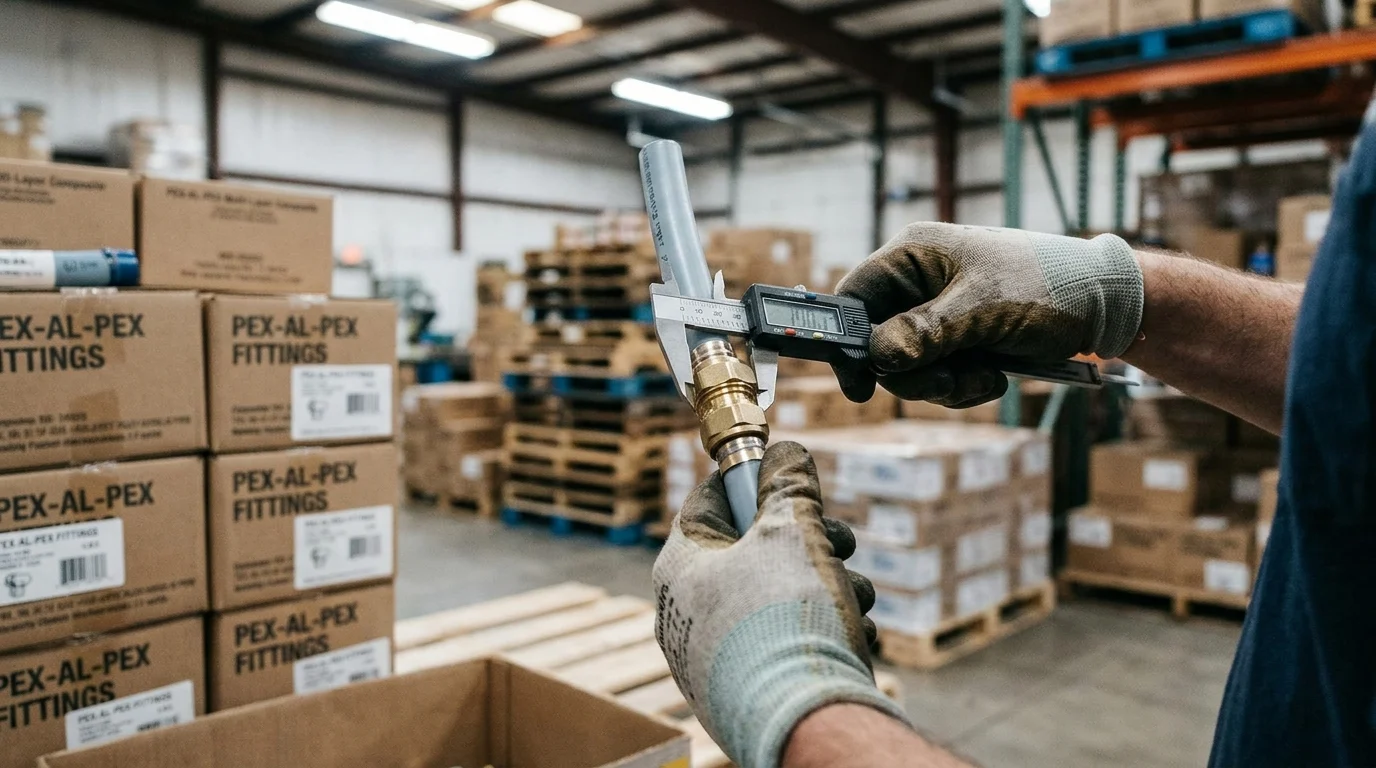
Mitigating installation risks in multi-layer piping systems is a strategic imperative that begins directly in the procurement department. By prioritizing technical precision and supplier accountability, B2B buyers can transform Pex-Al-Pex Compression Fittings from a potential liability into a highly profitable, reliable product category that drives channel growth.
The foundation of this strategy lies in meticulous specification verification, demanding robust quality control from manufacturing partners, and providing the necessary educational resources to the downstream supply chain. Implementing strict pre-order controls ultimately protects wholesale profit margins and strengthens brand reputation.
Supplier criteria that lower failure costs
Prioritize suppliers with automated assembly lines, in-house testing laboratories, and comprehensive traceability systems. These advanced manufacturing capabilities drastically reduce the incidence of out-of-box failures and hidden defects.
Pre-order checklist for installation risk control
Before issuing a Purchase Order, verify exact dimensional tolerances, confirm brass alloy grades, secure up-to-date certifications, and mandate destructive sample testing using the local market pipes and press tools.
How better installation control improves channel performance
Sourcing engineered-for-success fittings reduces warranty overhead, minimizes contractor complaints, and fosters long-term loyalty among high-volume plumbing installers, directly boosting the distributor’s bottom line and market share.
Key Takeaways
- Wholesale sourcing and supply-chain implications for Pex-Al-Pex Fittings
- Specifications, compliance, and commercial terms buyers should validate
- Actionable recommendations for distributors and procurement teams